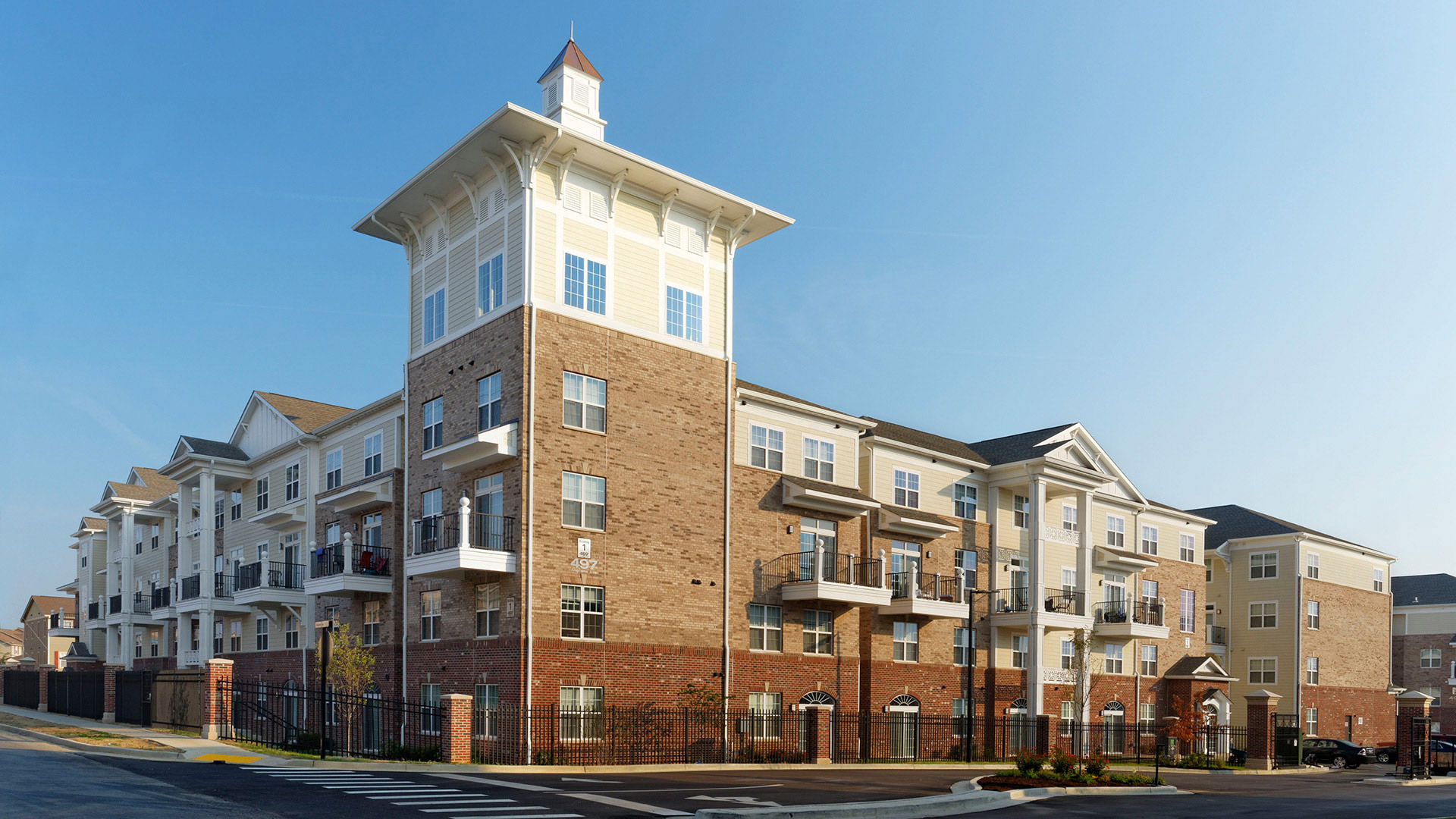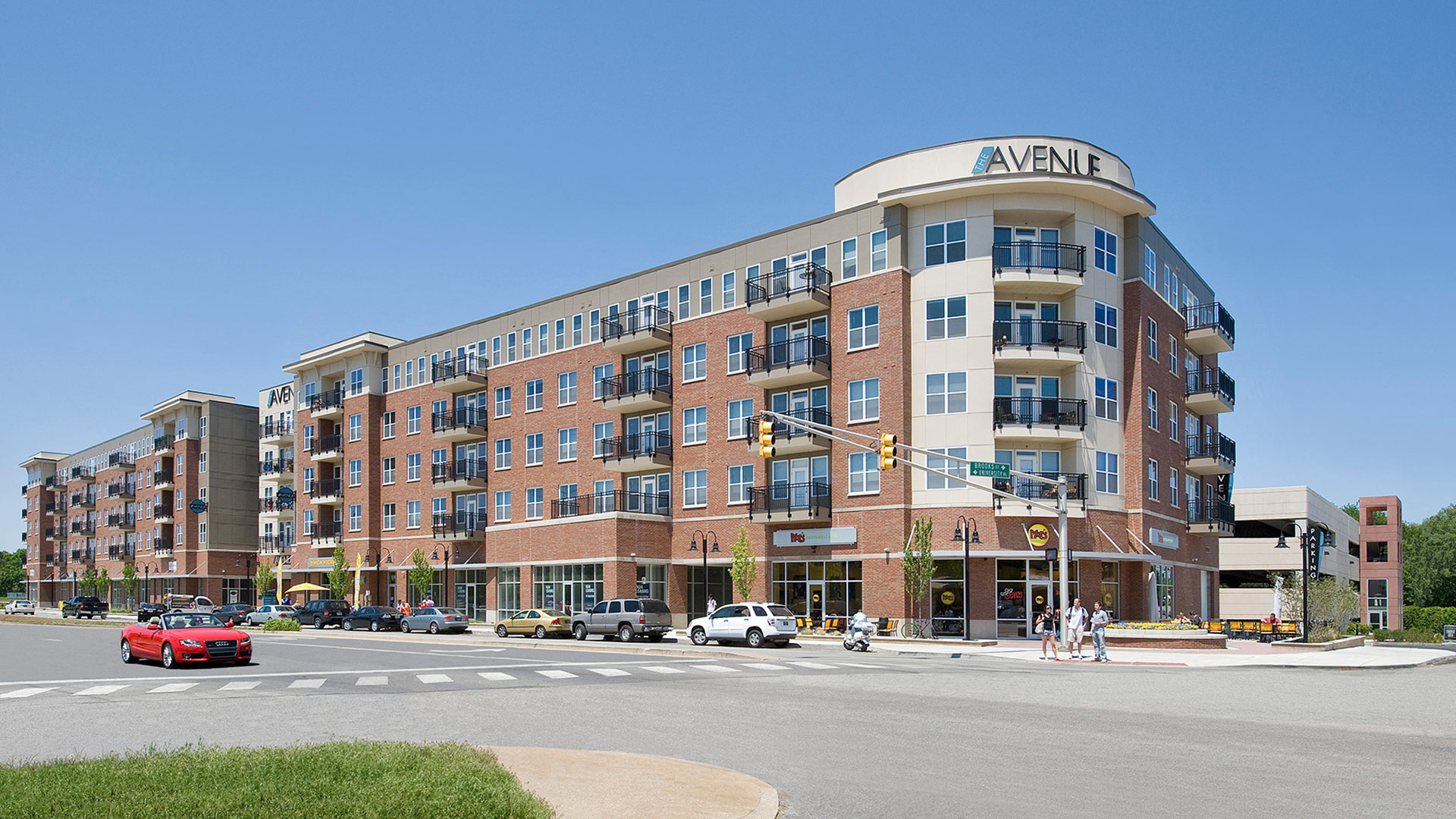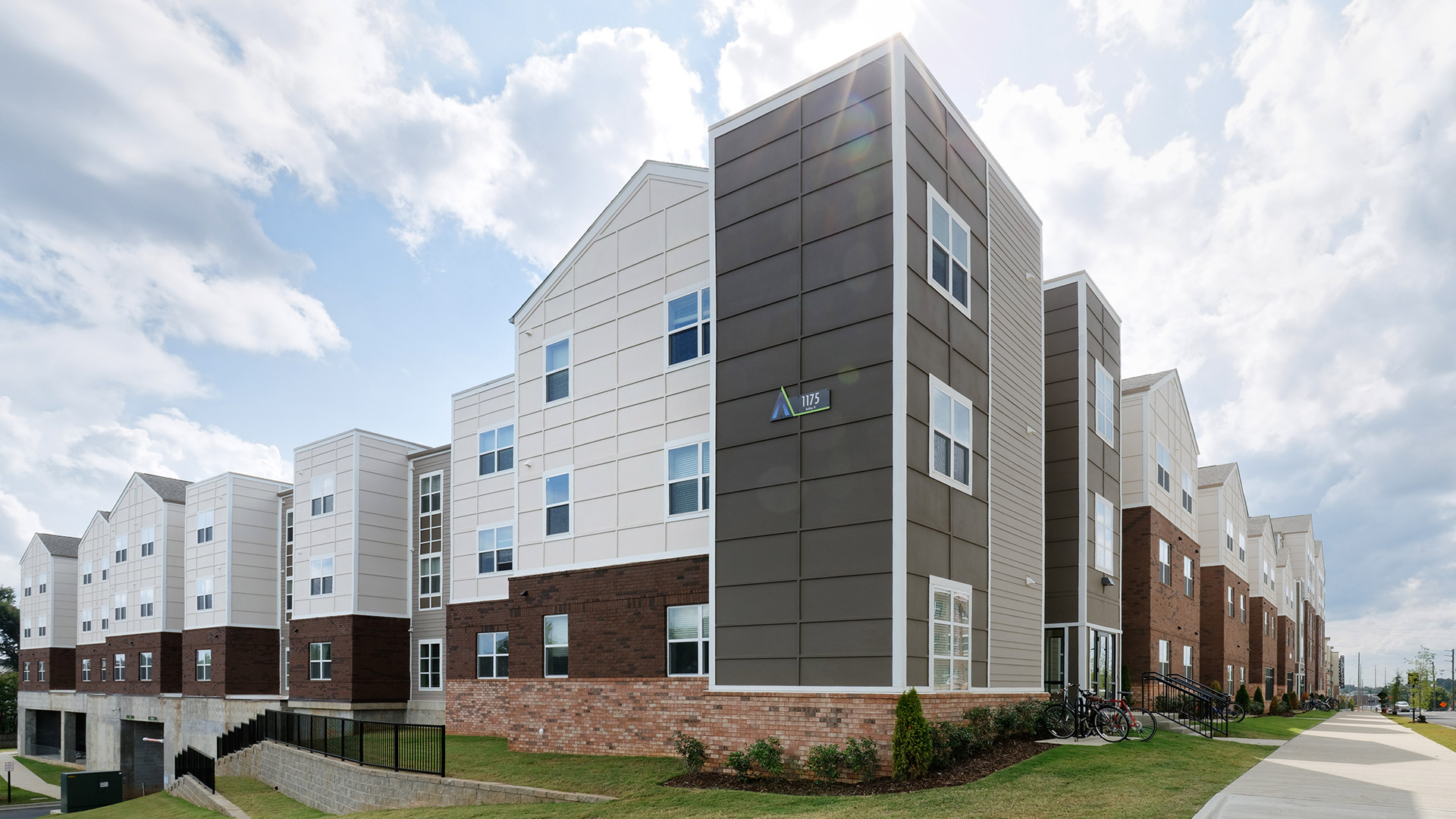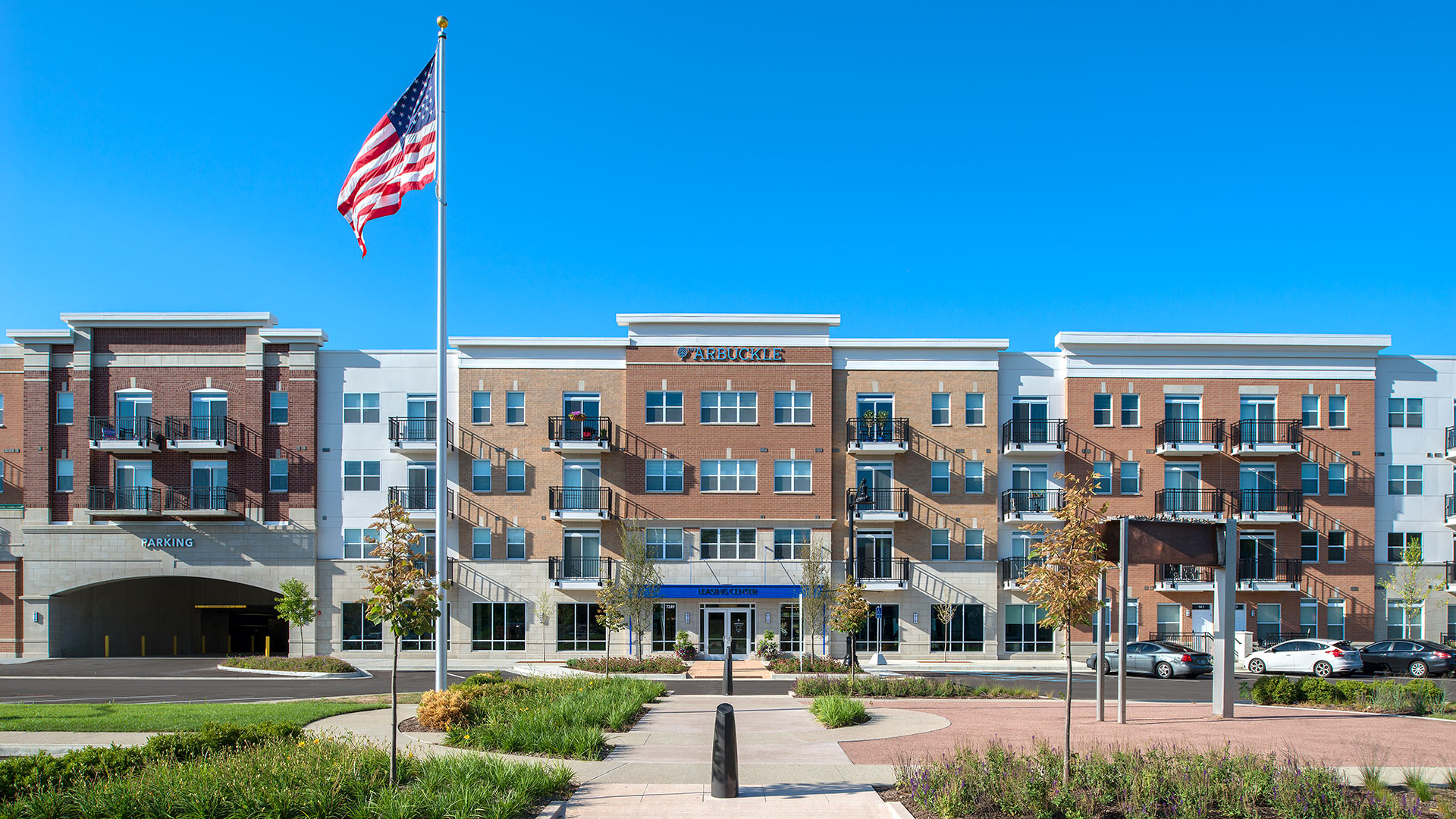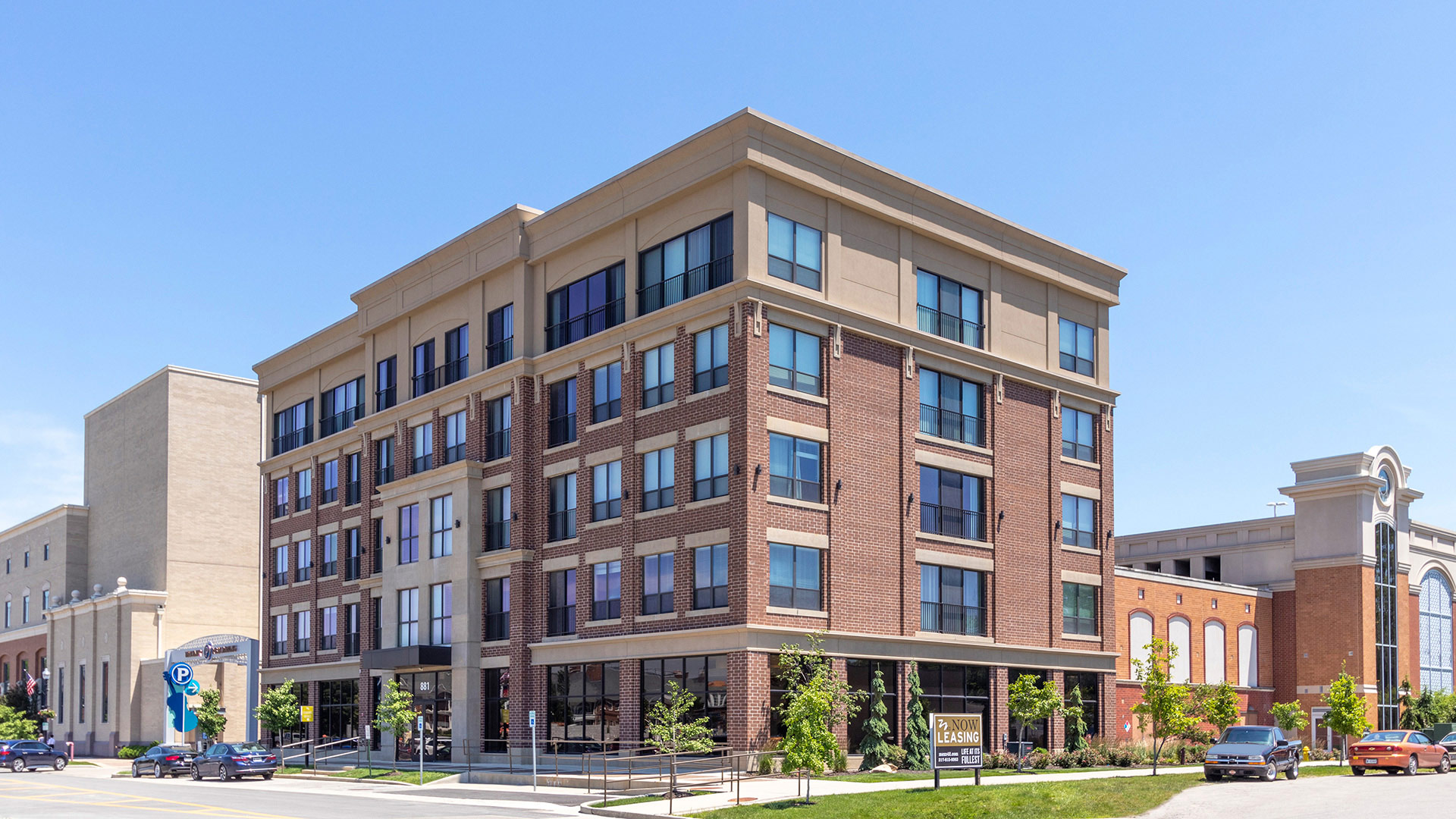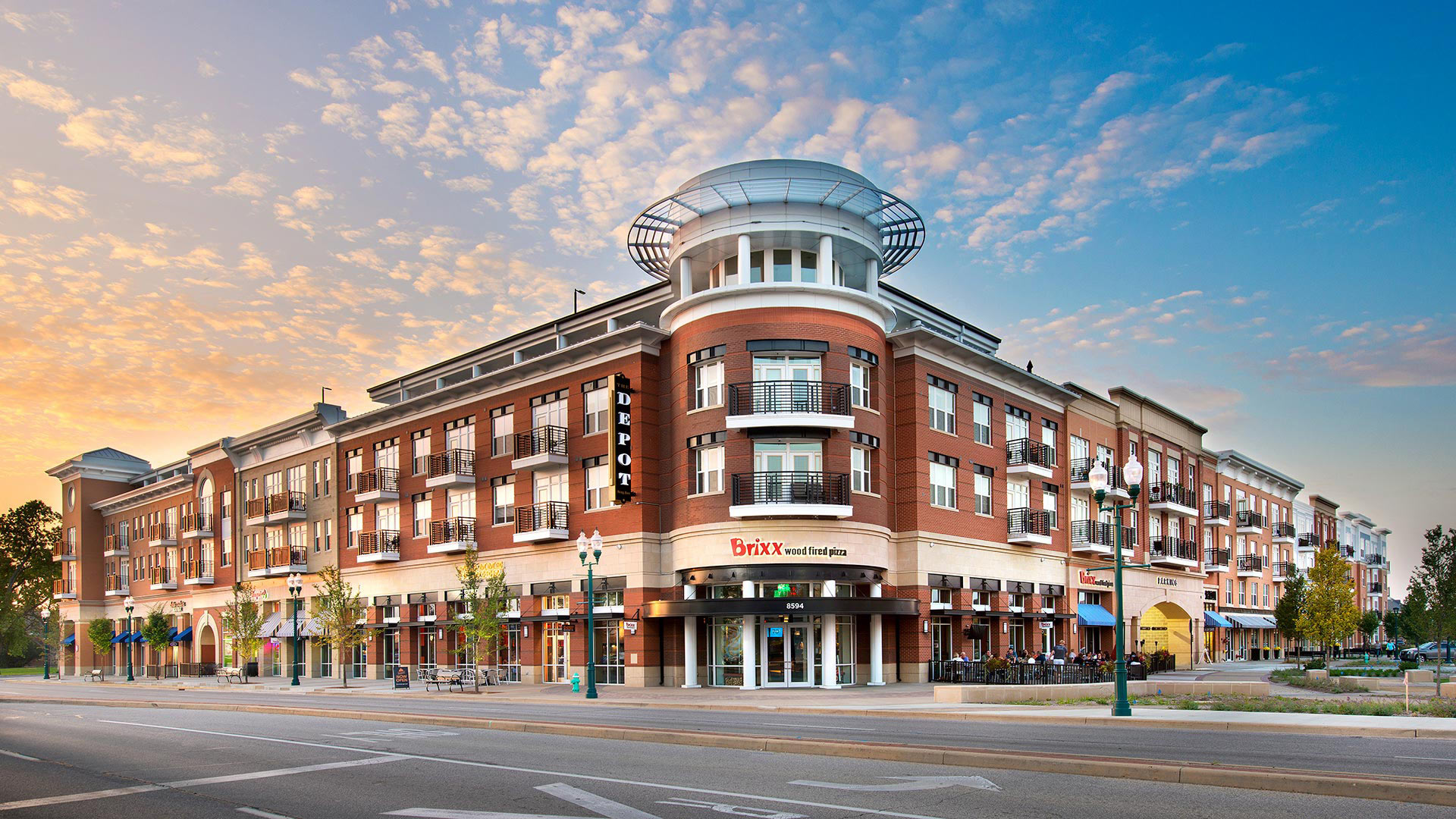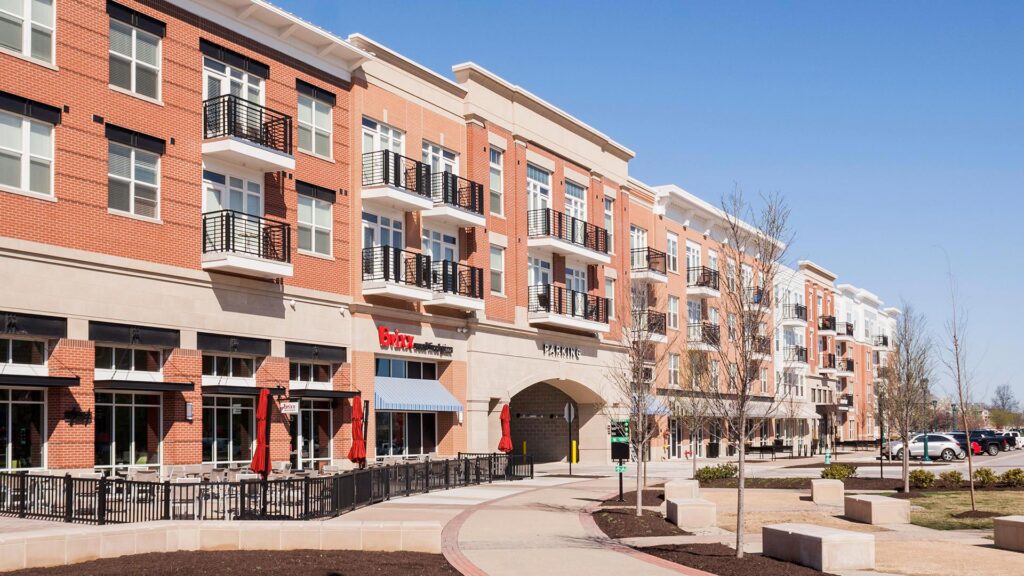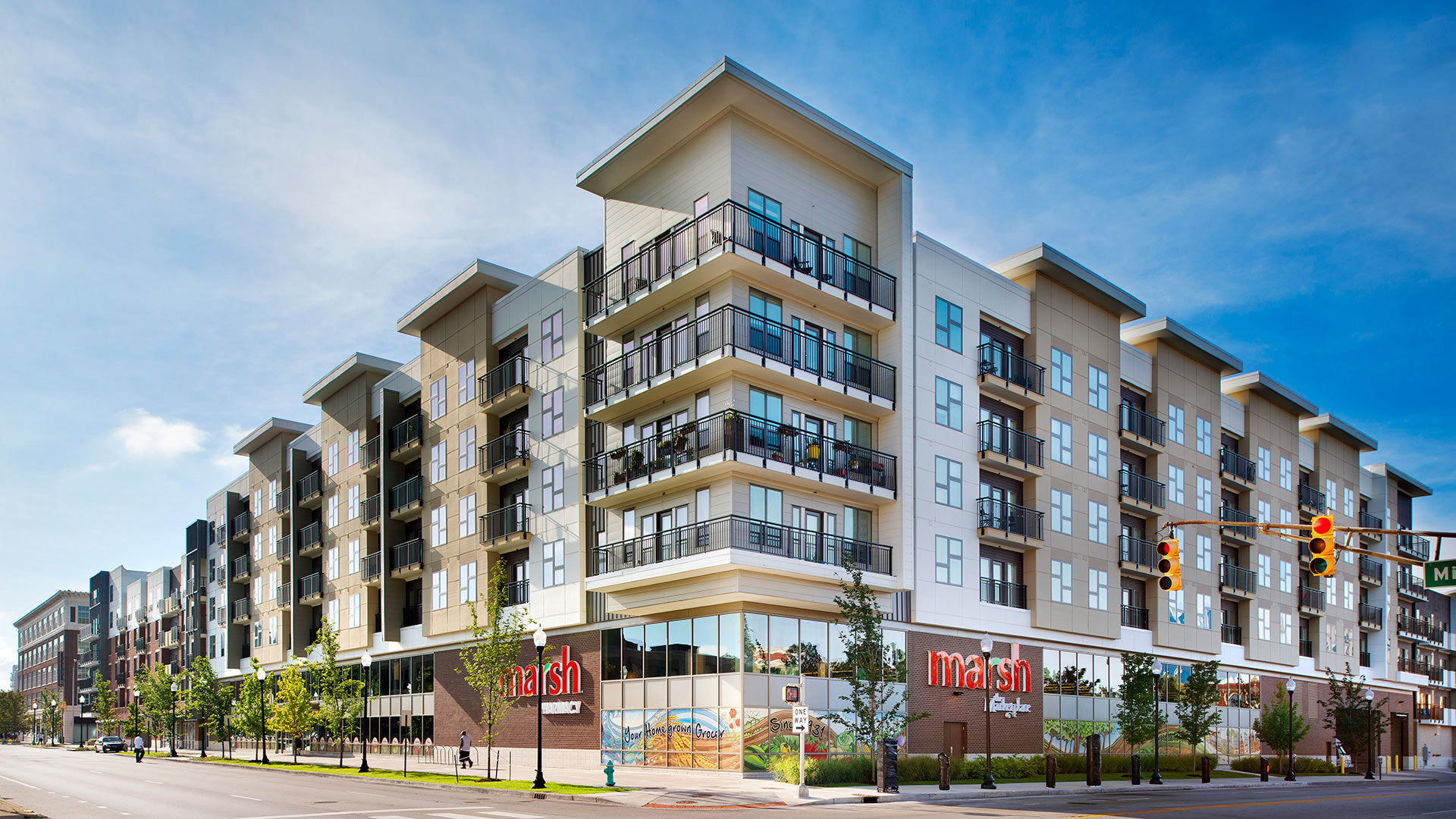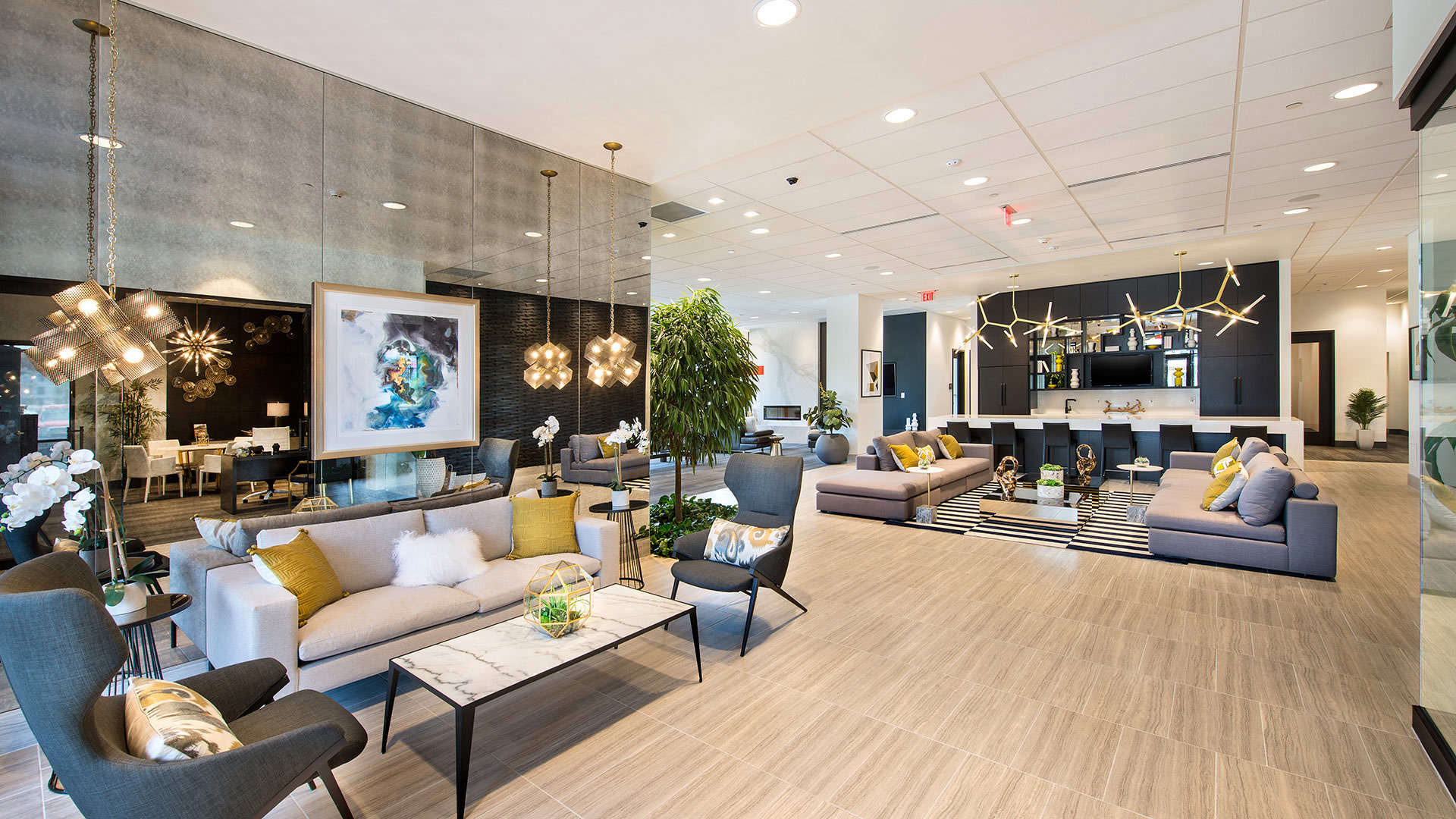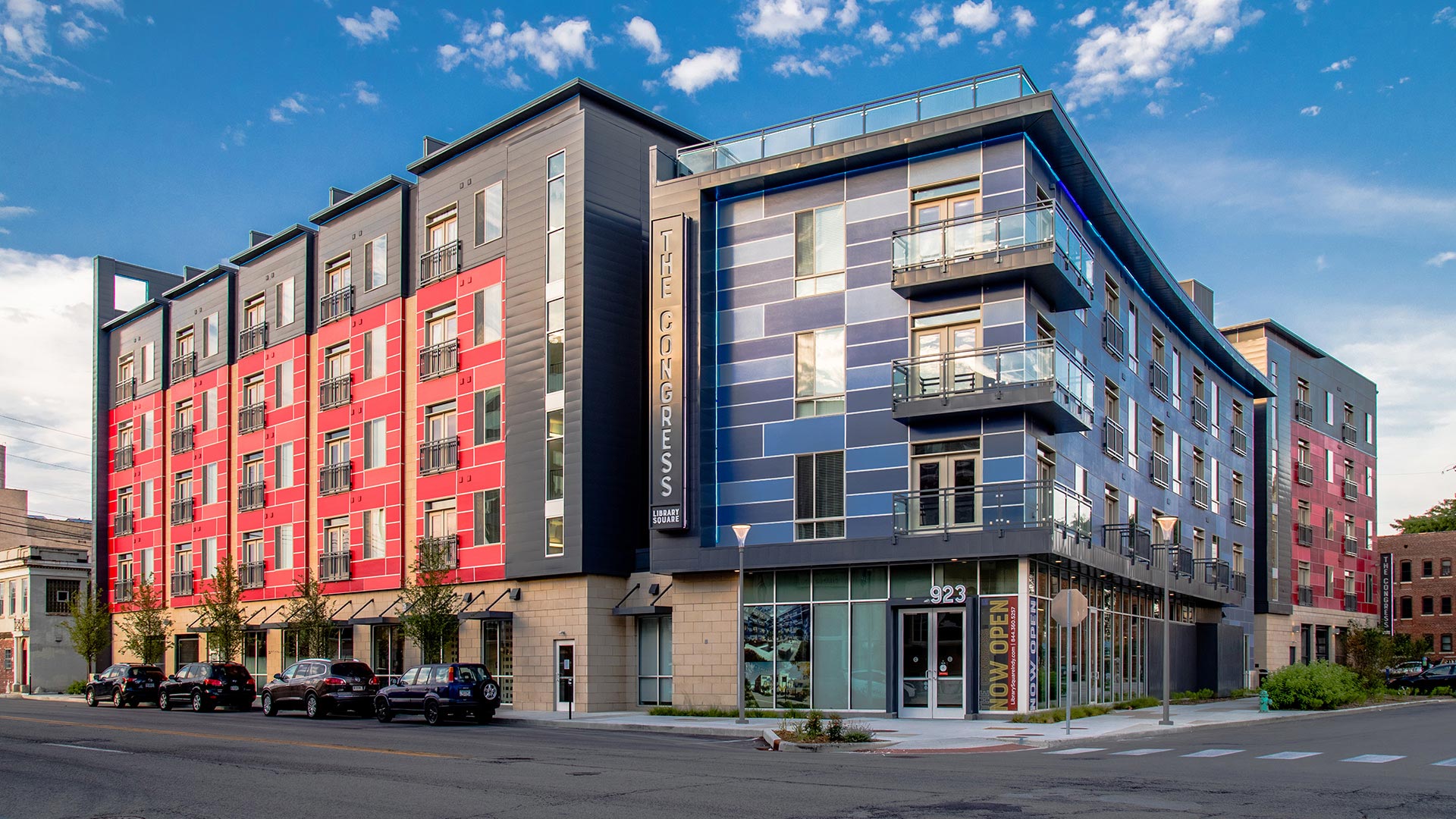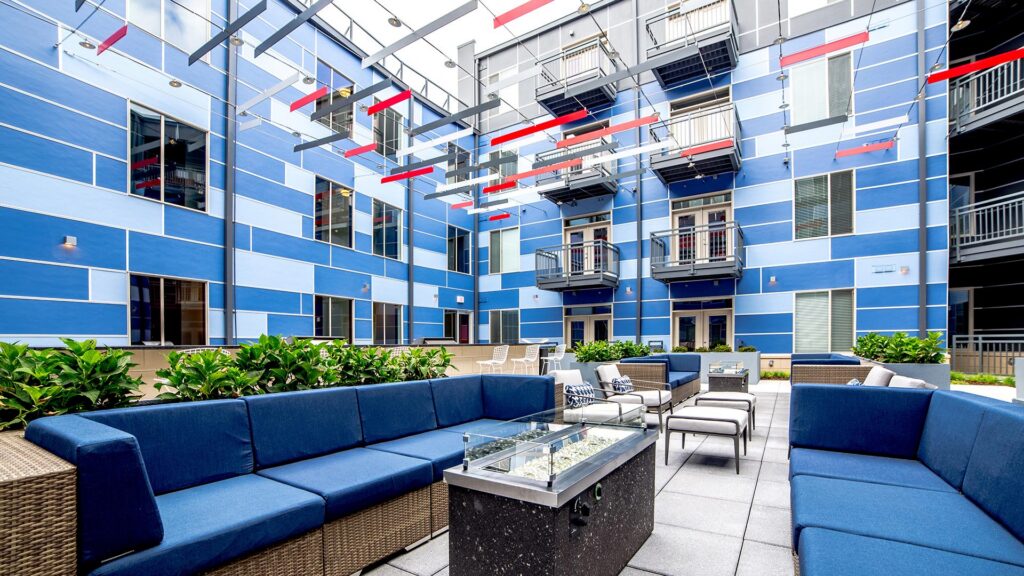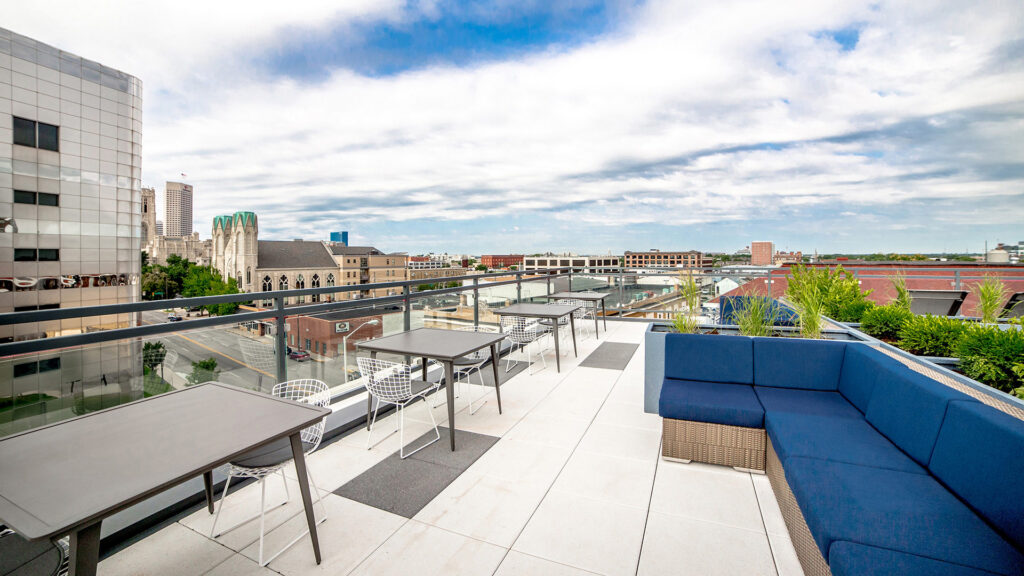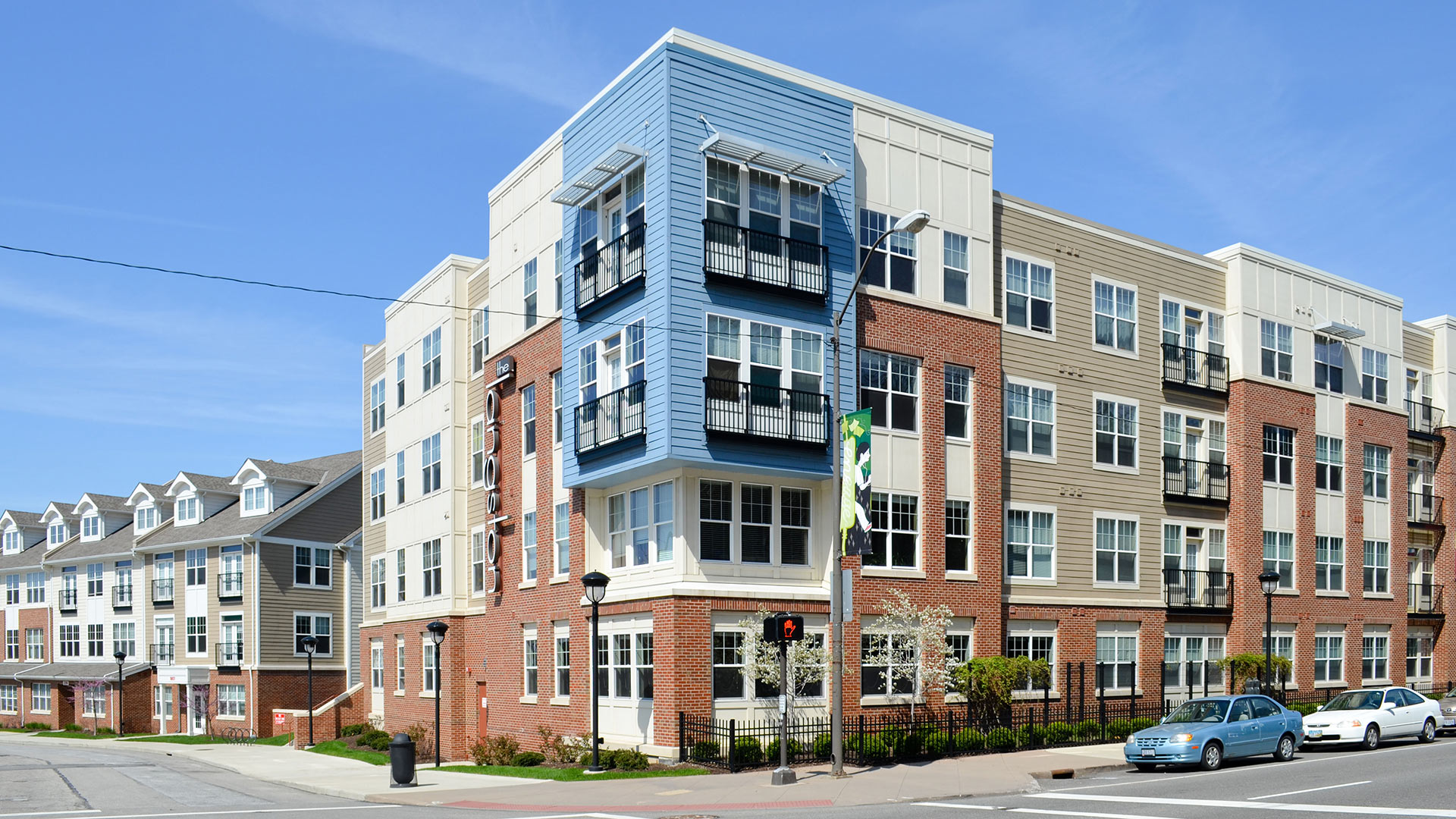
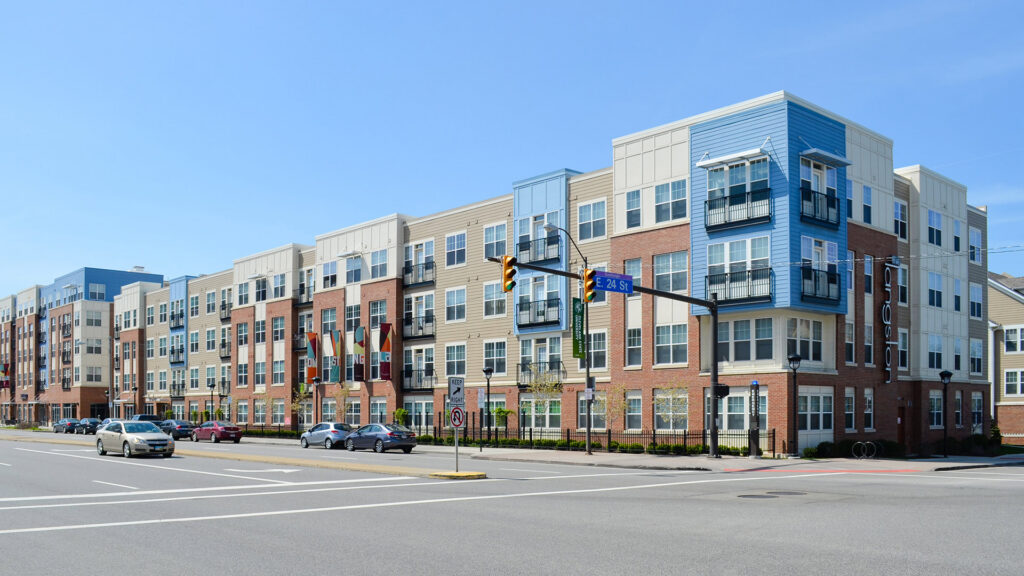
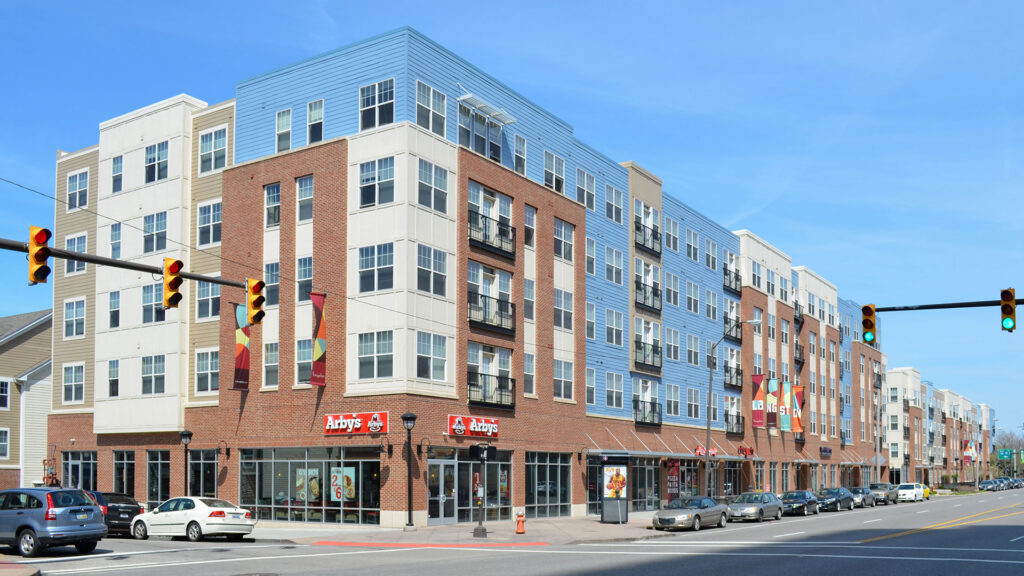
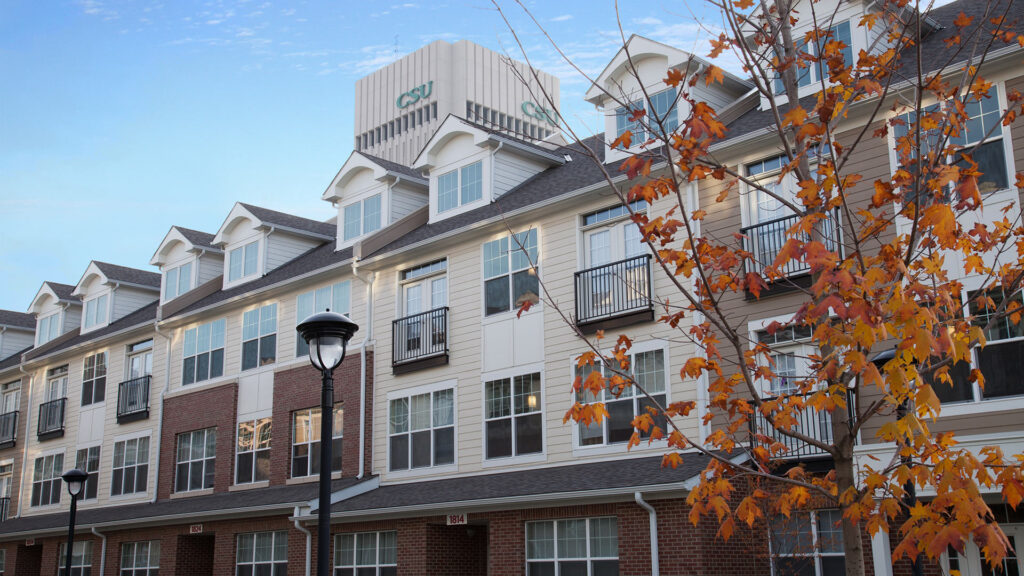
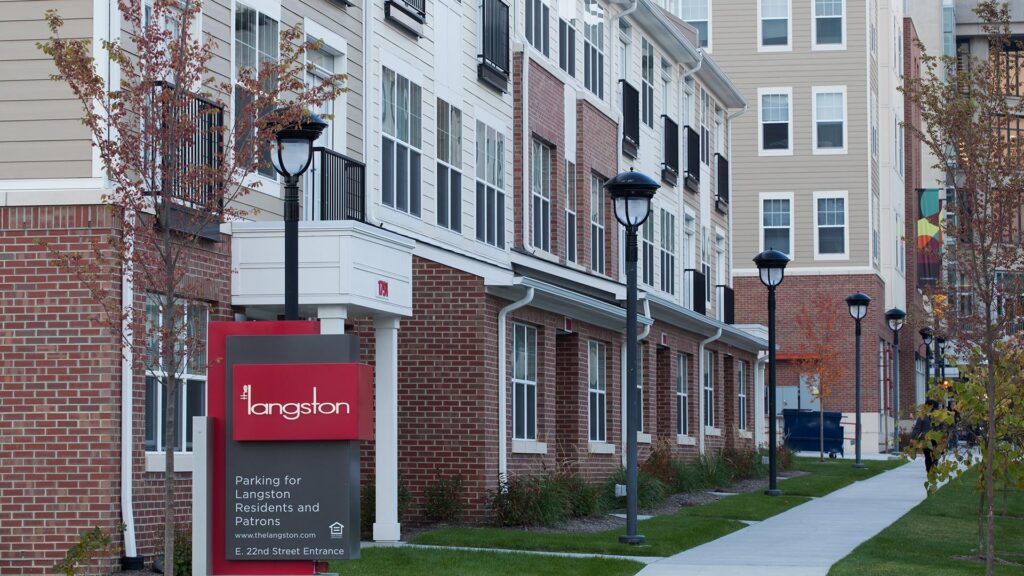
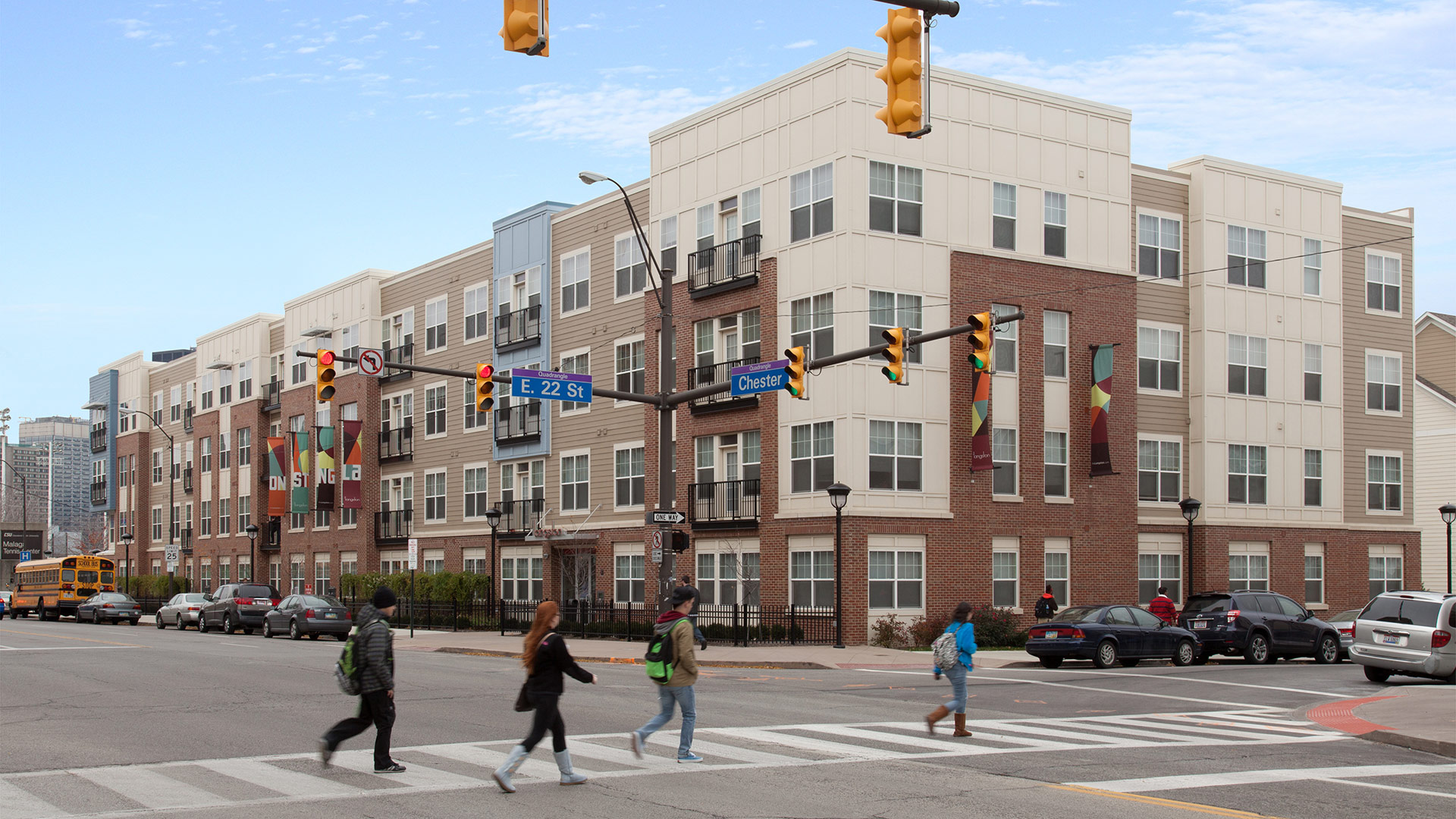

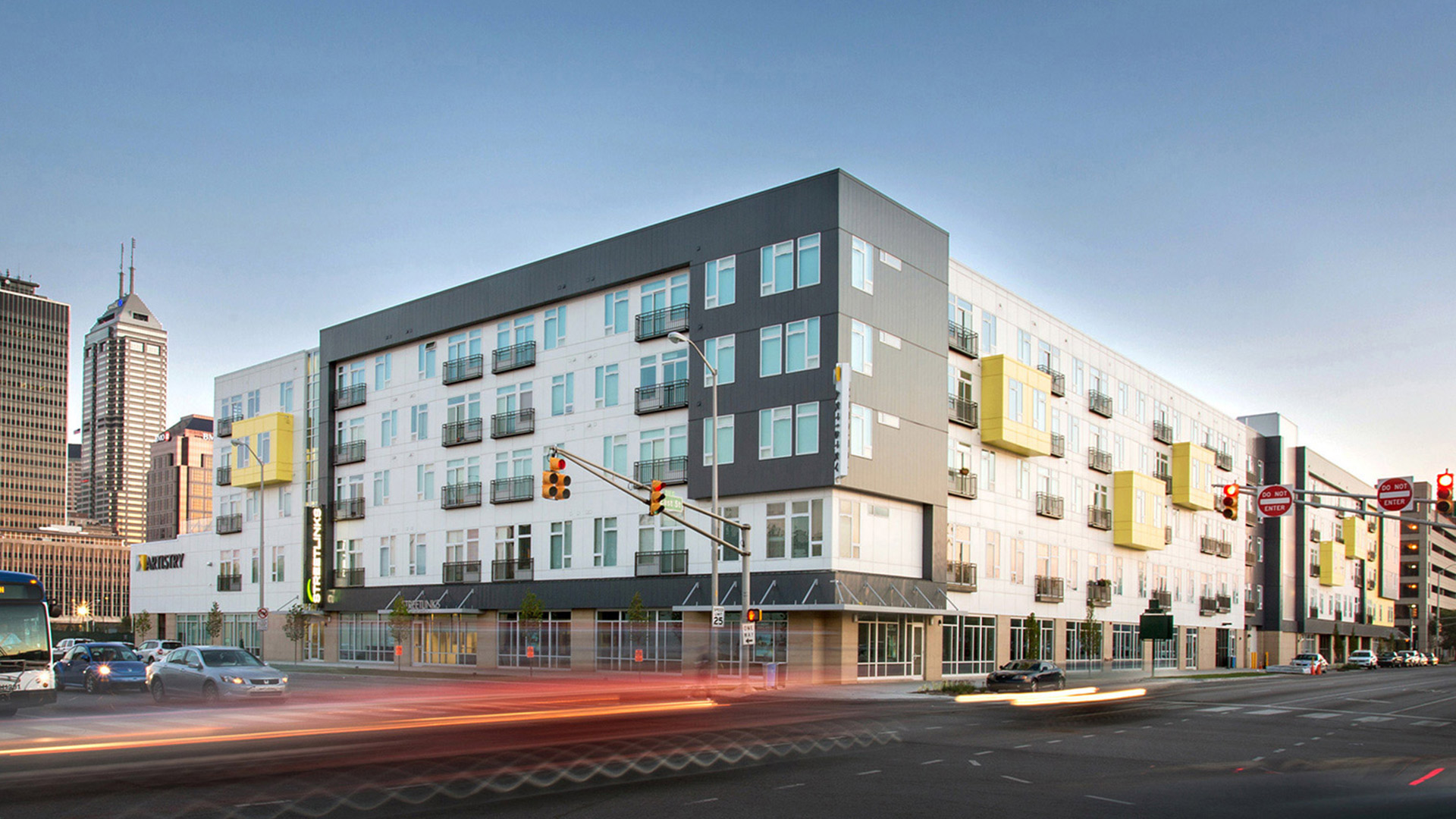
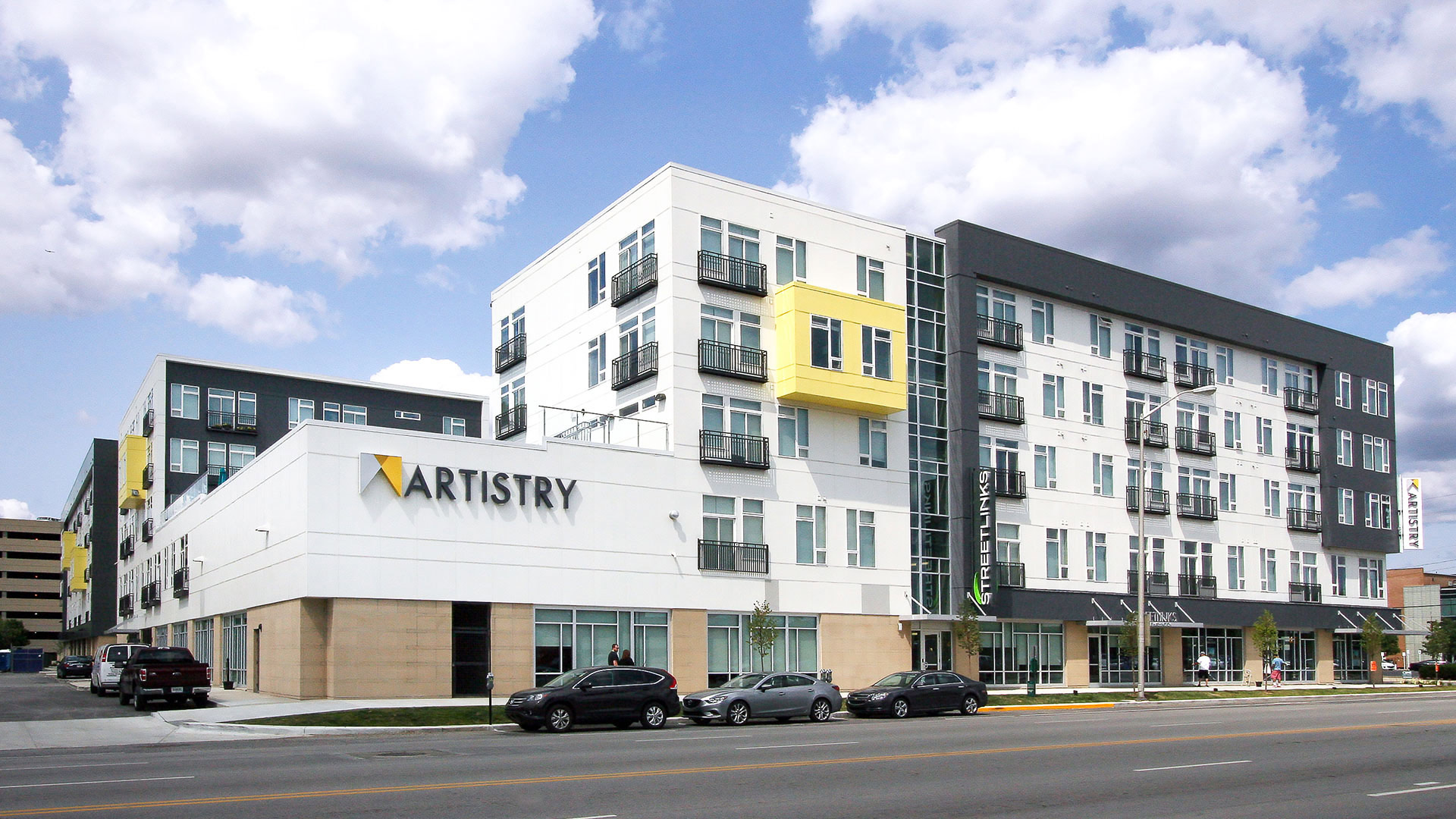
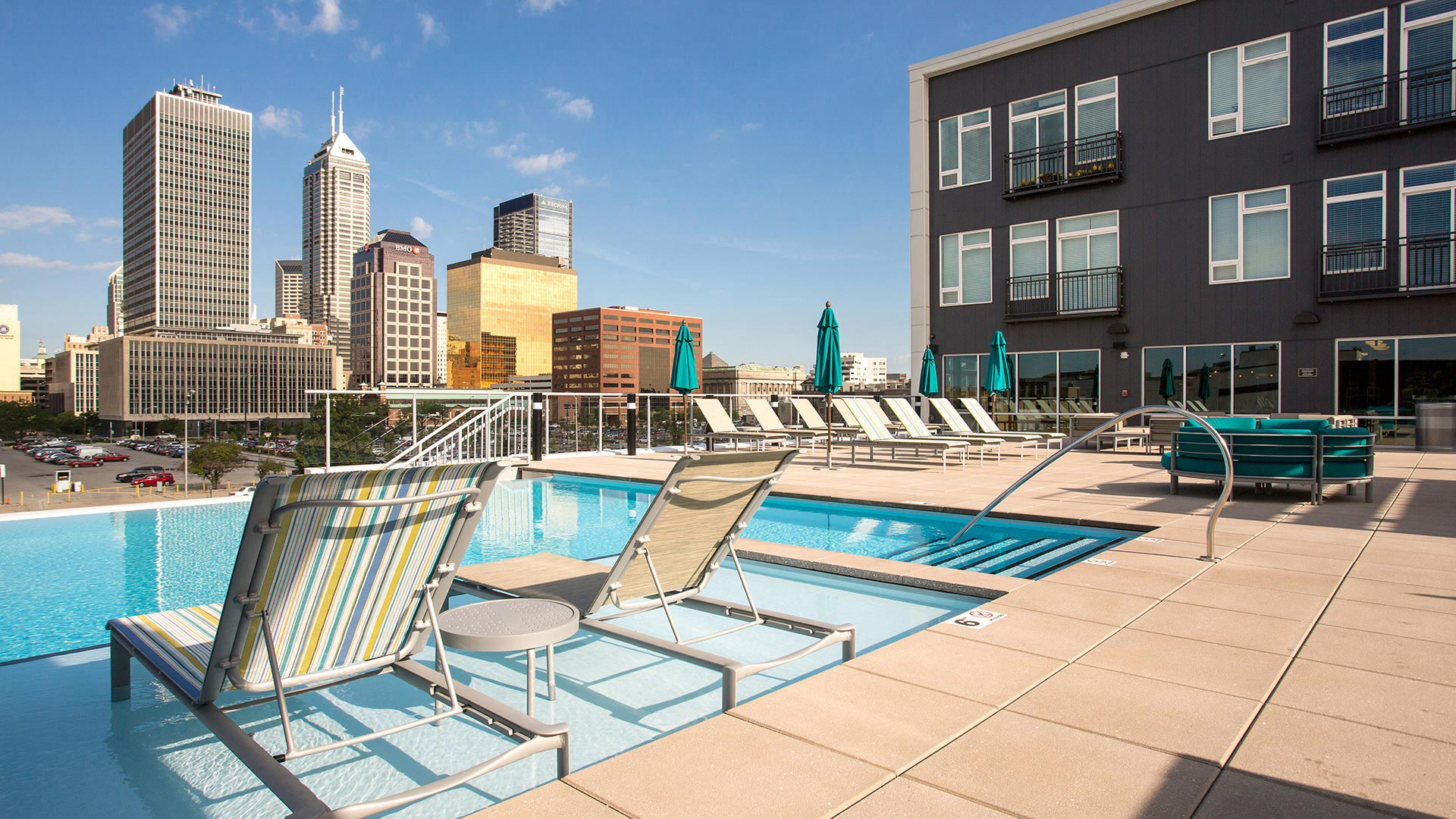
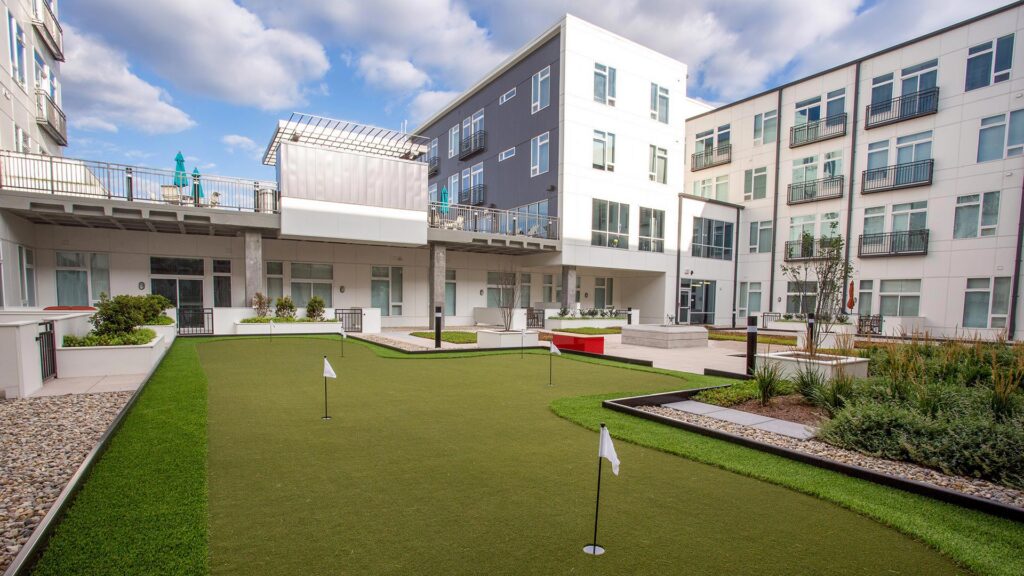
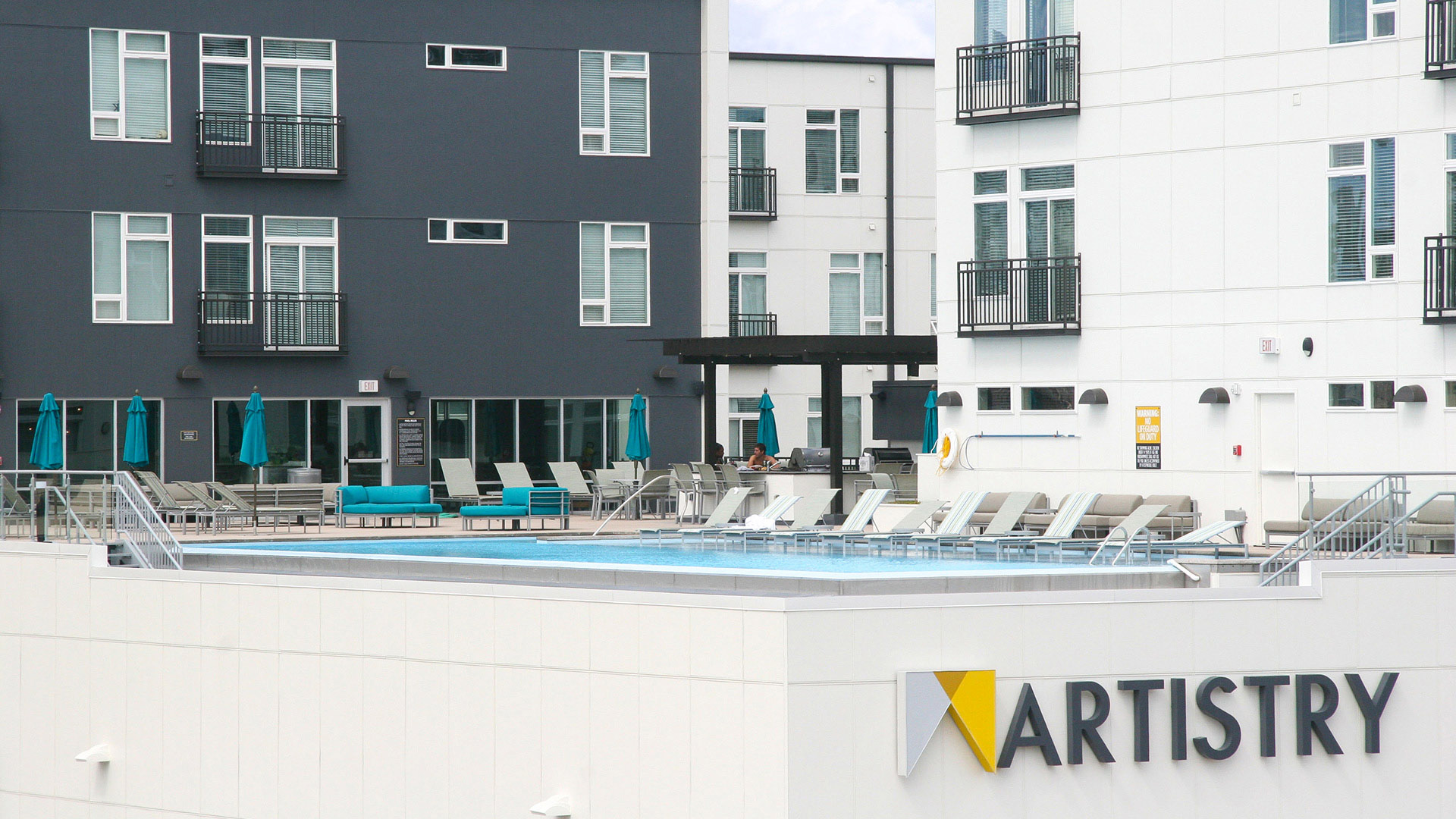
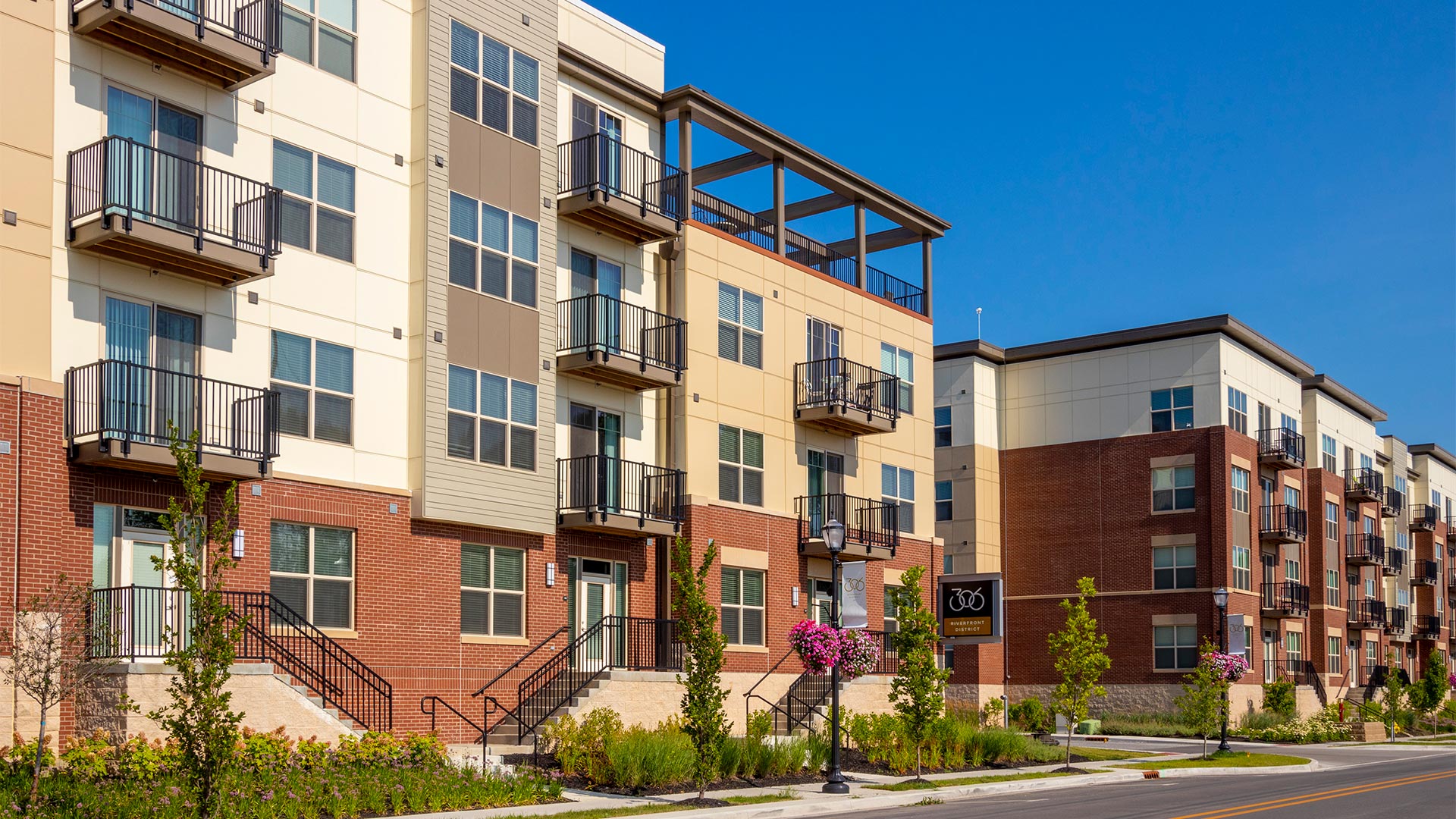
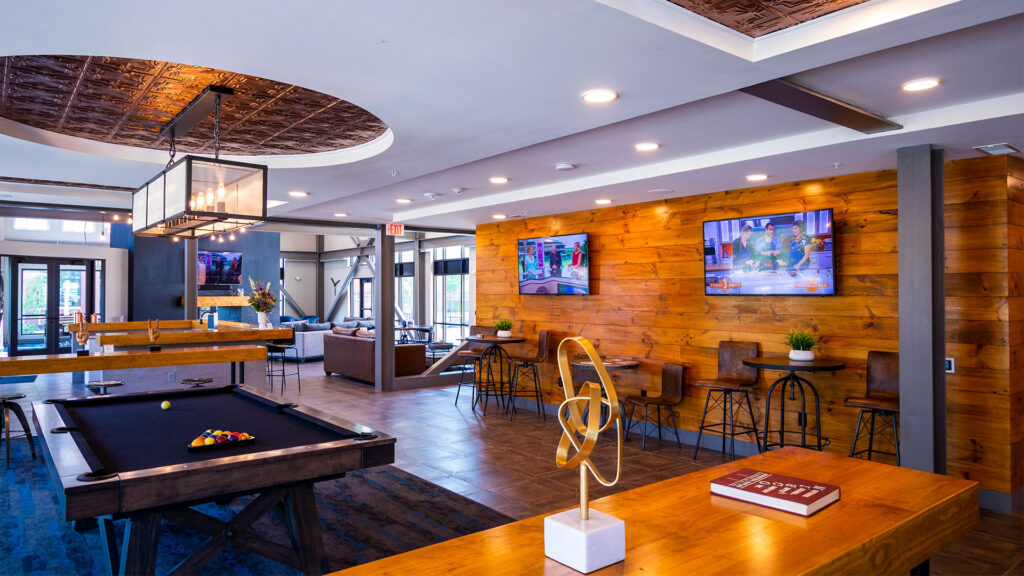
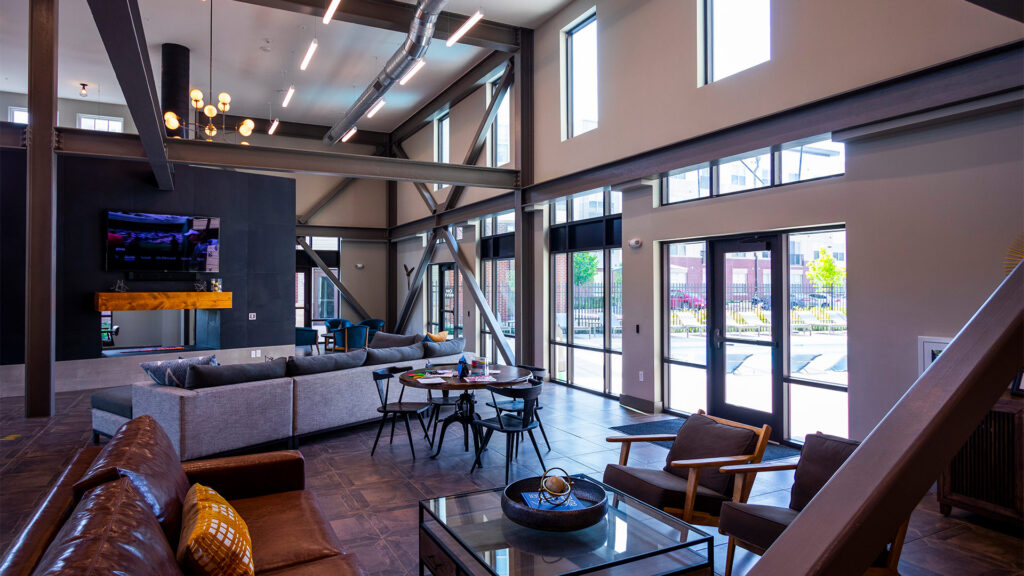
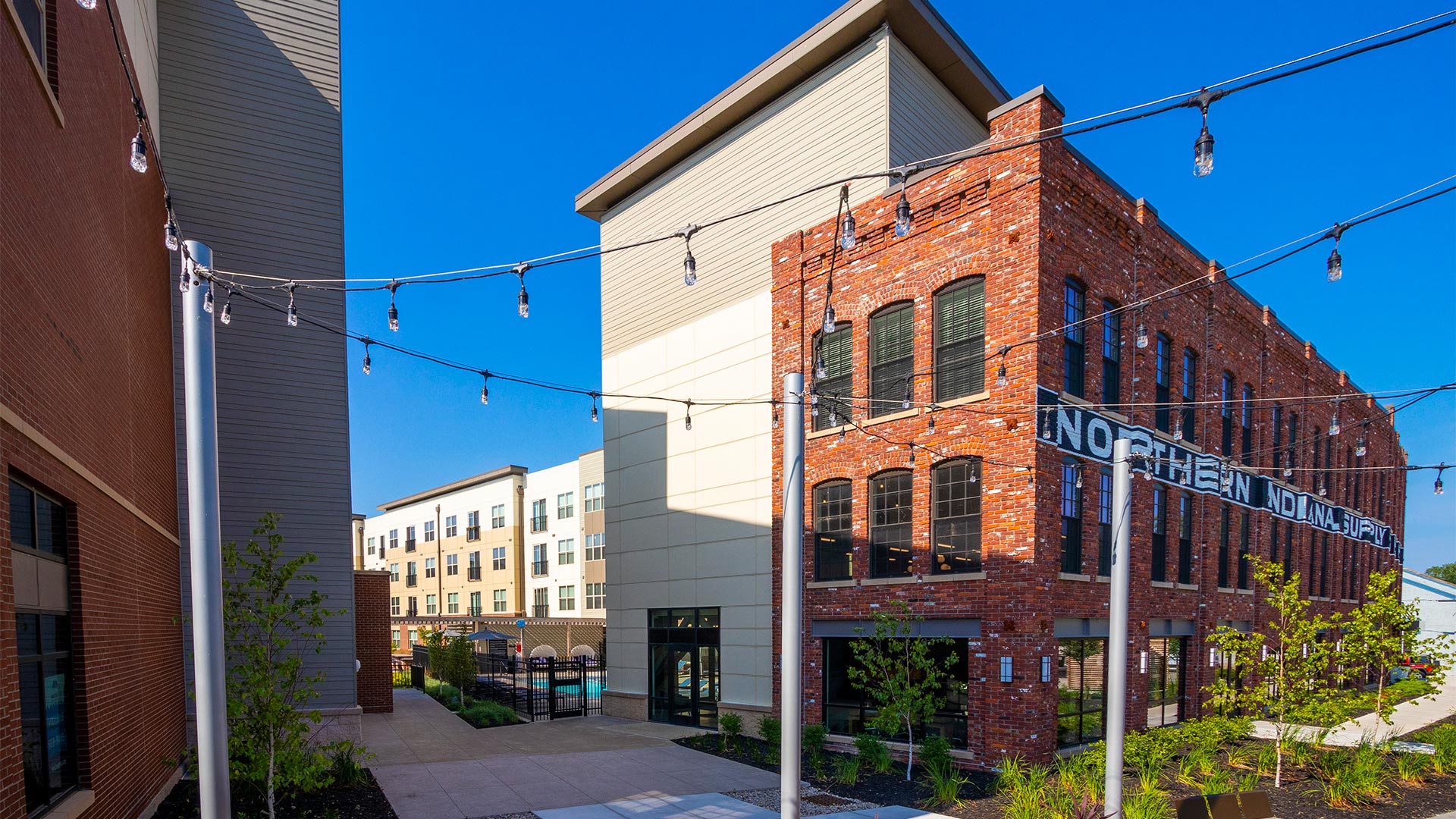
Phase I of the project was particularly challenging due to the owner’s intent to build up from an existing structure. The configuration of the existing structure required that designers incorporate a number of potentially awkward column locations. Ultimately, this became a feature of the building design as the column placement dictated a wide array of residential unit variations and influenced the façade. By addressing these challenges with unique design solutions, the owner can offer tenants more layout options and the building boasts a more dynamic façade that brings new life to the streetscape. An open third floor pool and recreation deck provides dramatic views of the downtown area for all residents along with two interior courtyards featuring a fountain, vegetable garden, bocce court, and putting green.
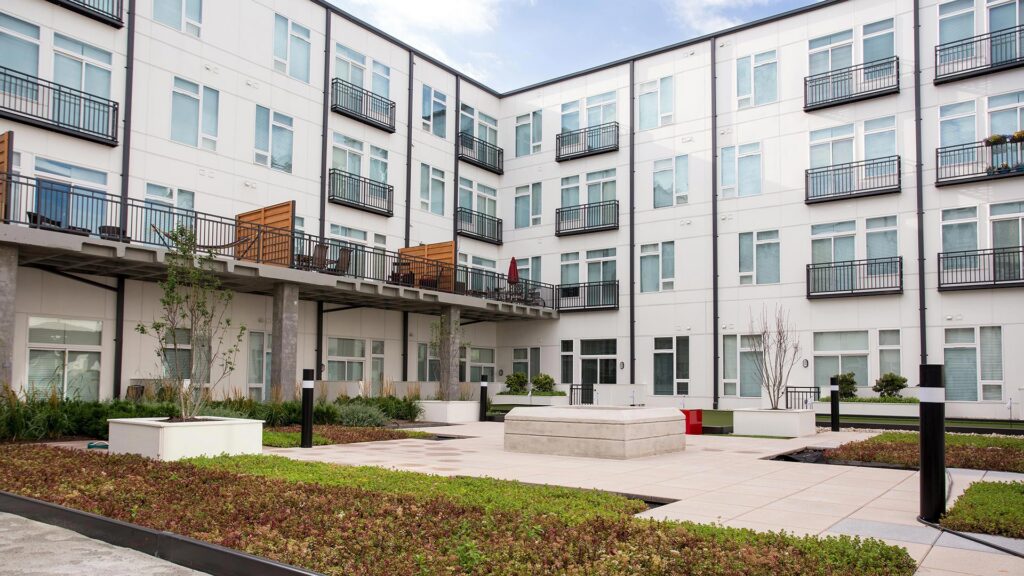
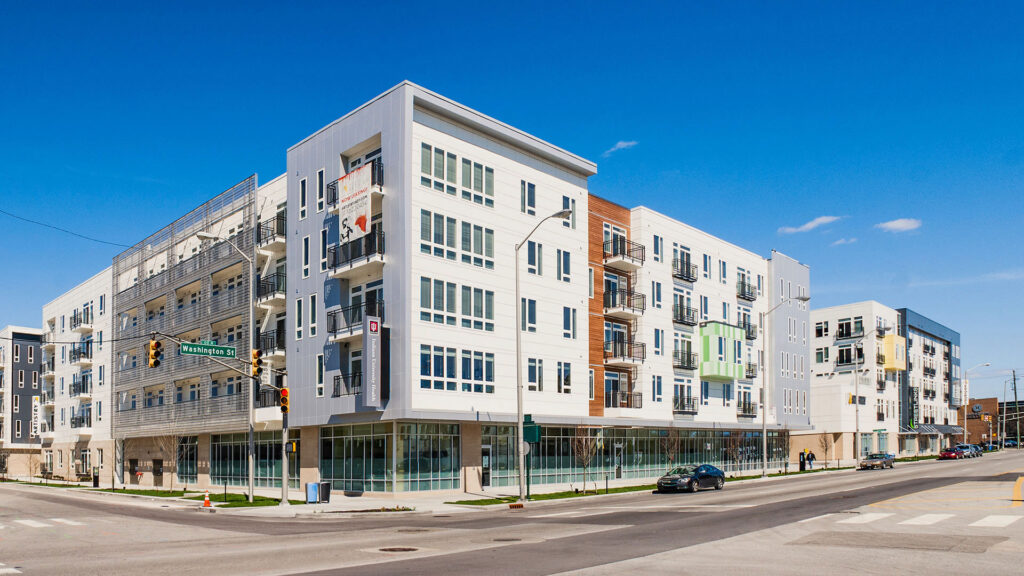
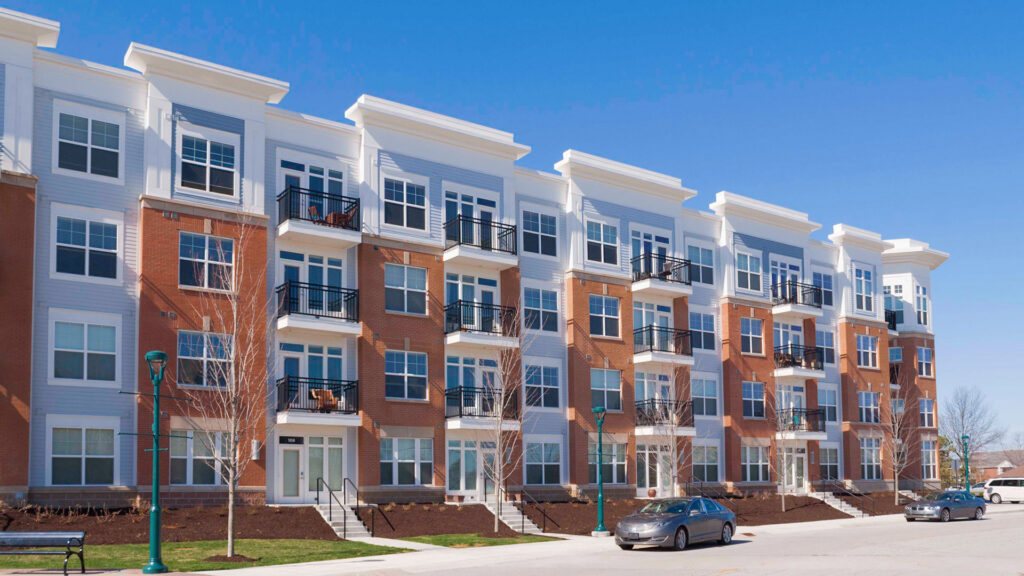
CSO went on to design Phase 2 of the project, which involved the addition of two buildings, the Mentor and Muse at Artistry, which provide additional living options to fit different types of lifestyles, including 354 square foot eco-suites for those who need minimal space.
,

This development will enhance economic growth in the area and will draw new residents to the city. We need diverse, unique housing to retain and attract residents. “
–Kokomo Mayor Greg Goodnight

,


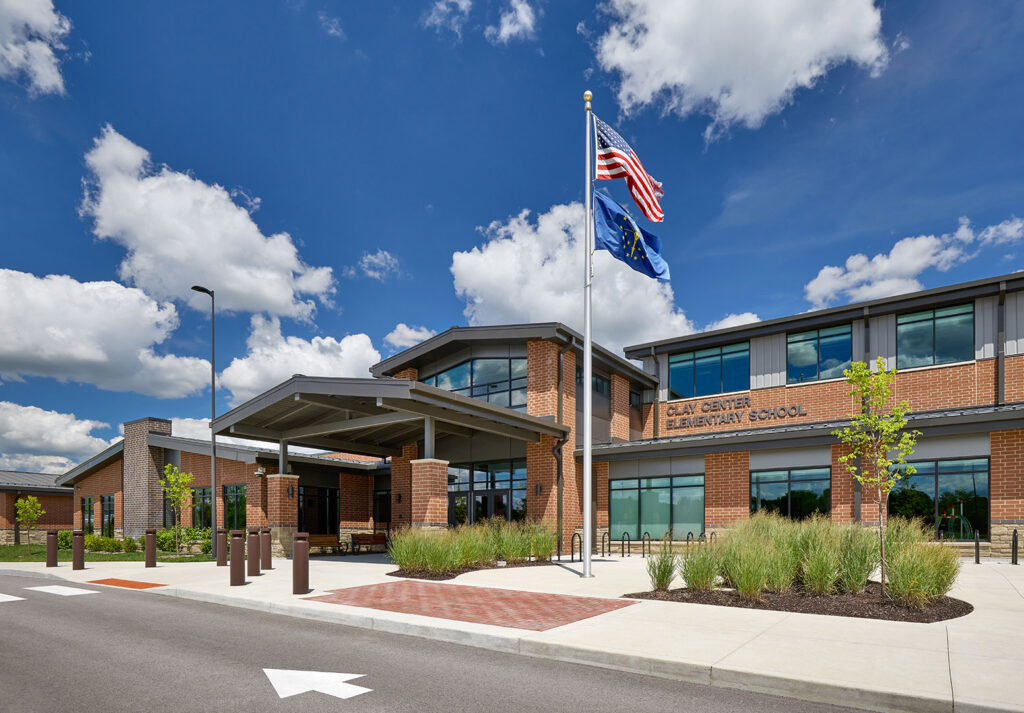
Colorful corridors lead to each learning neighborhood, consisting of a shared activity commons, 5 classrooms, and a learning lab courtyard.


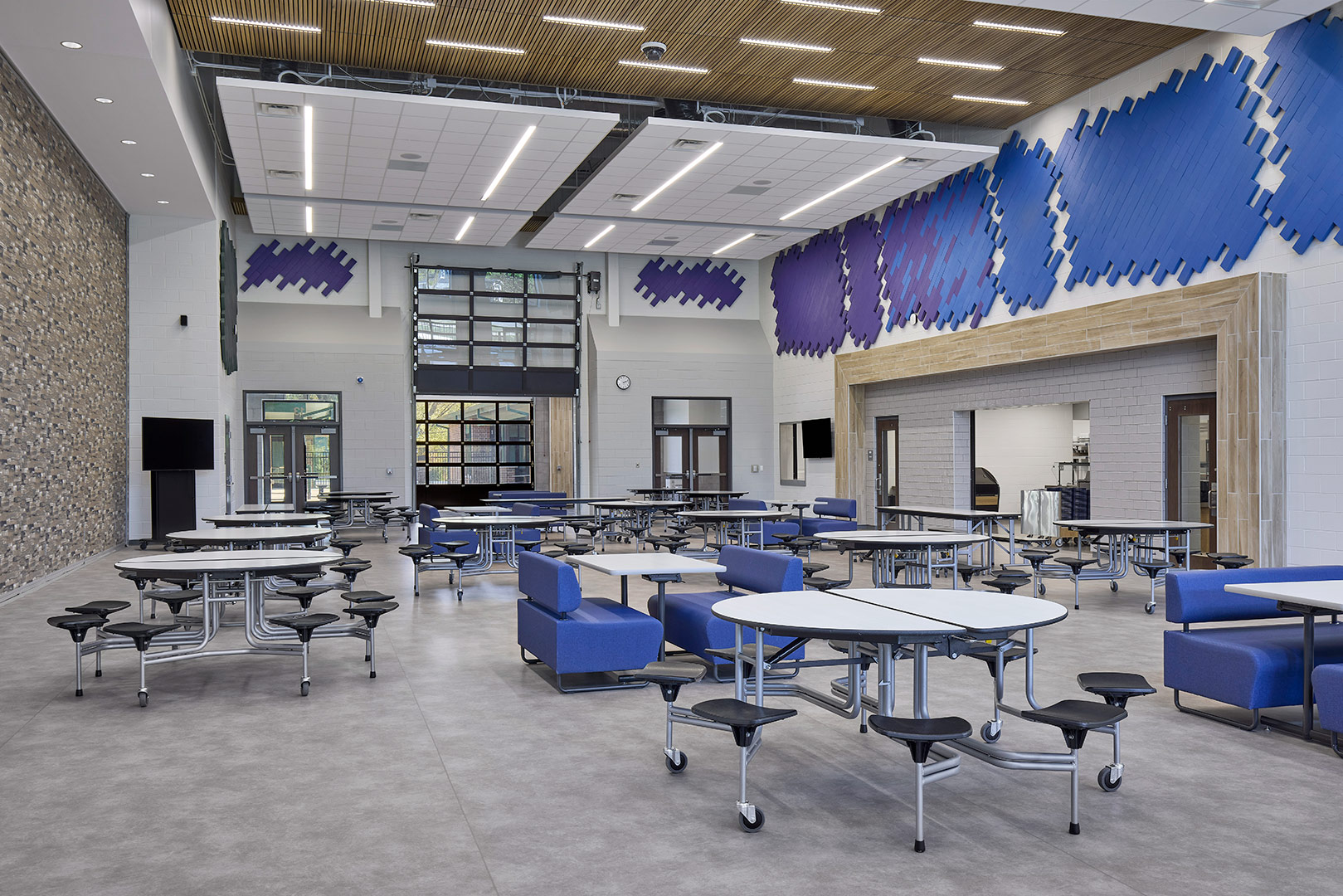
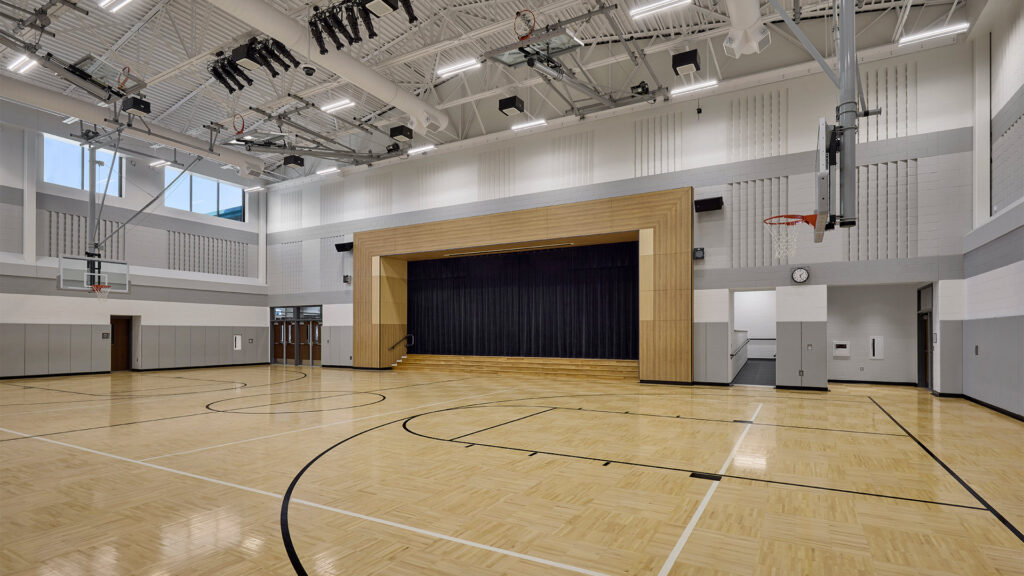
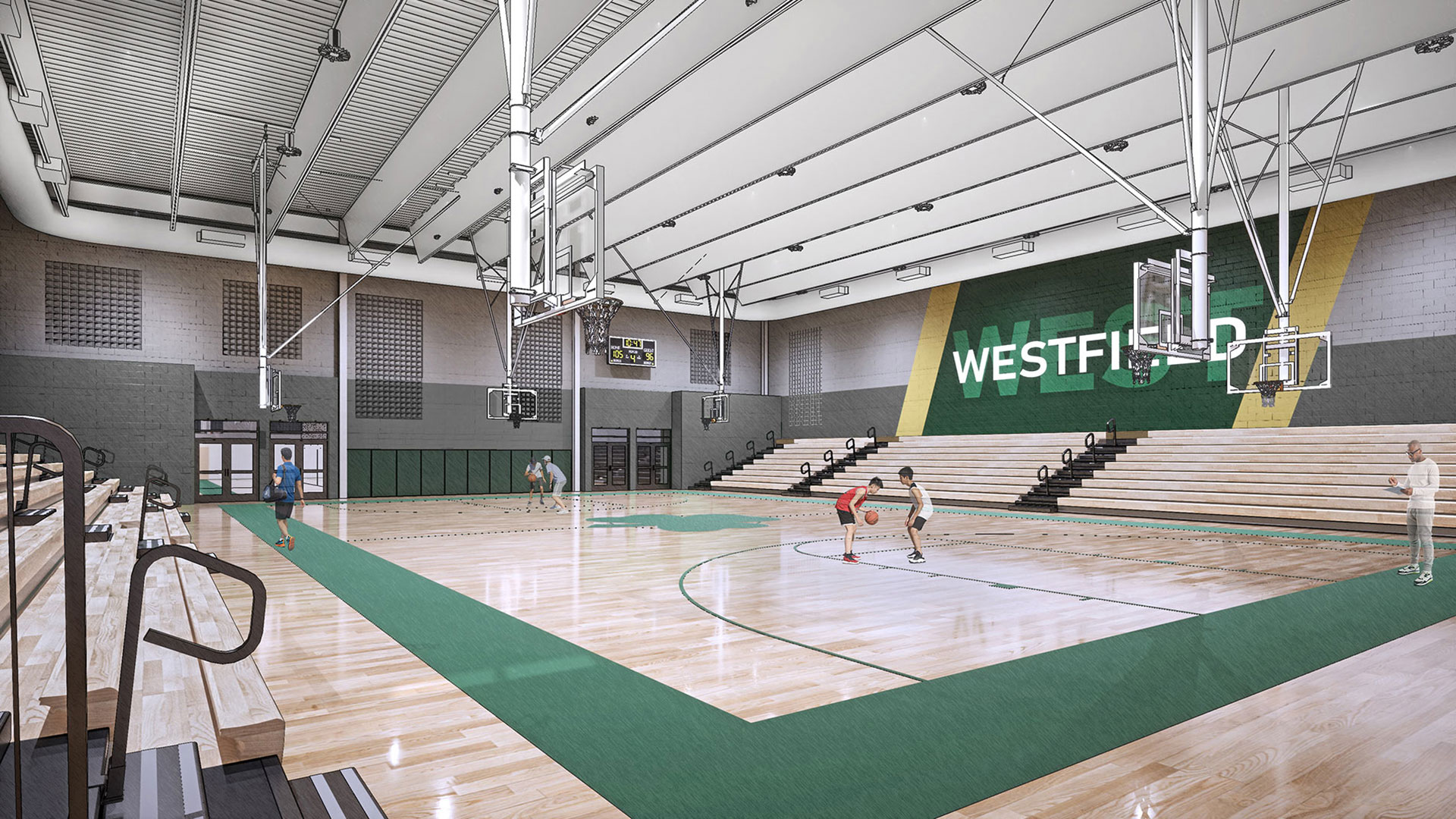
The cafeteria includes a multi-purpose stage—perfect for performances, assemblies, and more. An operable partition between the cafeteria and gym can be opened for additional space when hosting larger groups.

,
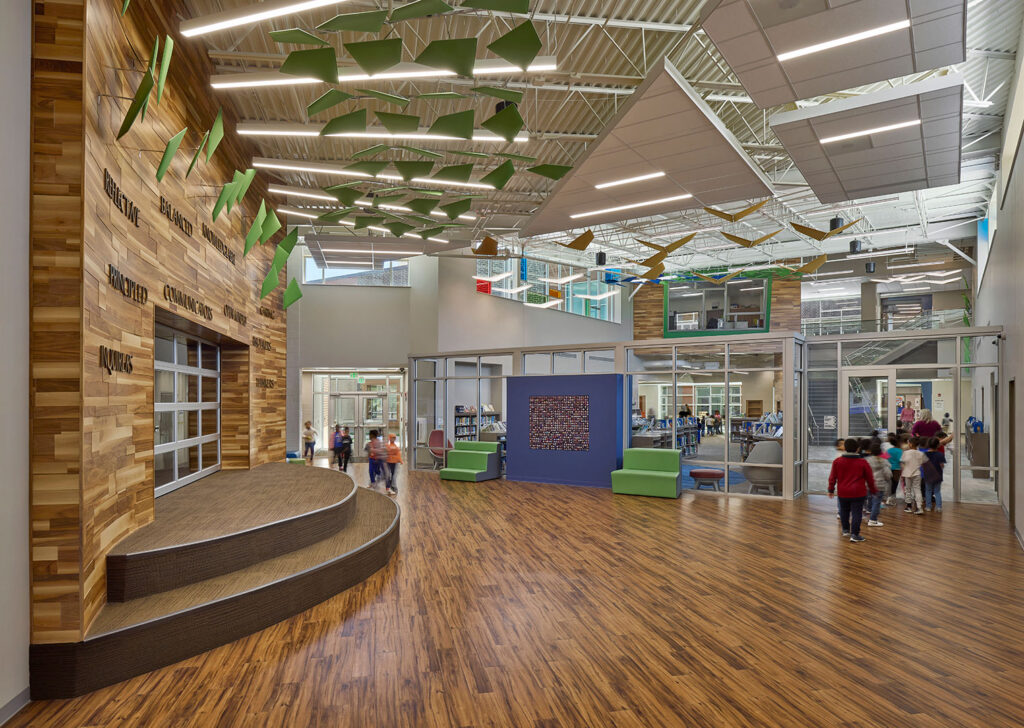
A multi-purpose stage supports performances and gatherings of all kinds.
For smaller events, one side of the stage opens up to the main lobby. For larger events, the opposite side of the stage opens up to the cafeteria.
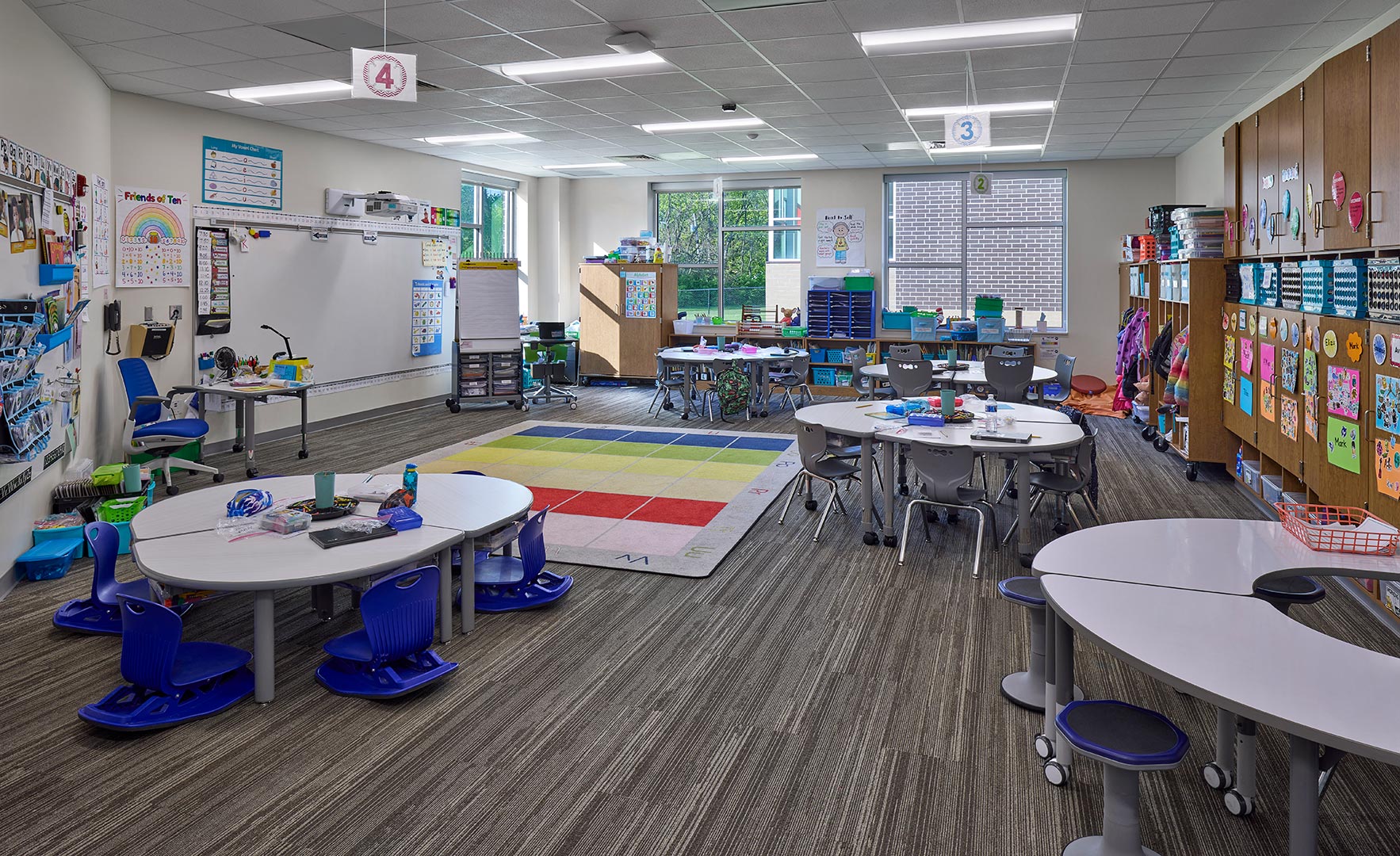
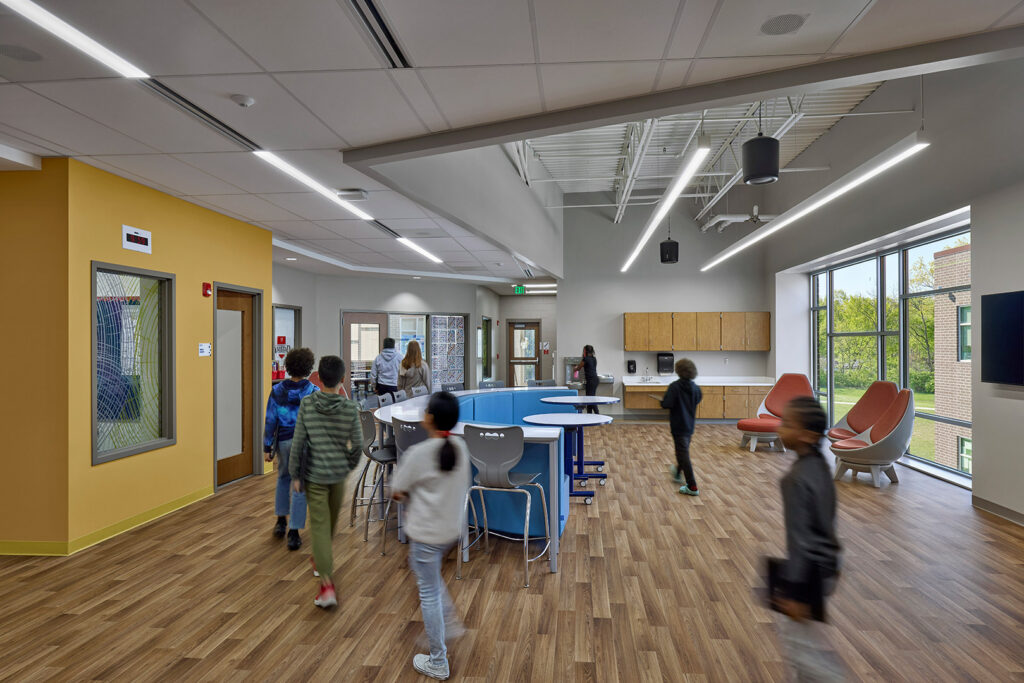
Each five-classroom learning neighborhood—one per grade level—includes a central activity area.

,
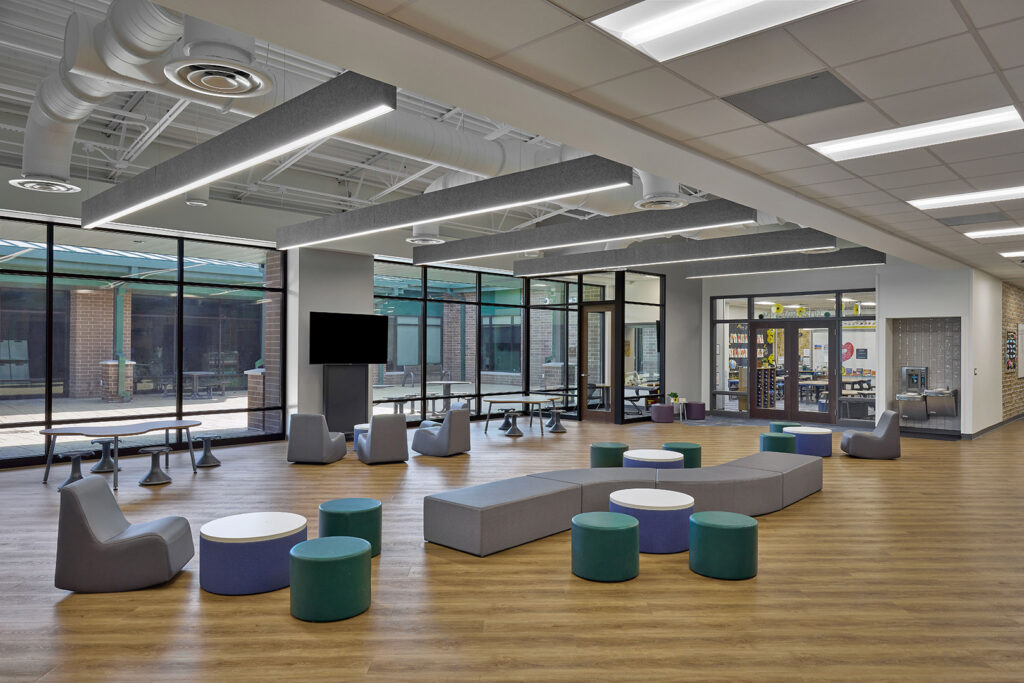
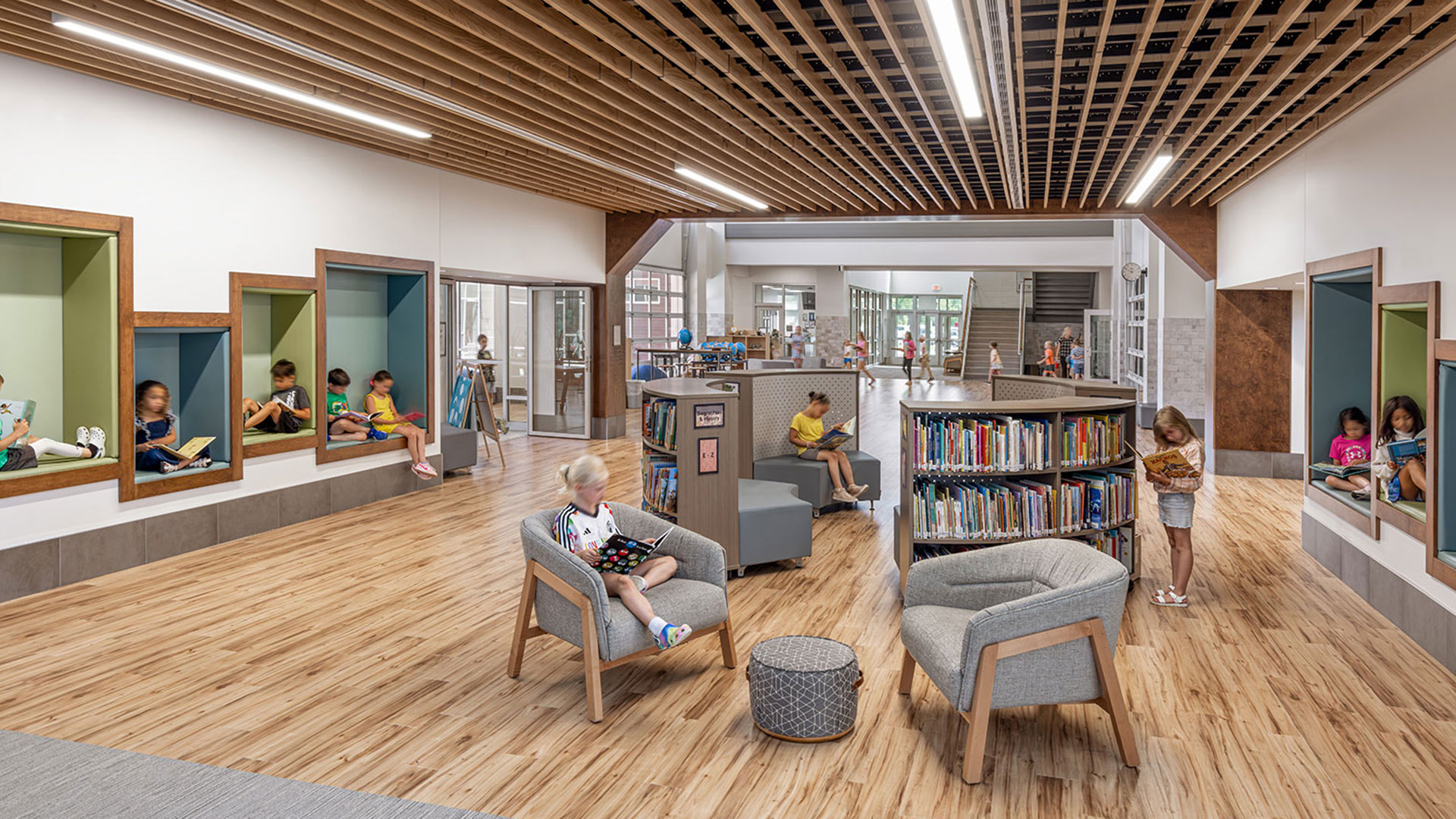
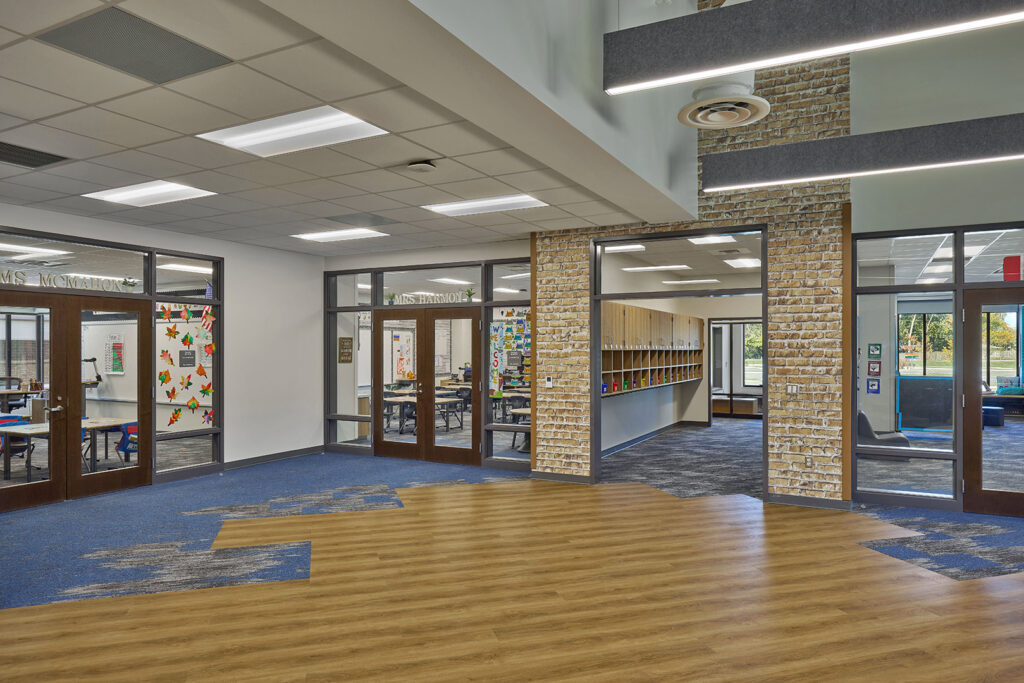
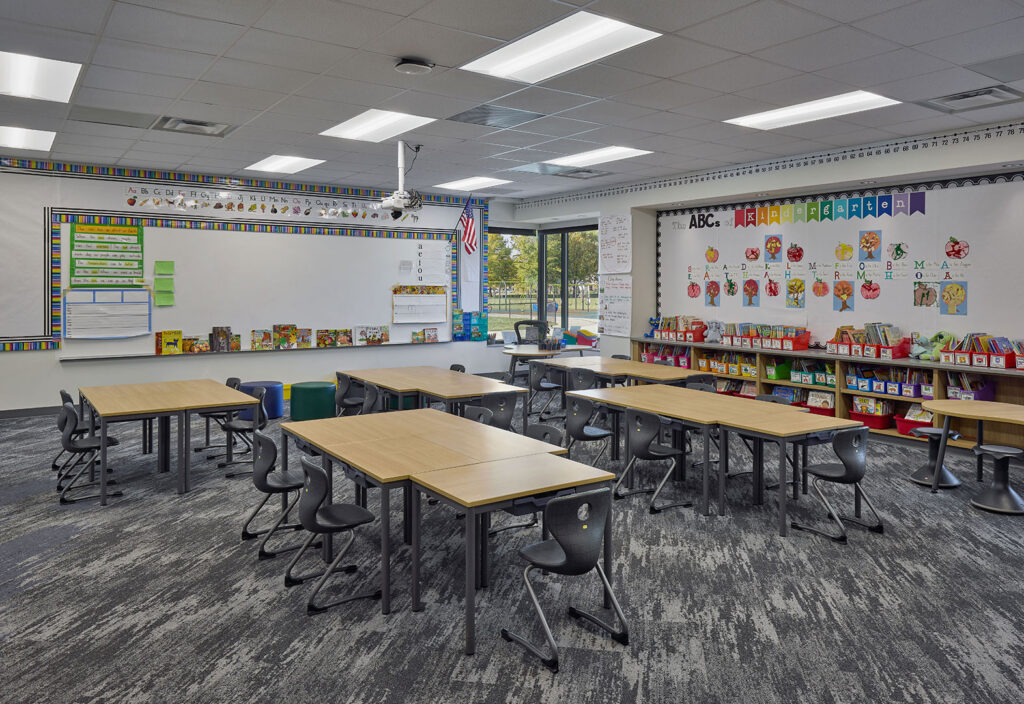
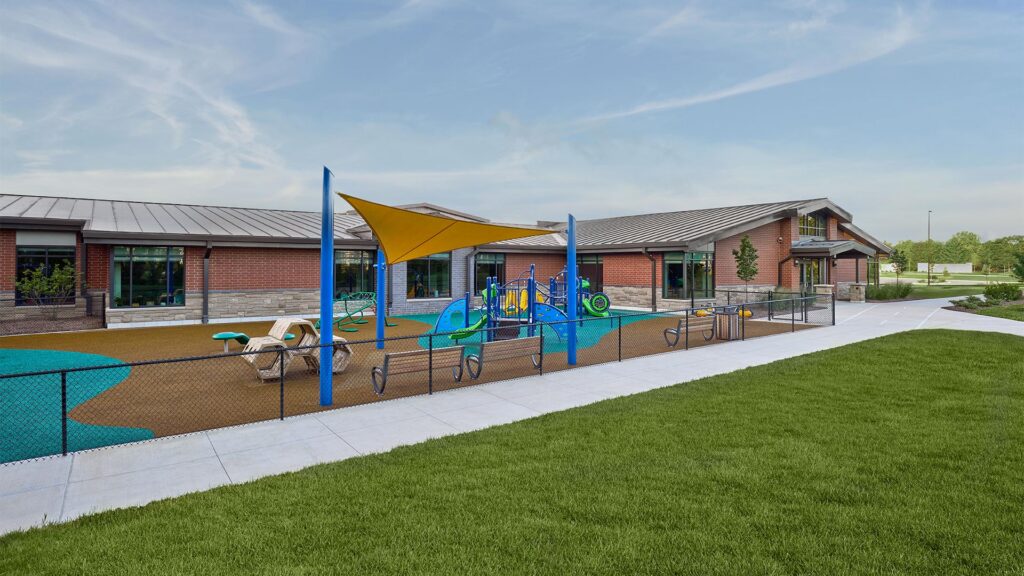
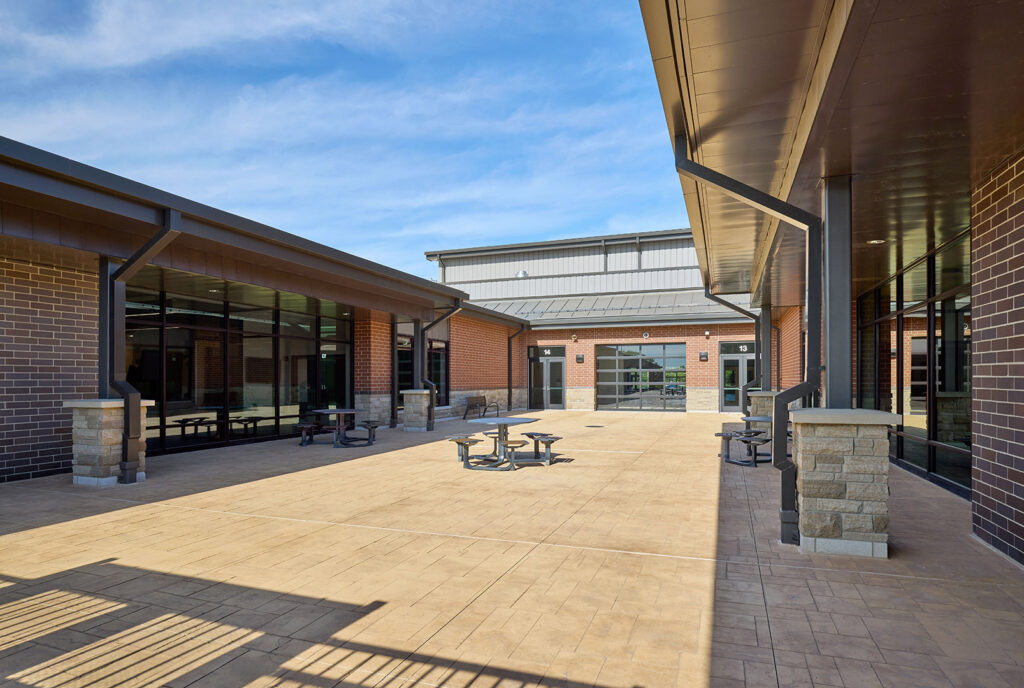
Grade-level neighborhoods consist of five classrooms with large glass doors that open to an activity commons space which overlooks a secure courtyard. Each pair of classrooms shares a small group room and cubby alcove for student storage.
,
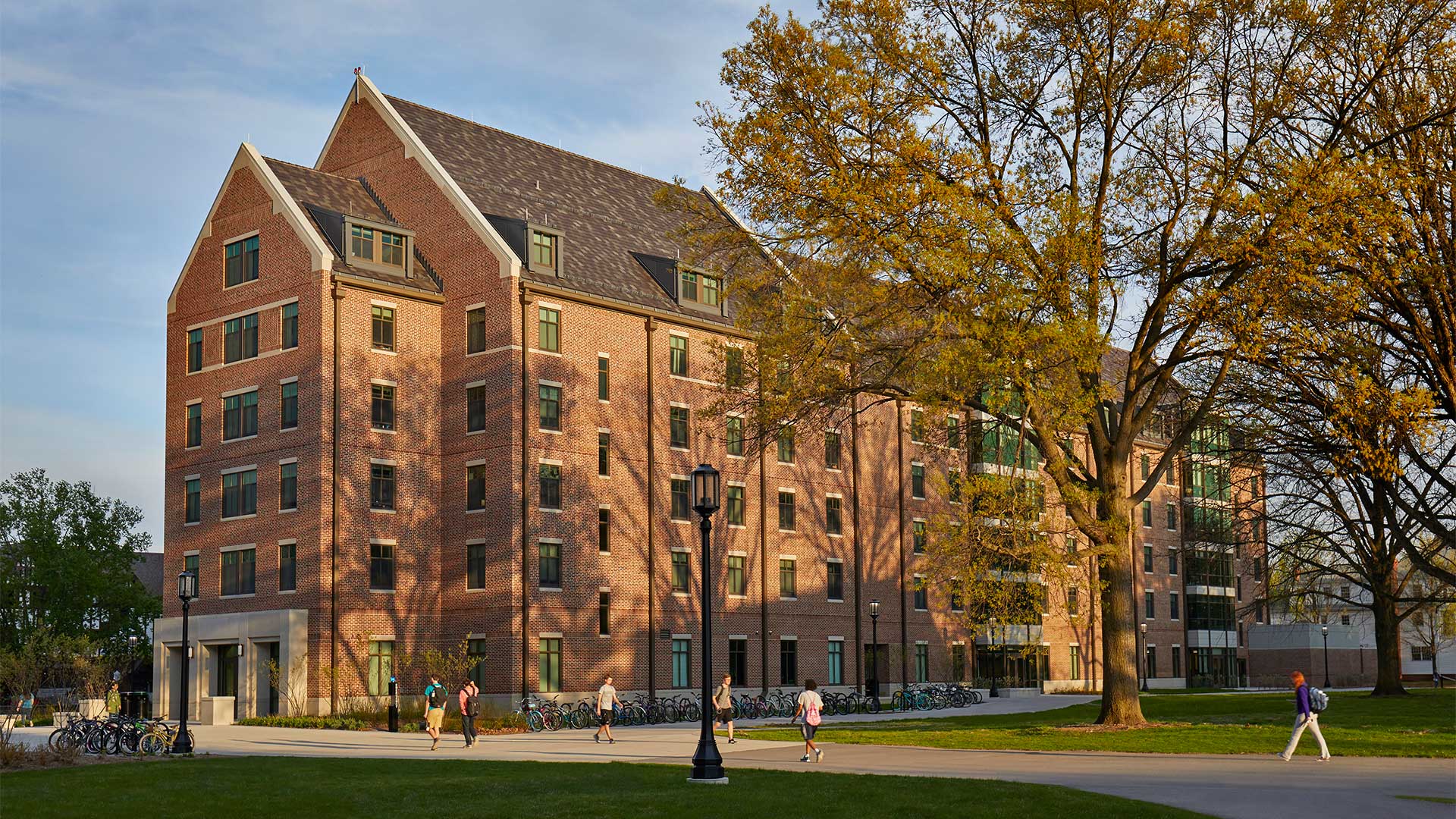
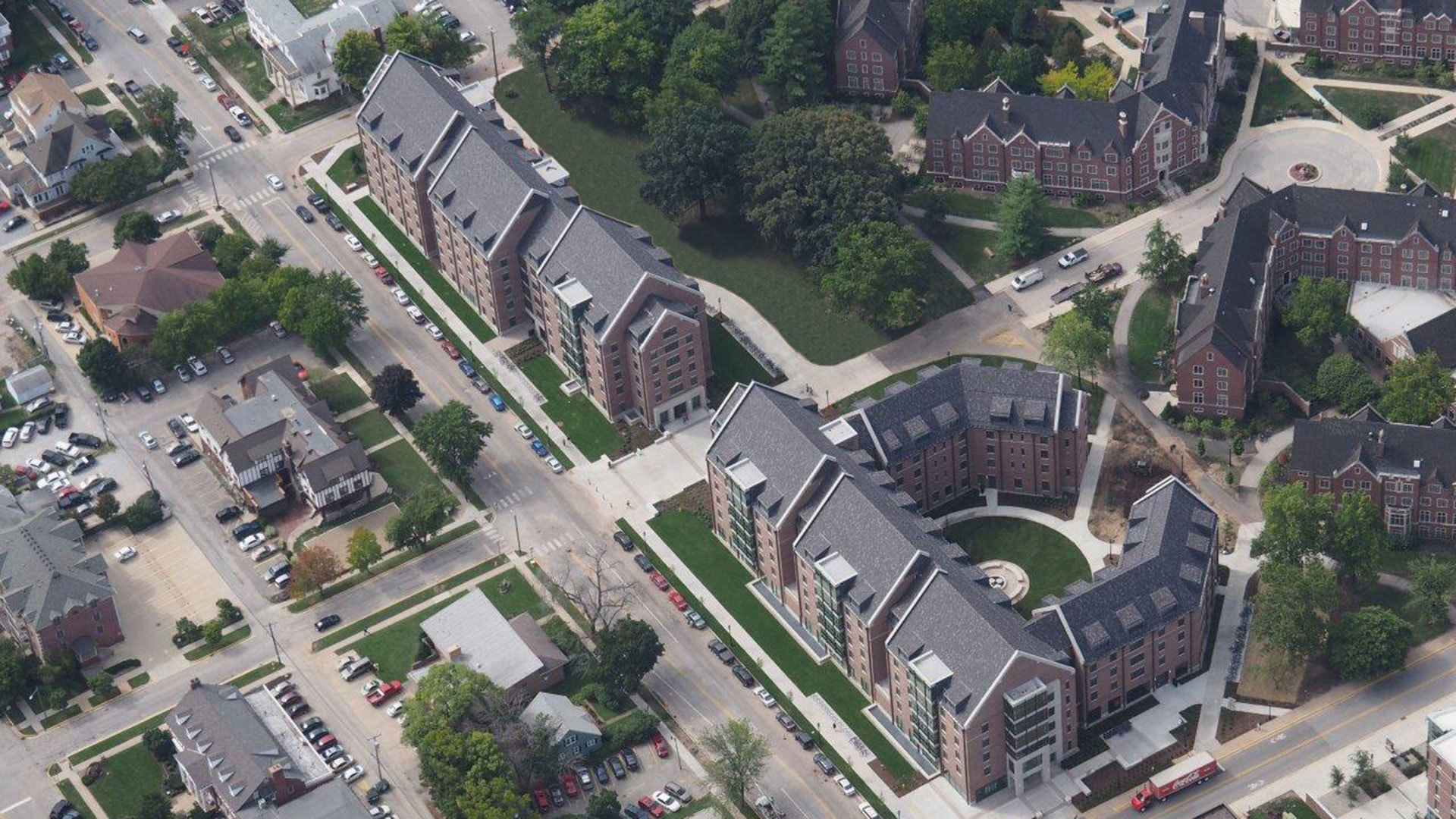
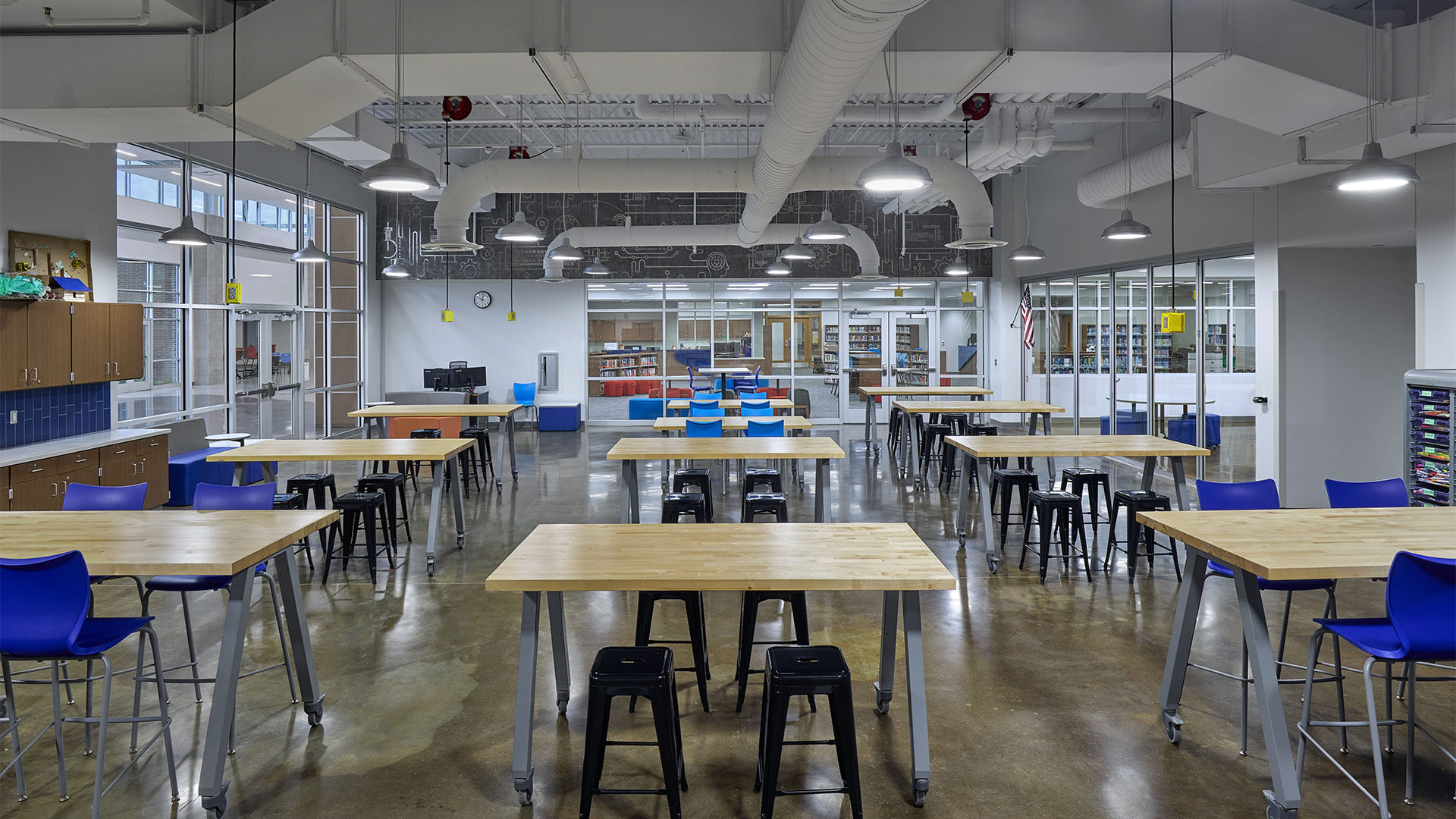
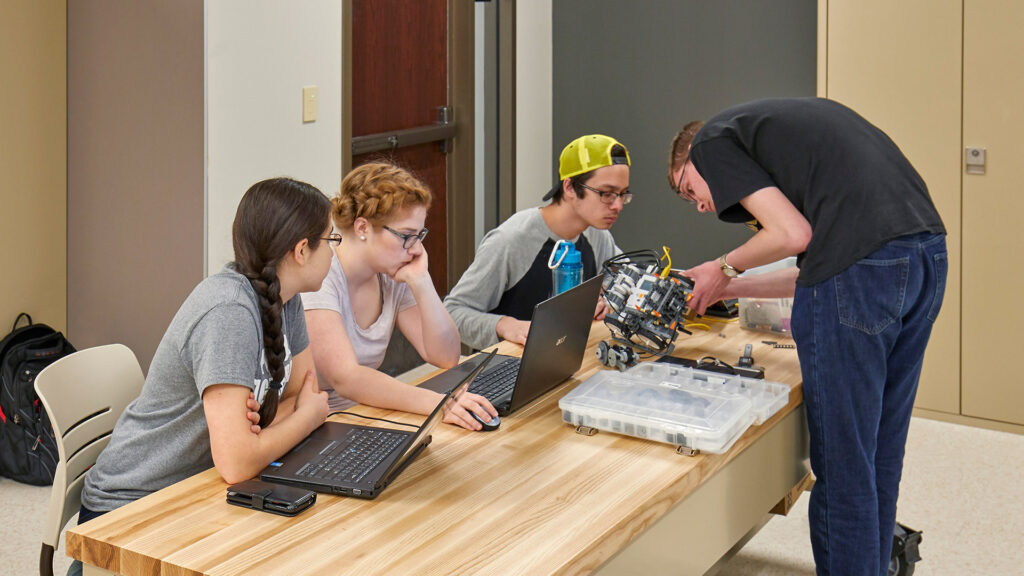
The academic spaces consist of approximately 40,000 square feet to accommodate faculty and staff offices, classrooms, innovation space, and study spaces. Learning and leadership opportunities include a STEAM (science, technology, engineering, arts and agriculture, math) research lab, active learning studios, and an Innovation Forum – featuring an interactive, programmable floor – provides a showcase for student projects.
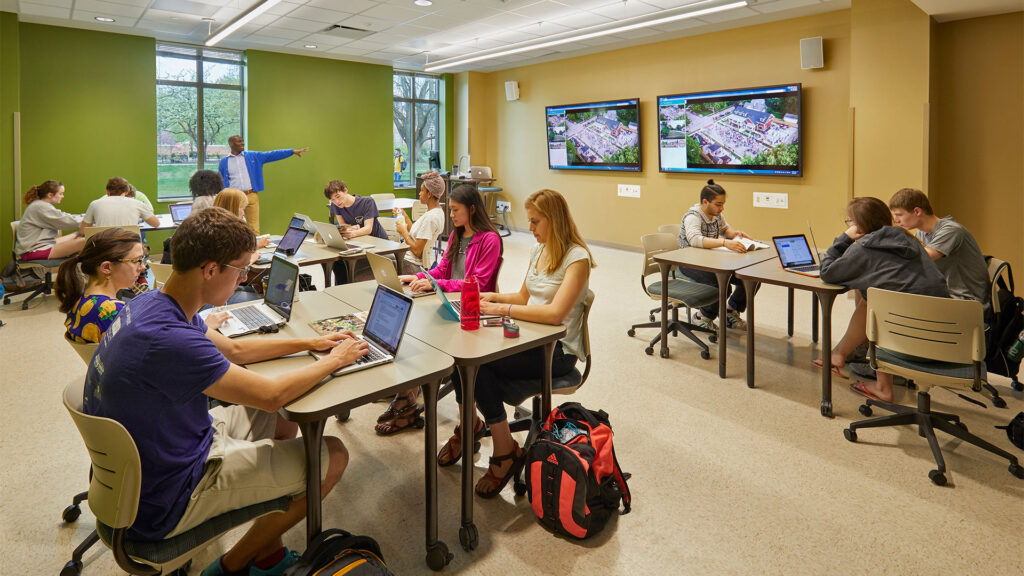
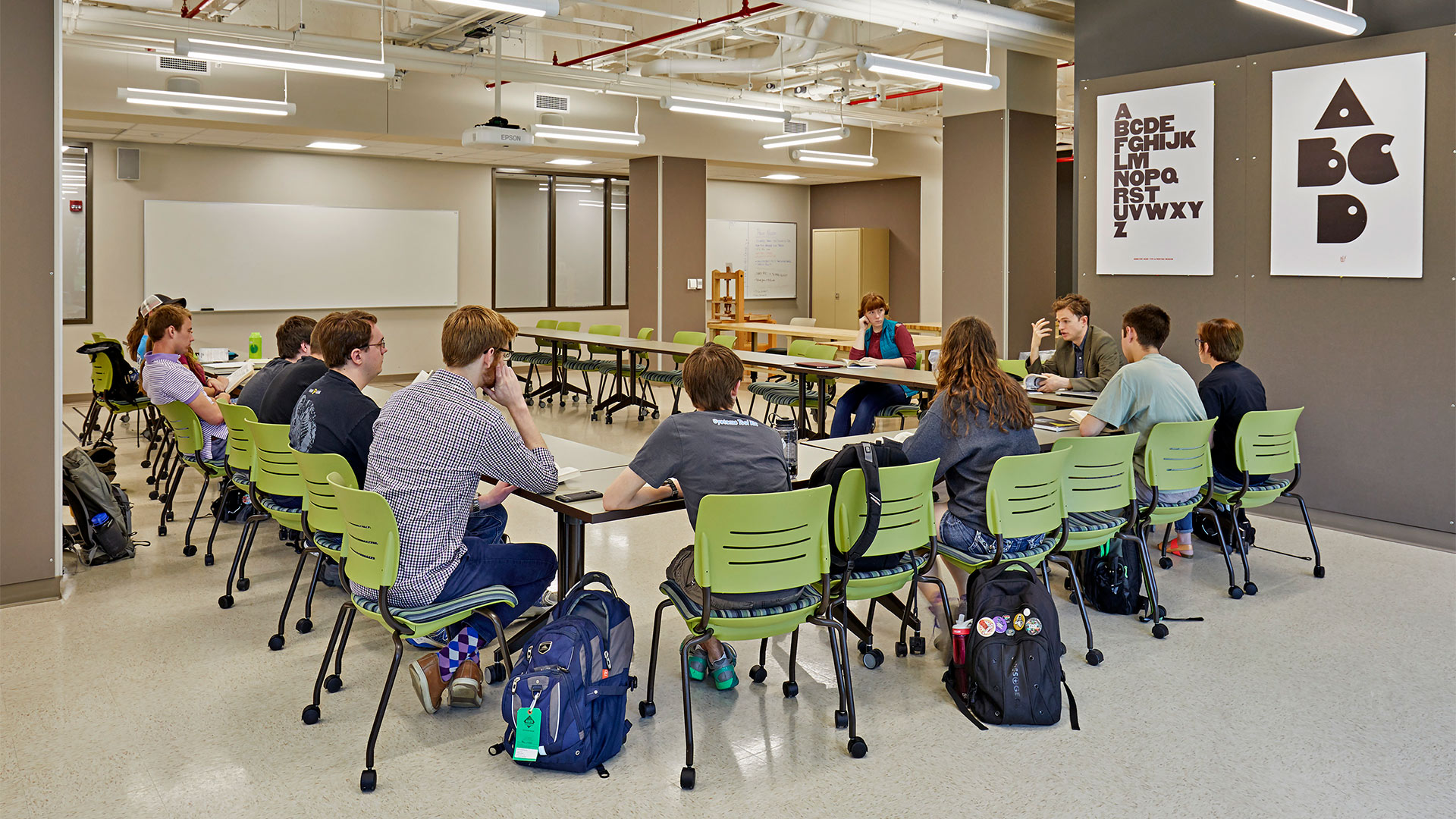
STEAM Research Lab
A dedicated STEAM (science, technology, engineering, arts and agriculture, math) research lab is thoughtfully designed to foster experiential learning, innovation, and leadership.
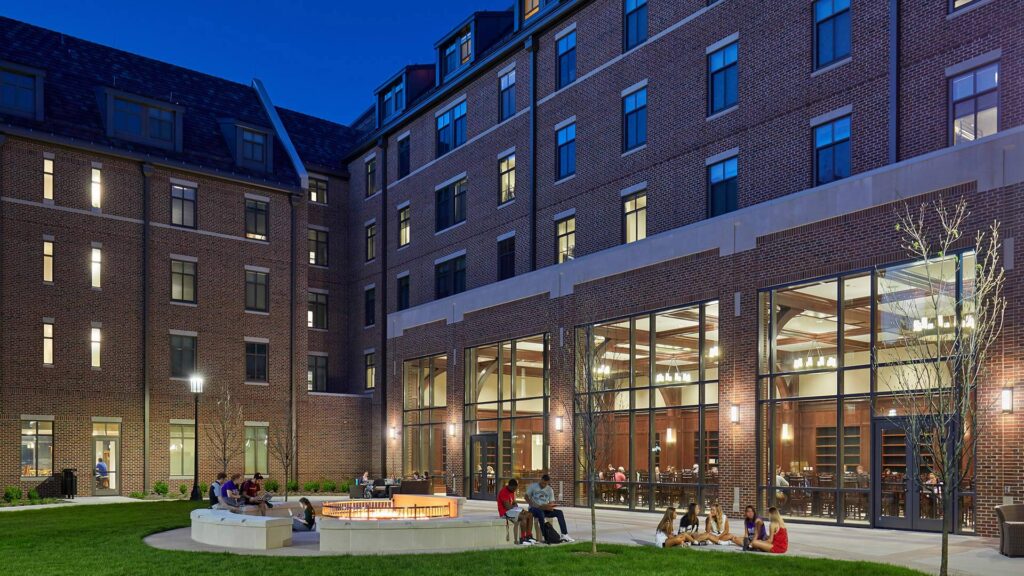
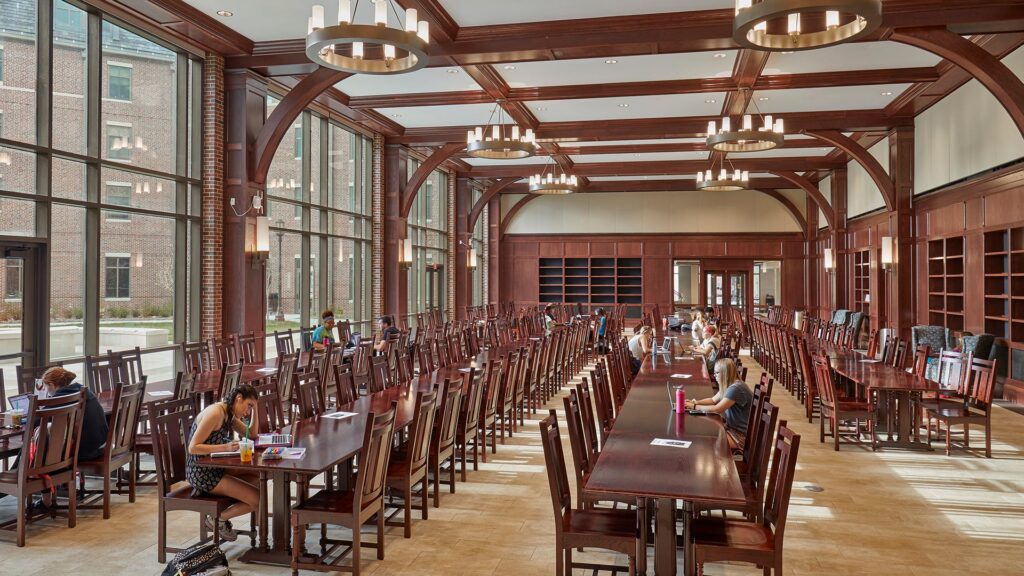
The “Great Hall”, a flexible space that can be configured to seat more than 400 for lectures, presentations, and events, is the centerpiece of the Honors College. The space is located in the center of the community with access to a primary campus path and greenspace.
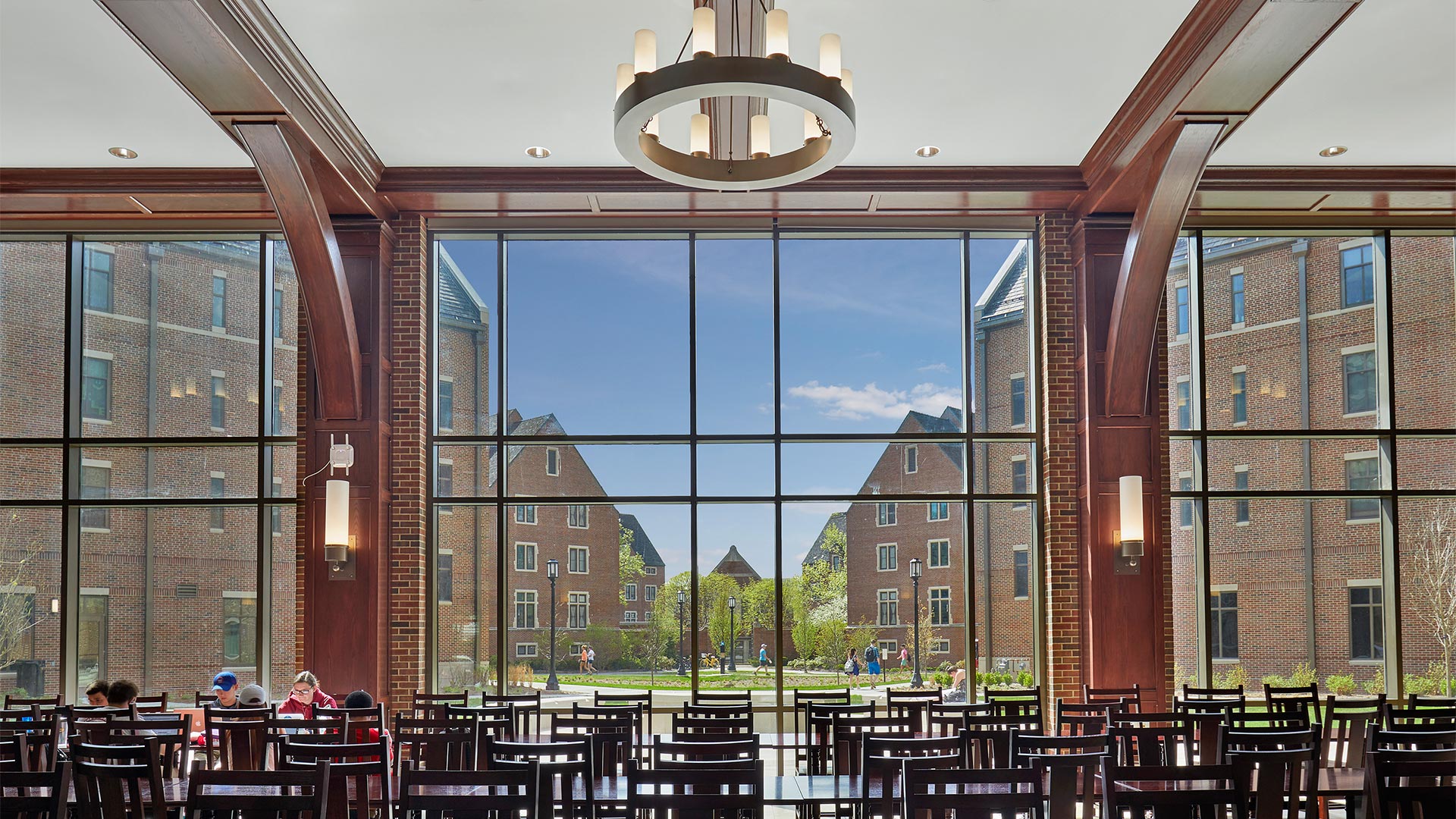
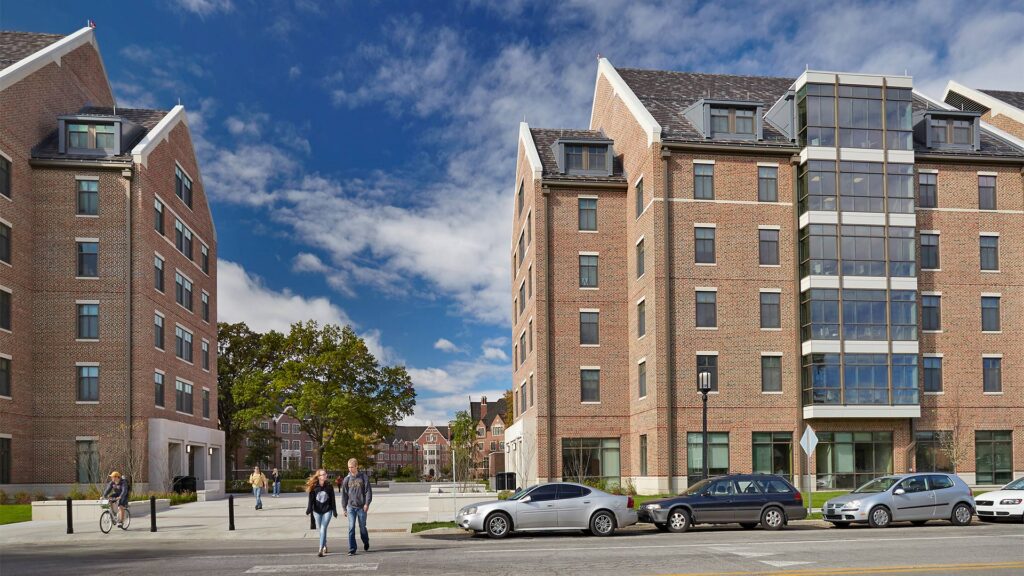
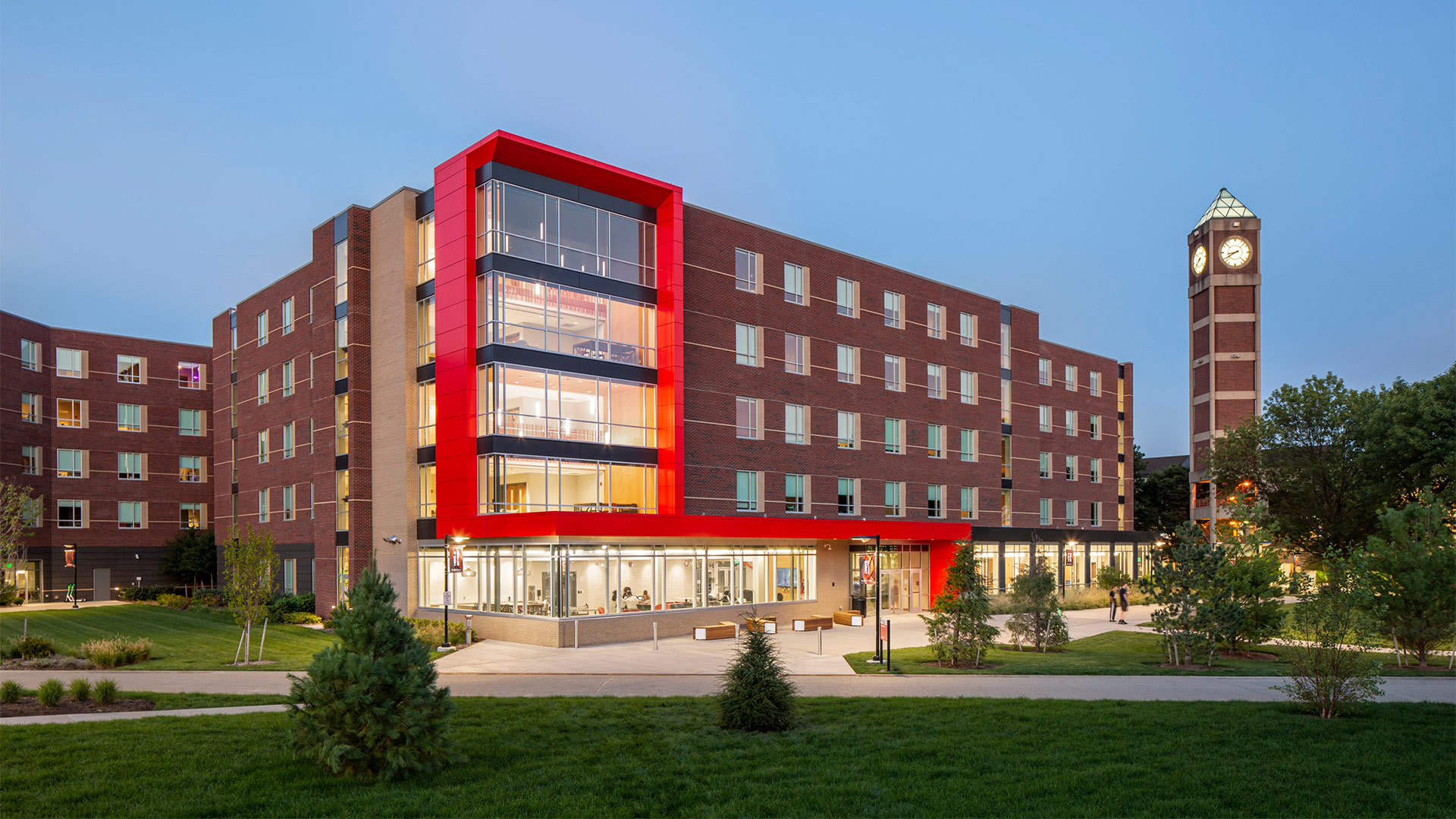
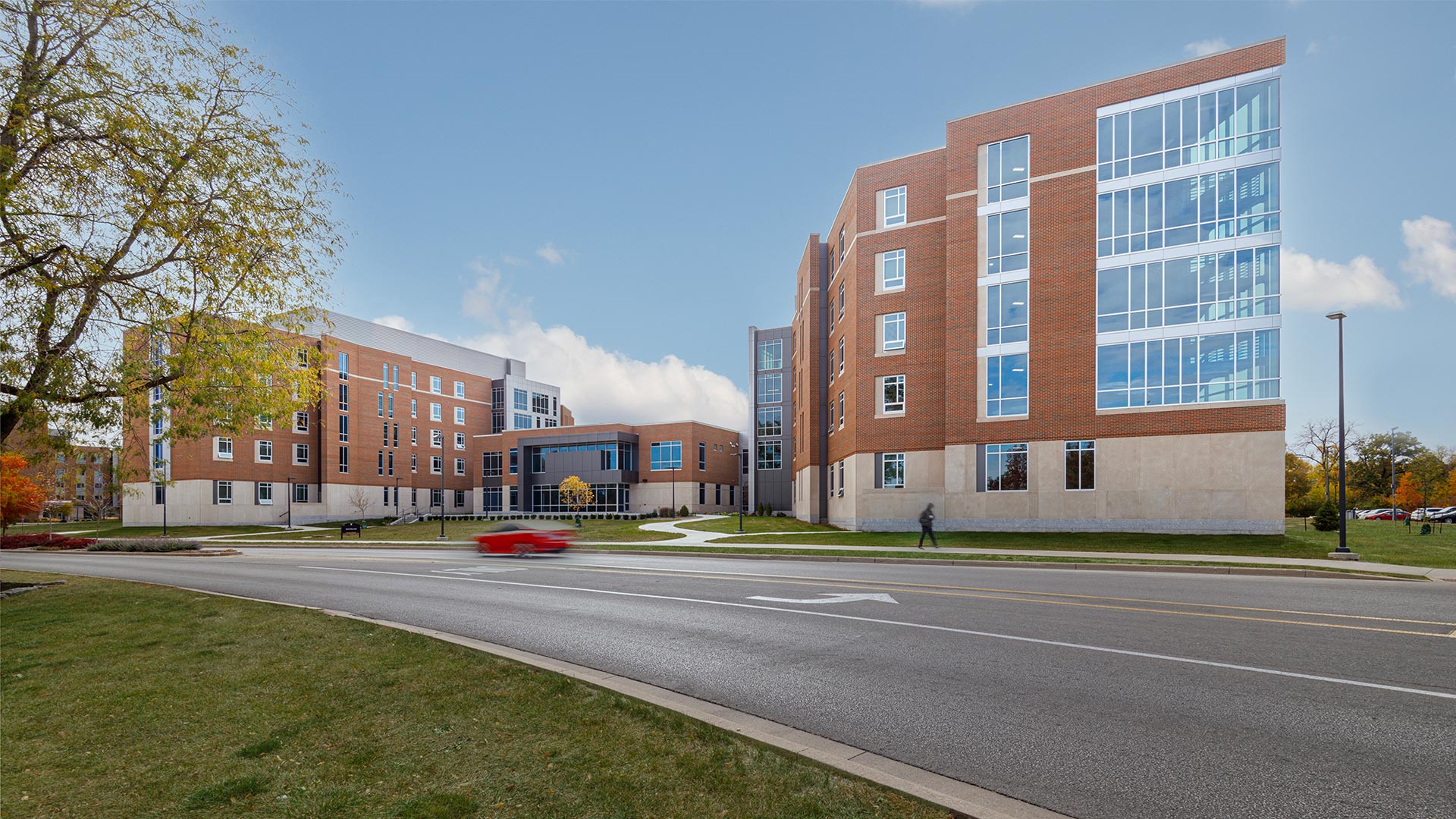
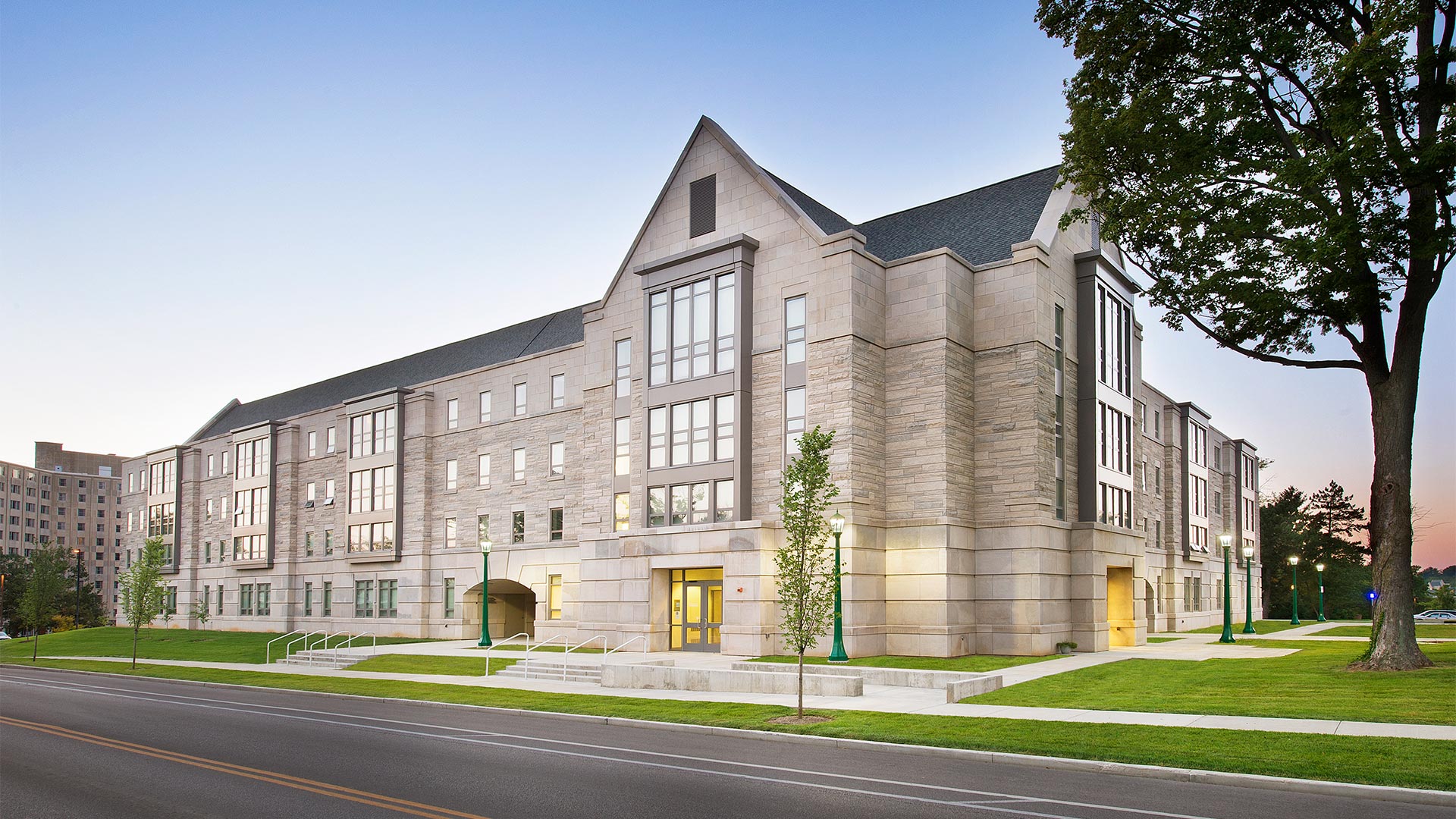
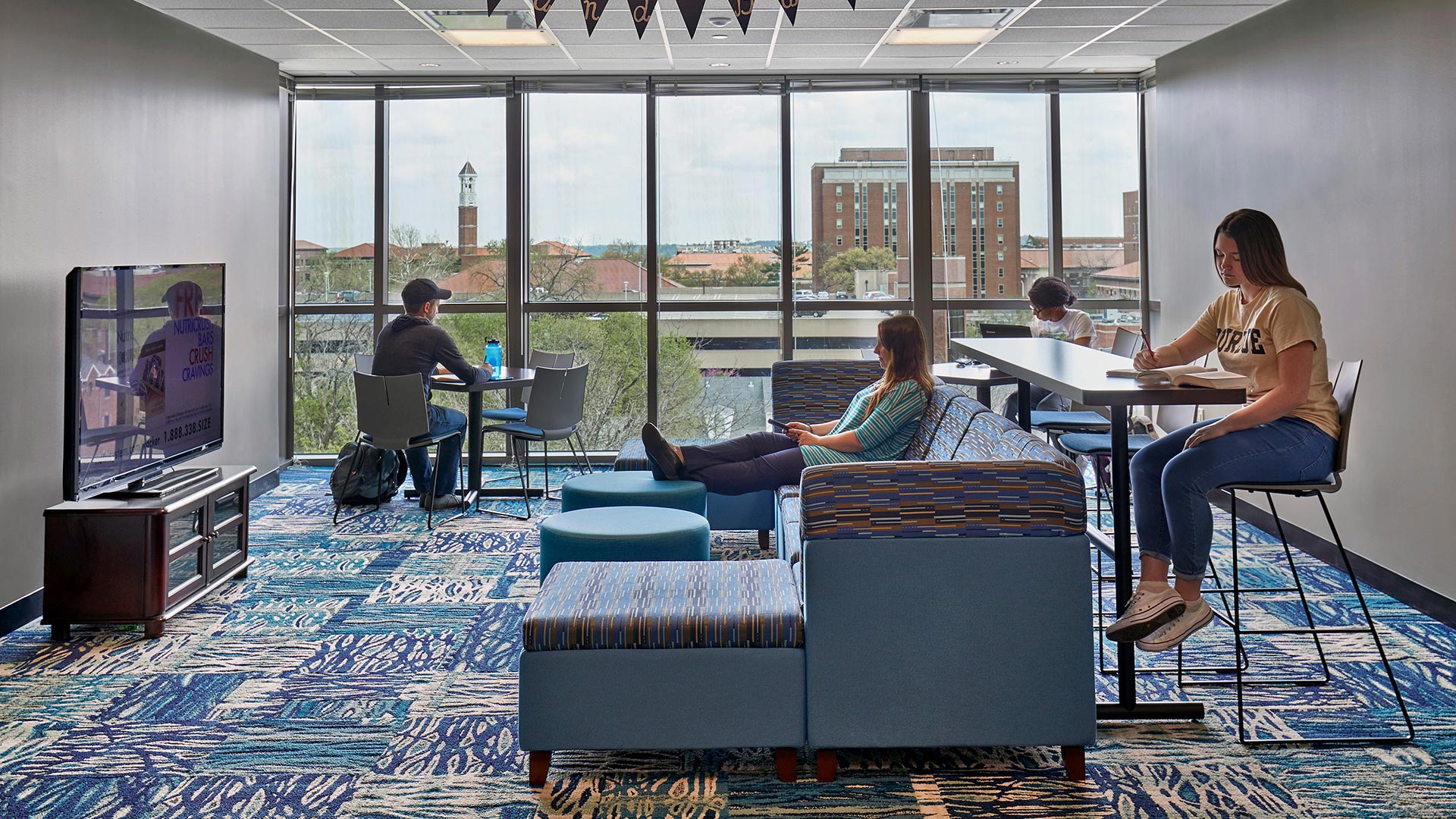
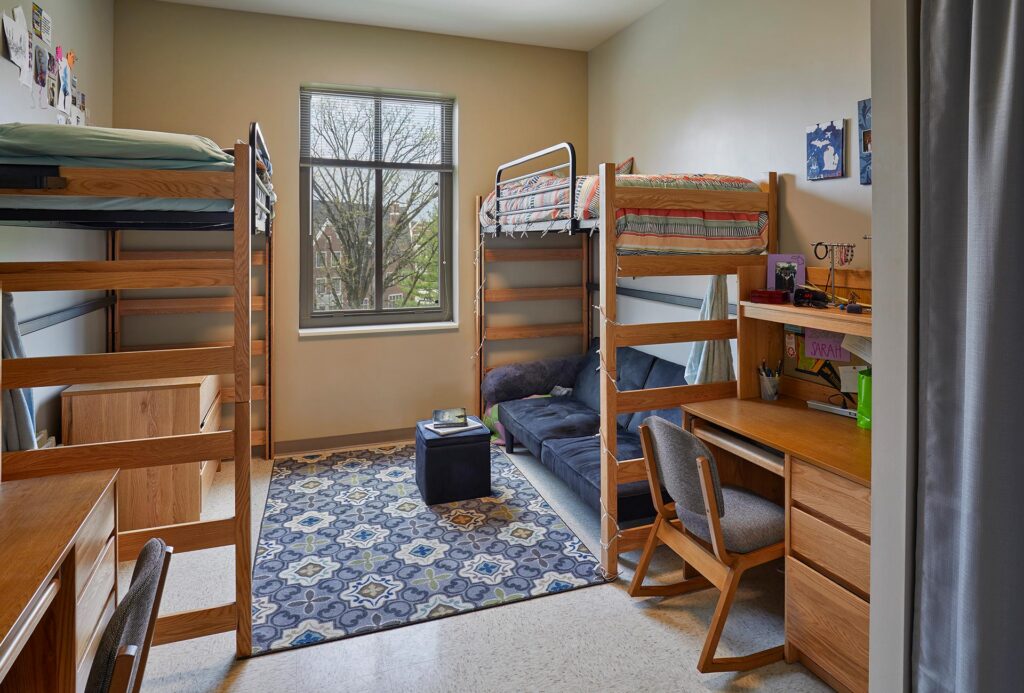
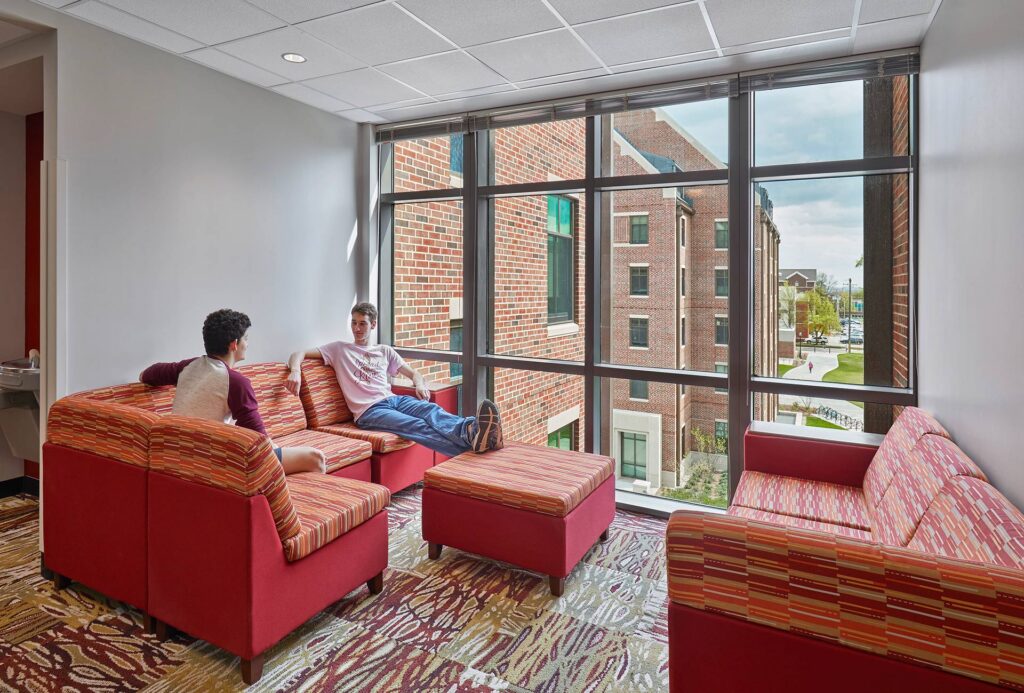
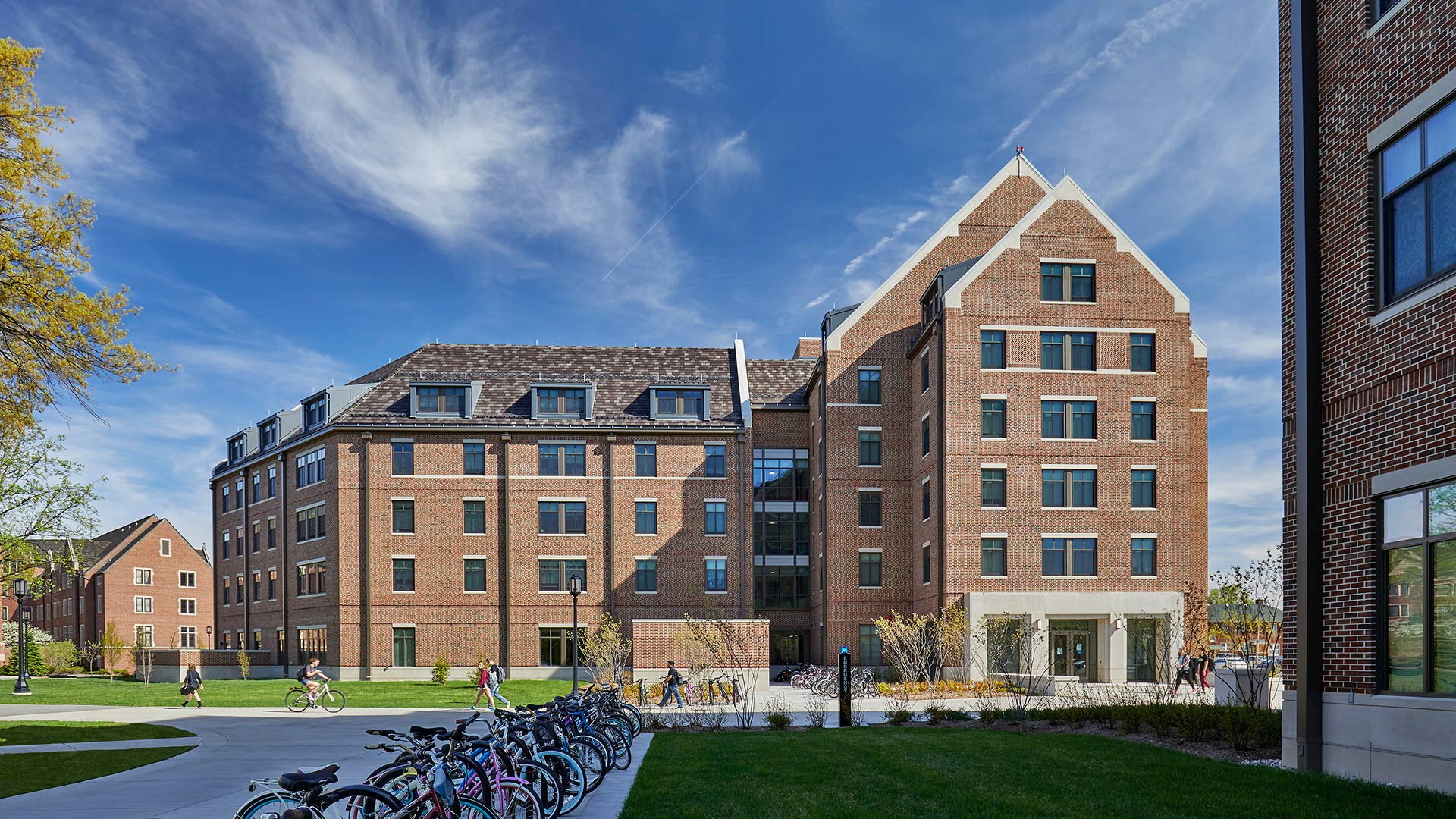
The two buildings that make up the community – each with academic space and residential space – are located within the University’s “student success corridor.” Over 800 students live in clusters of roughly 24 students in pod configurations complemented by community and social areas designed to foster informal interaction and collaboration.
,
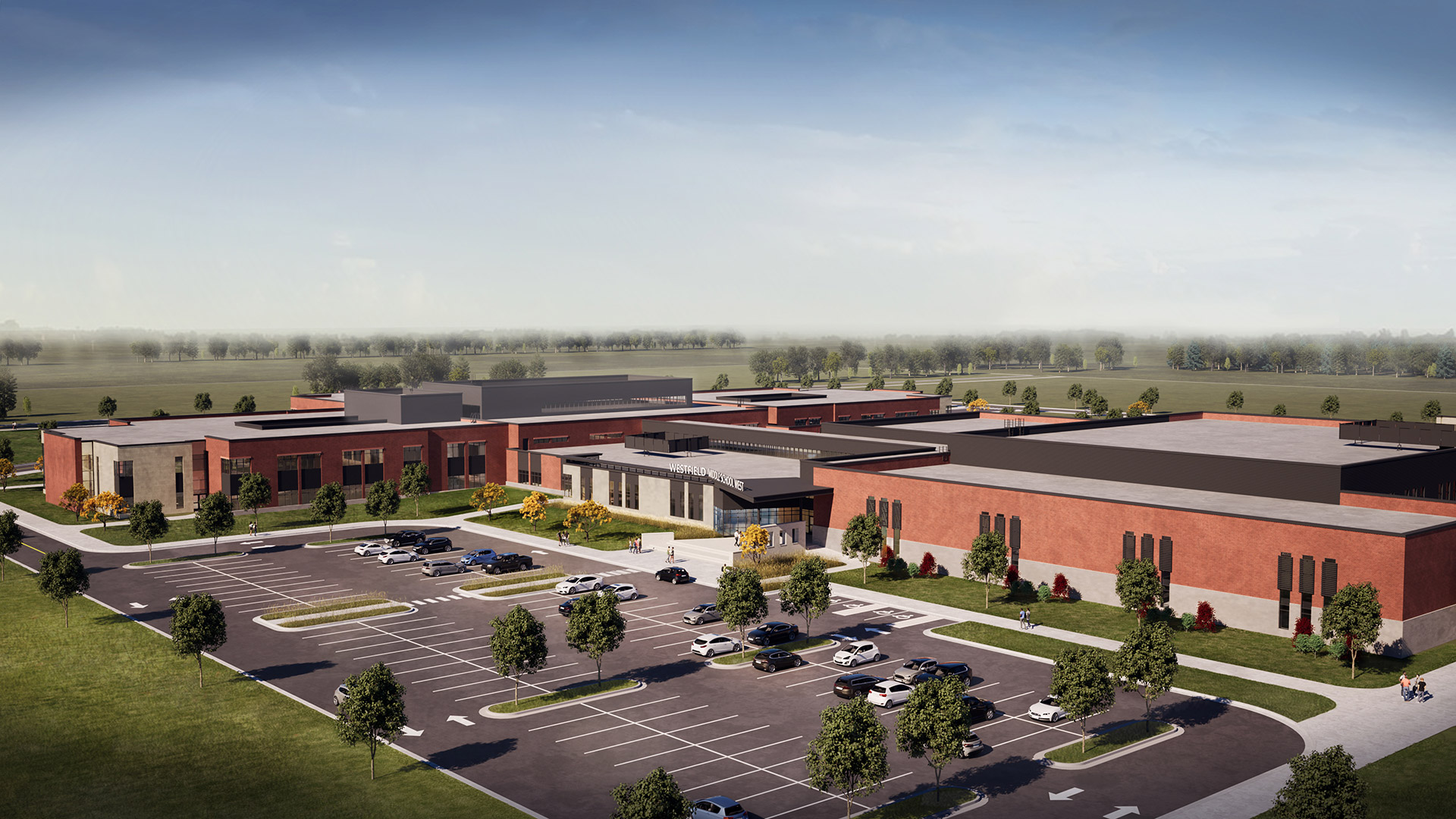
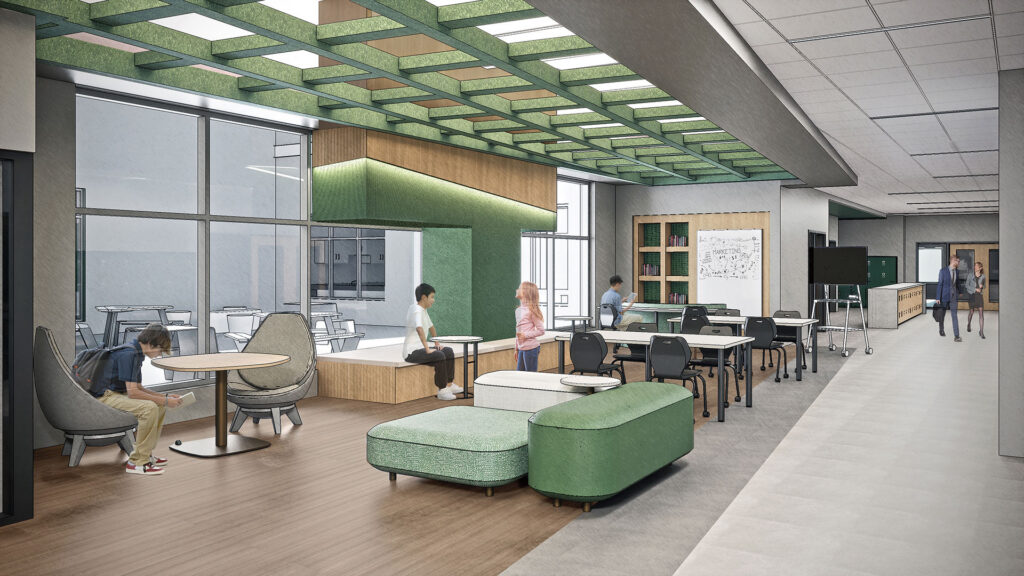
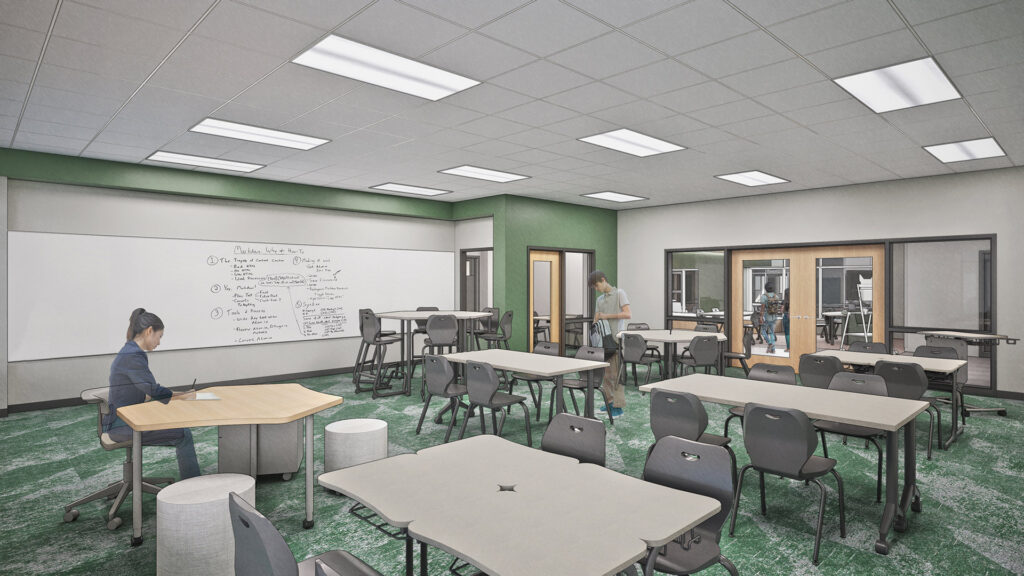
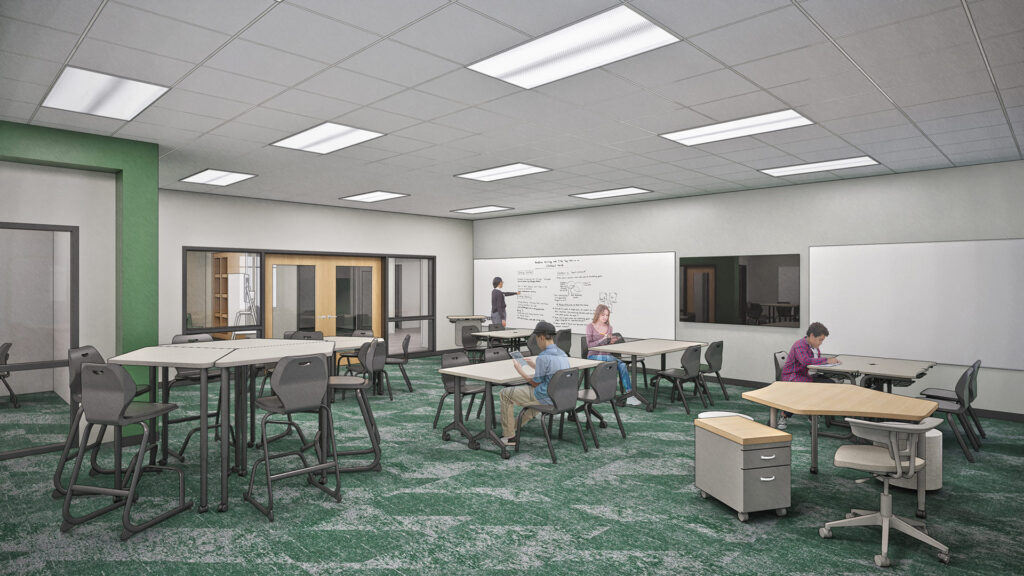
Each grade-level “Academic House” consists of a shared common area, four classrooms with small group rooms in between, restrooms, and a shared STEM lab.
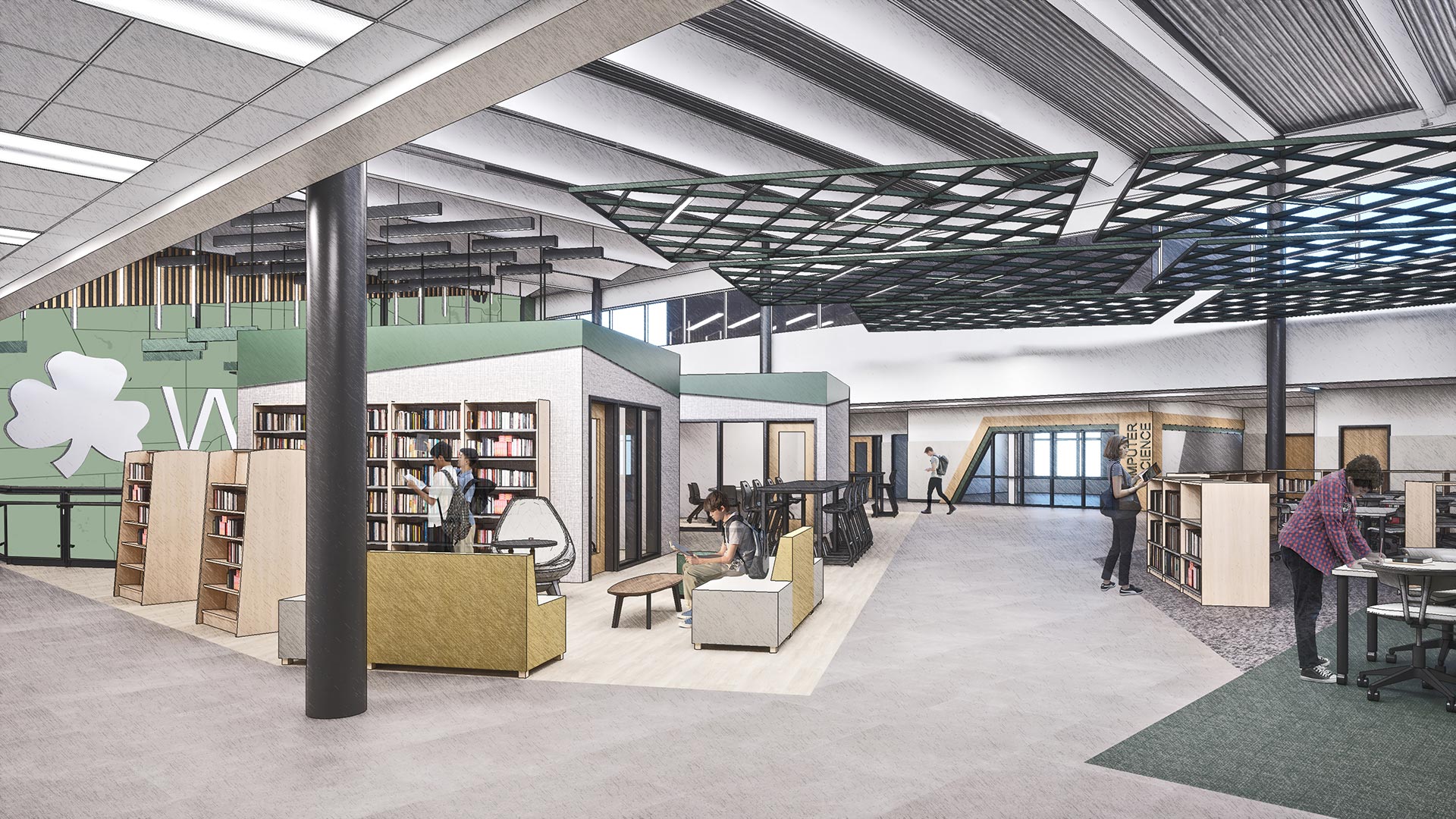
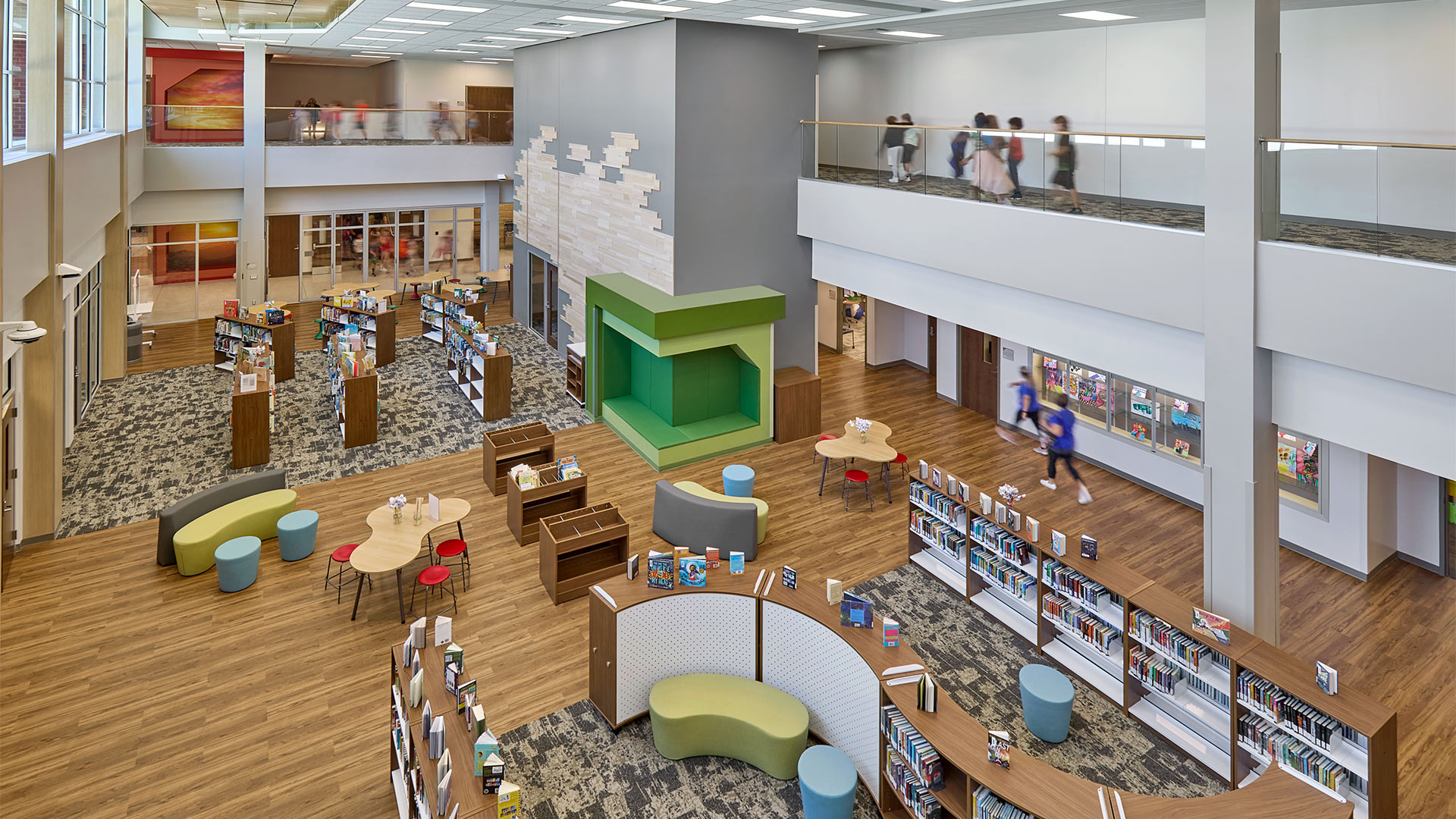
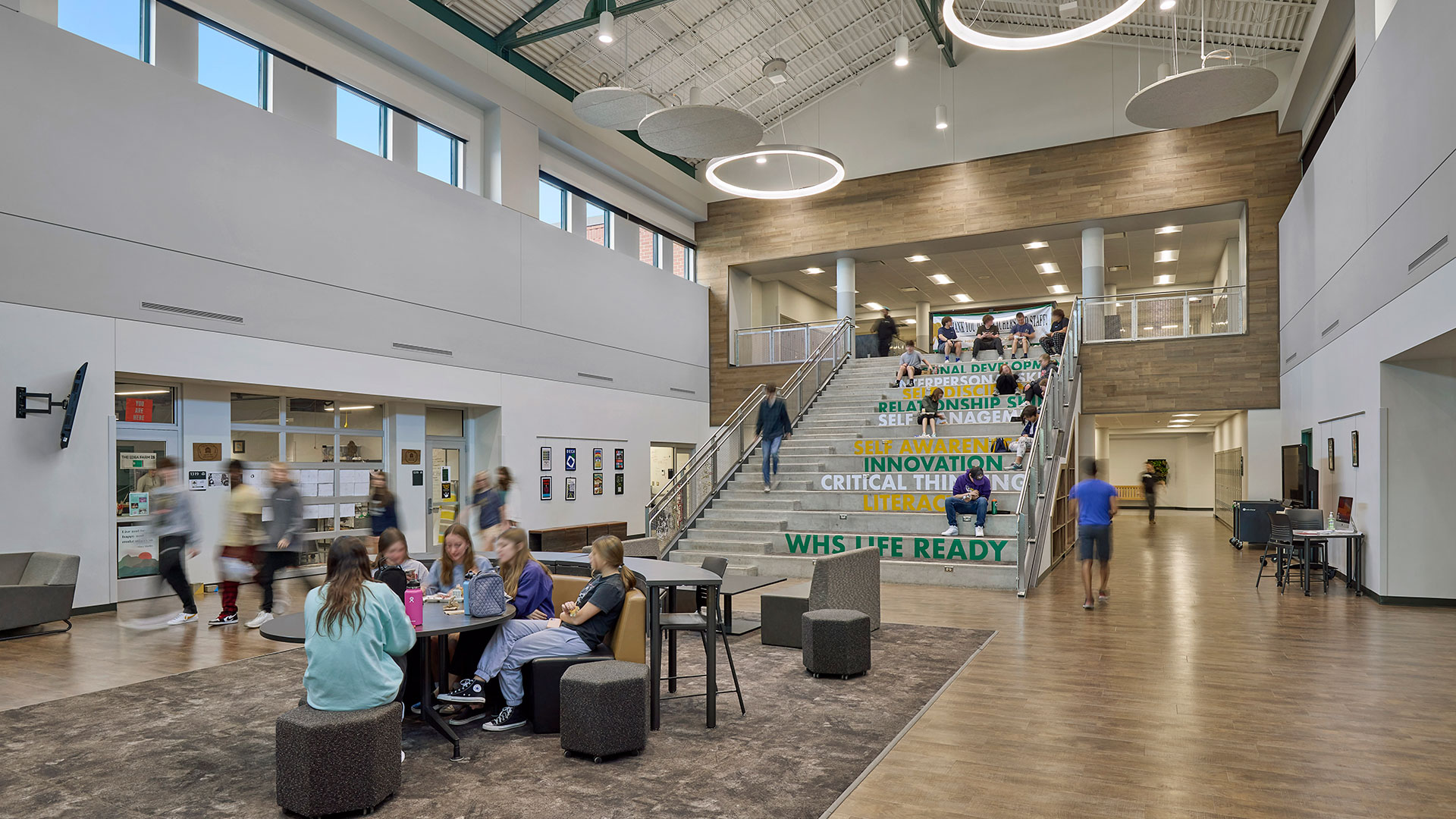
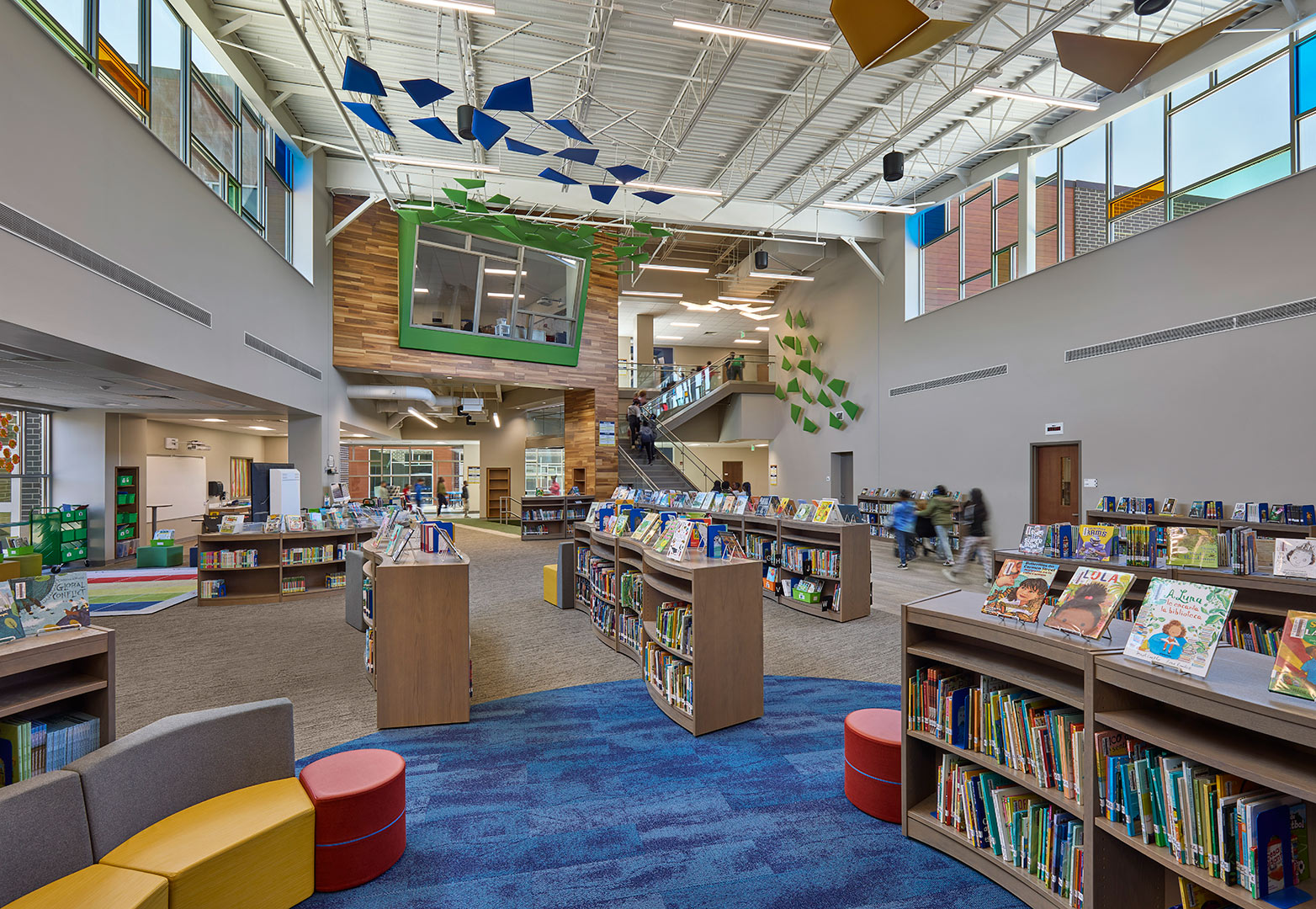
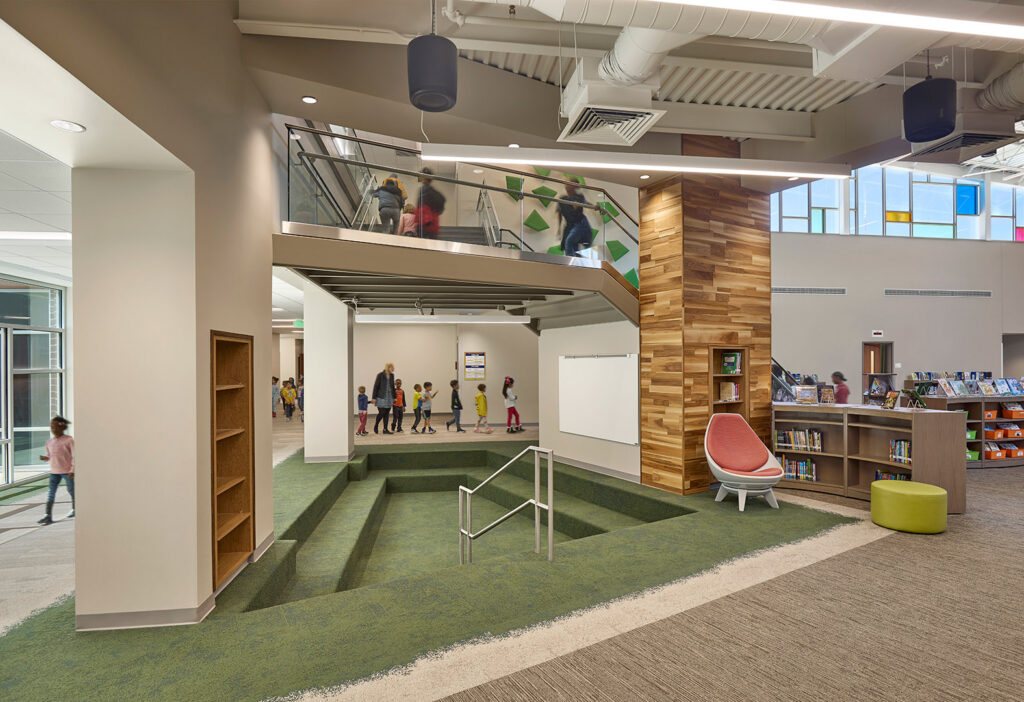
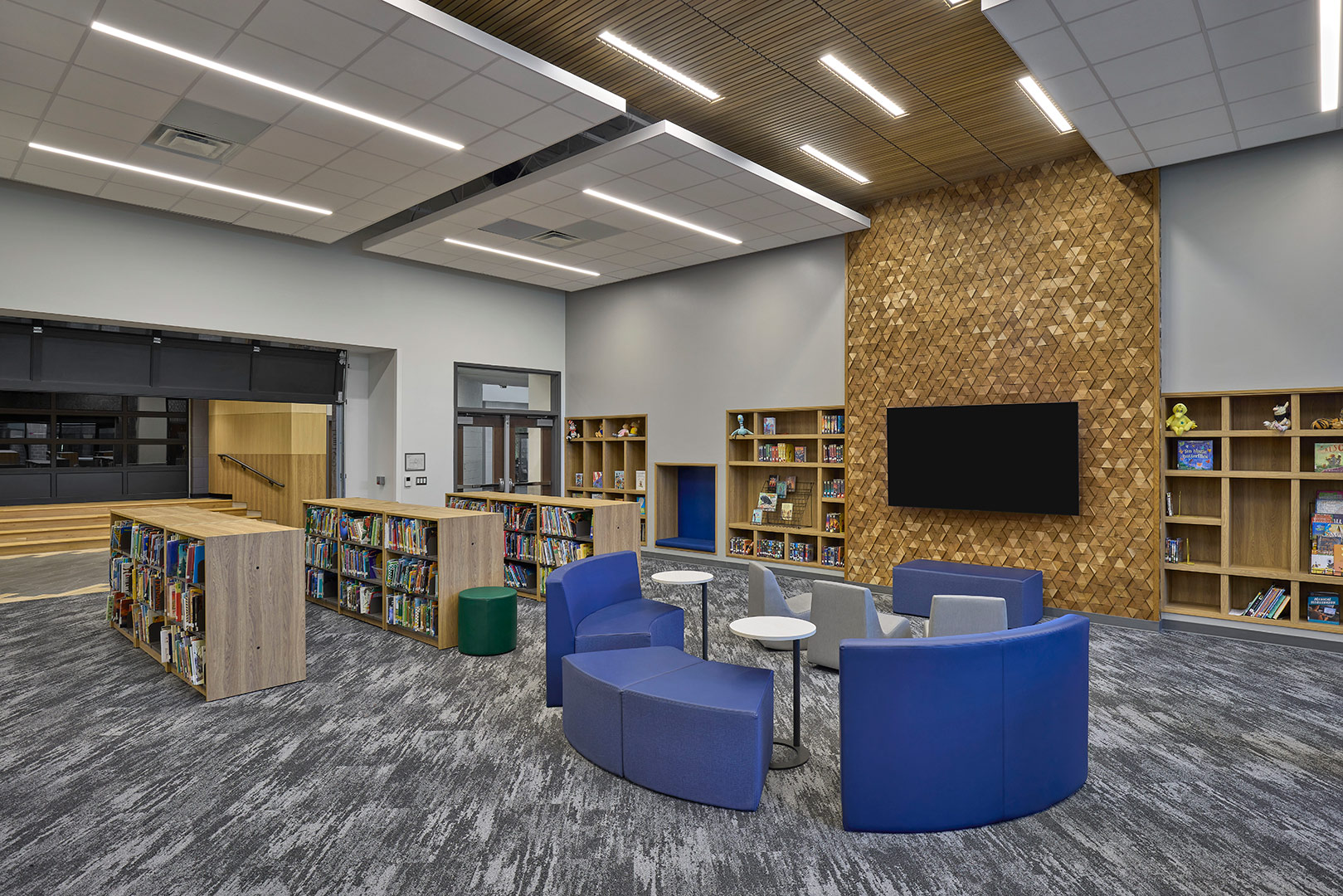
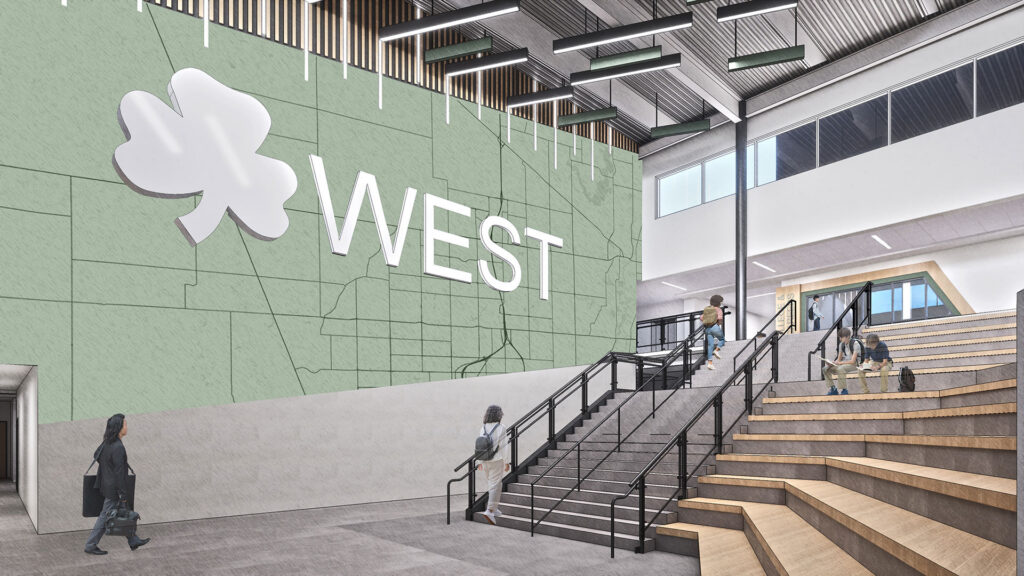
At the center of the school is a cafeteria on the first floor with a large gathering stair leading up to the media commons.
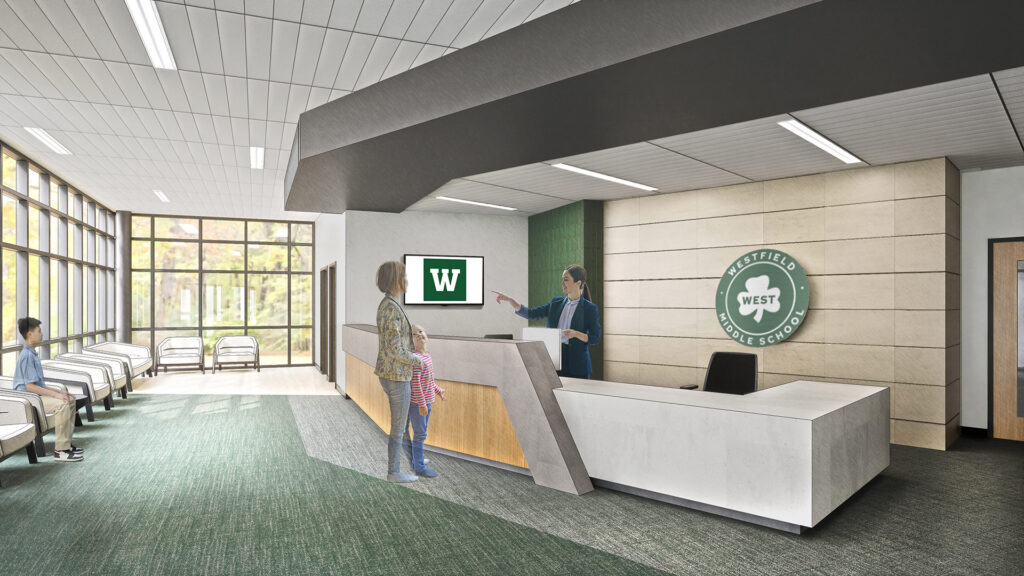
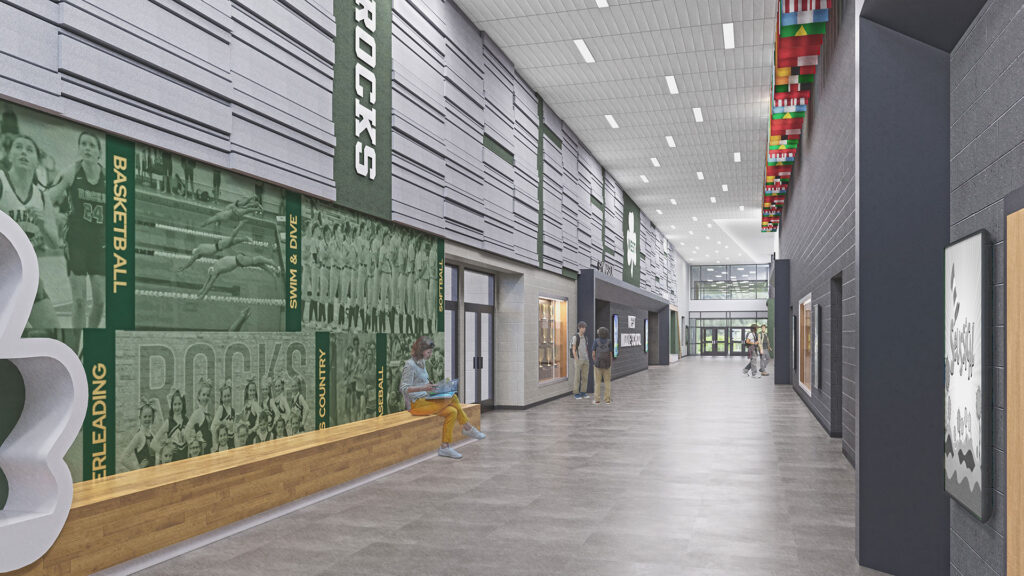
Strategic Separation of Spaces
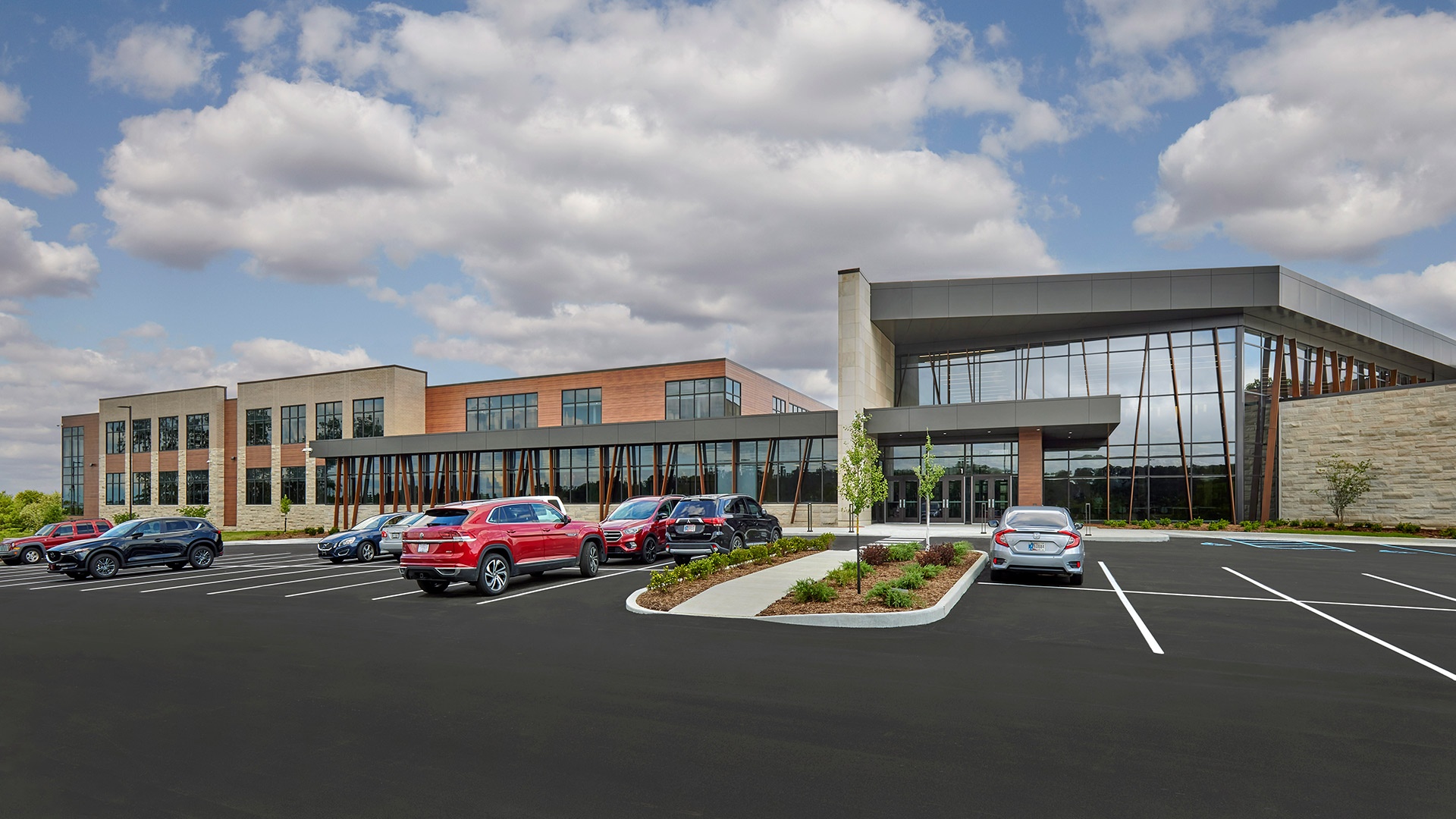
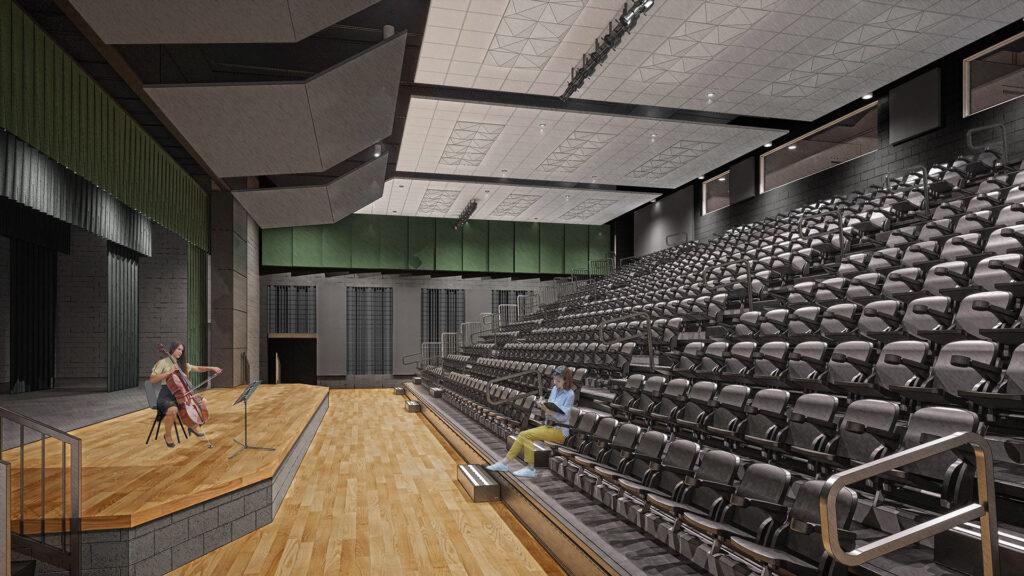
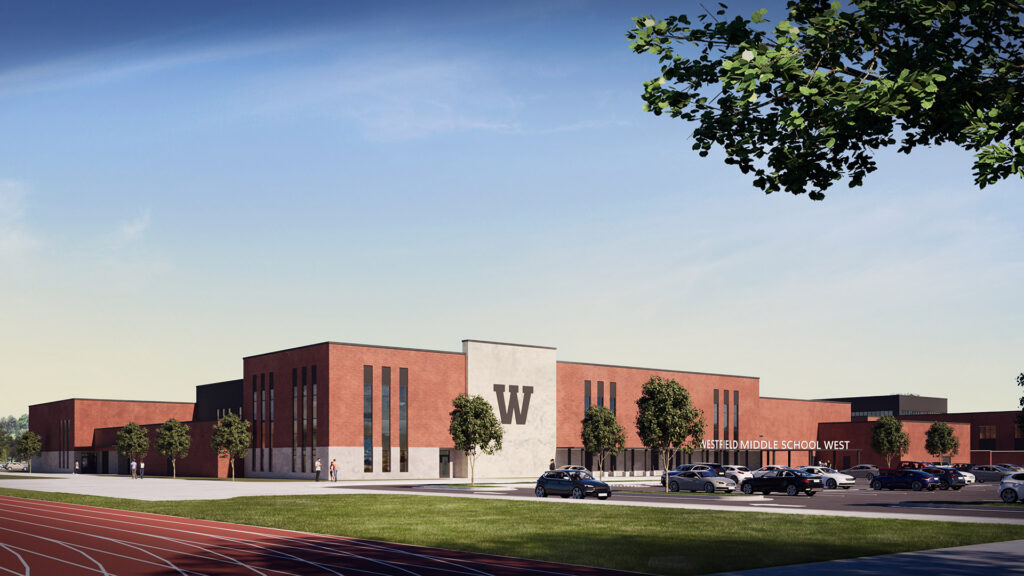
The far end of the building houses athletic and performing arts spaces, including a flexible theater and two gymnasiums.
,