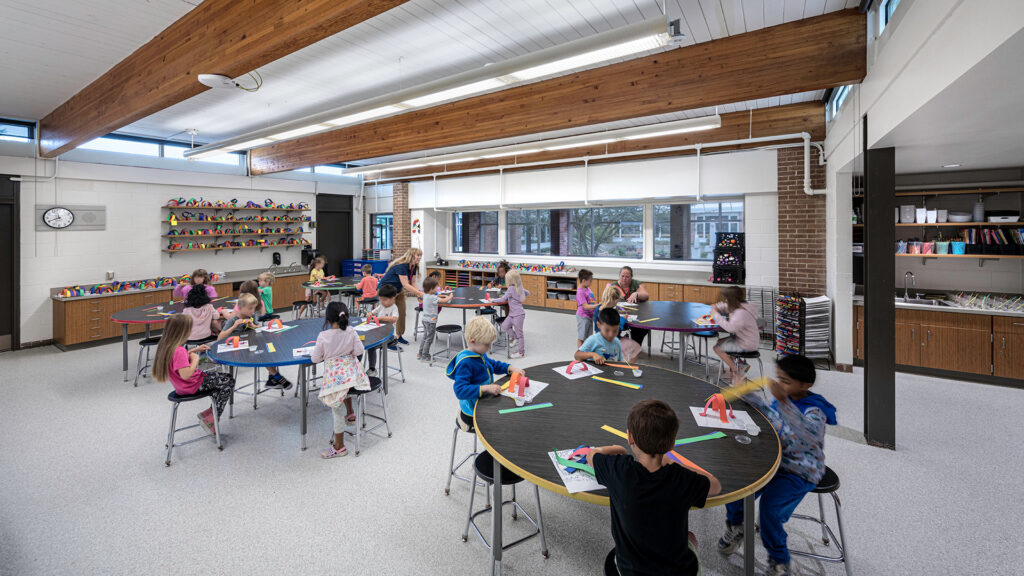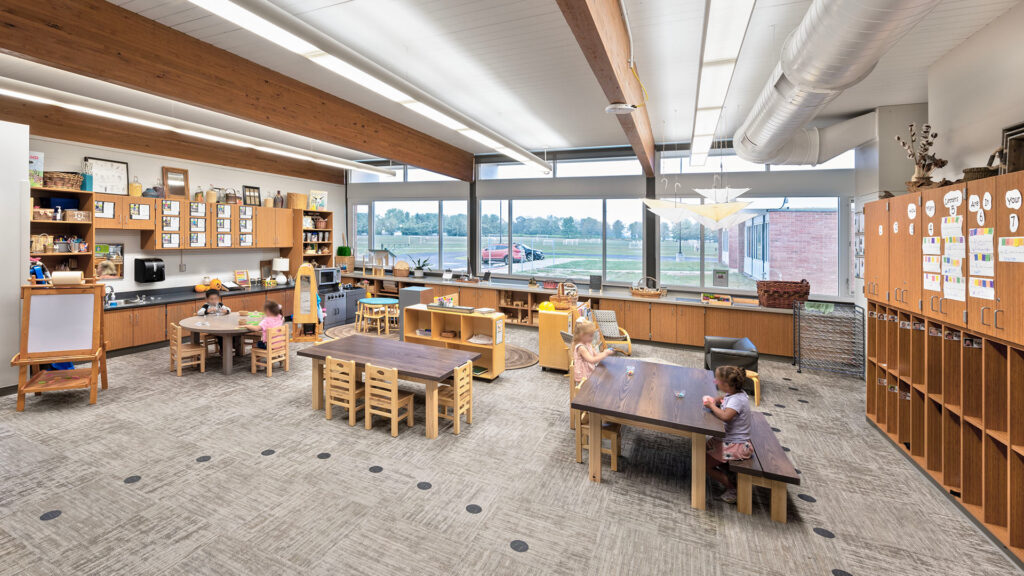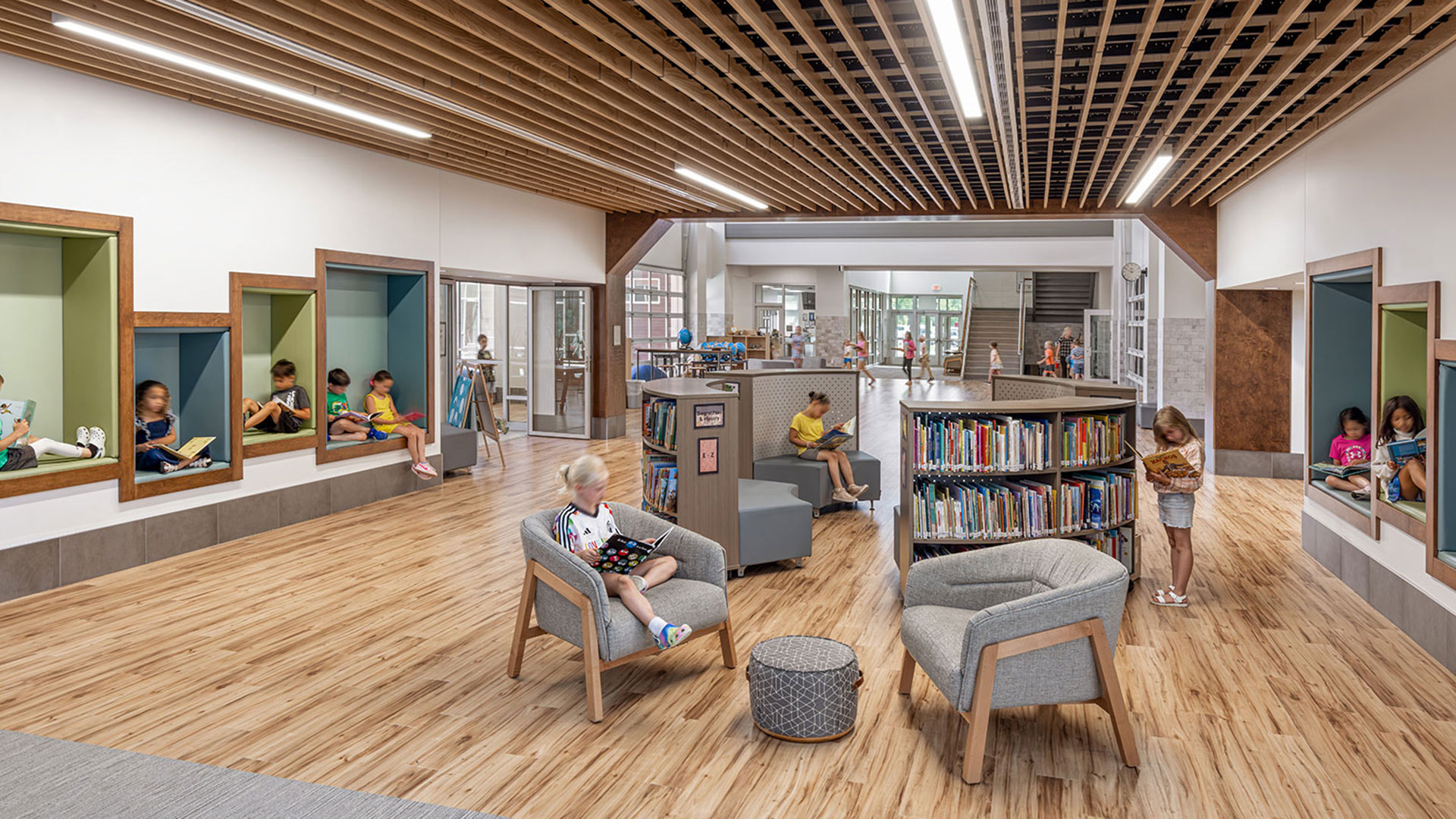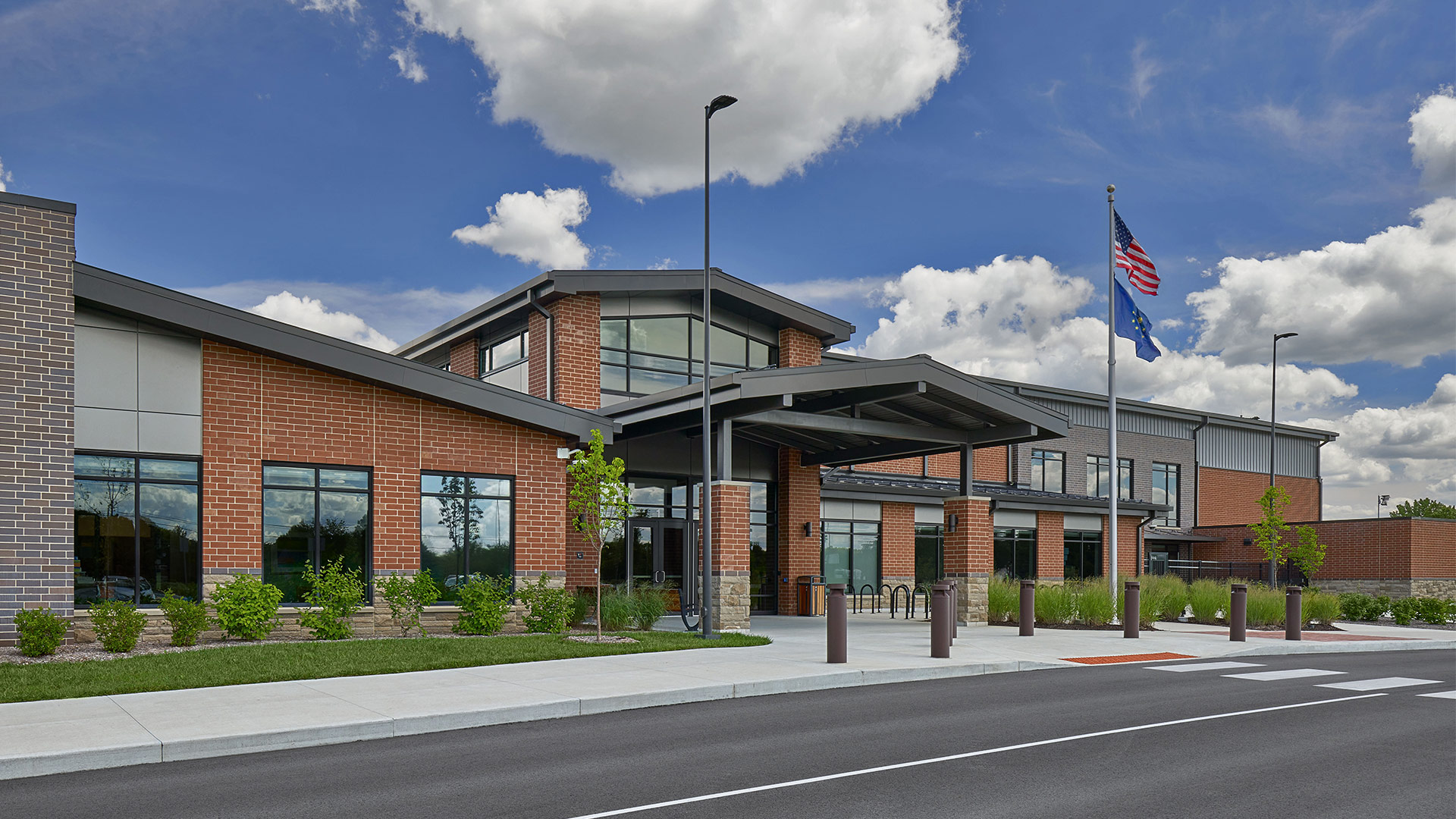

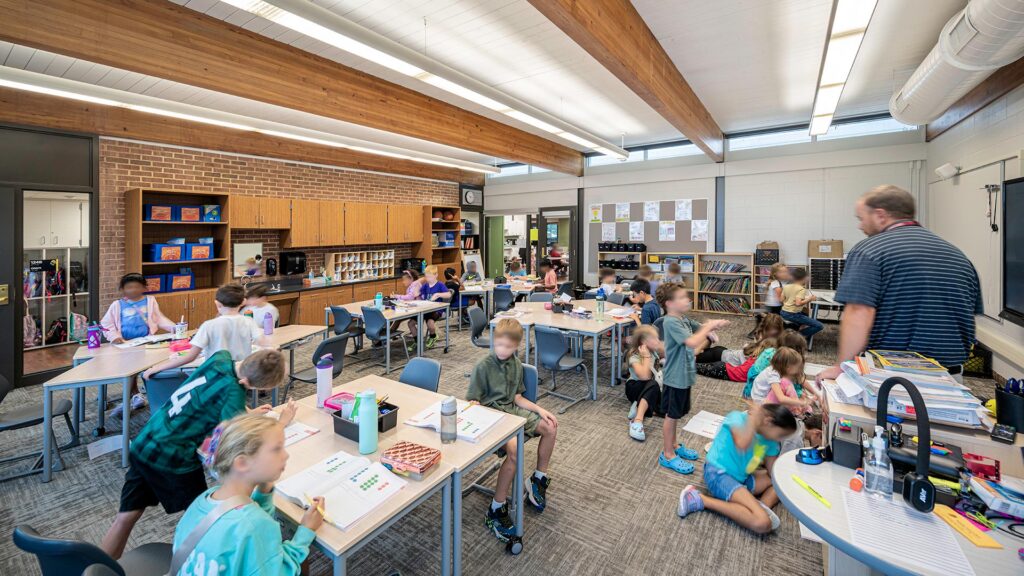
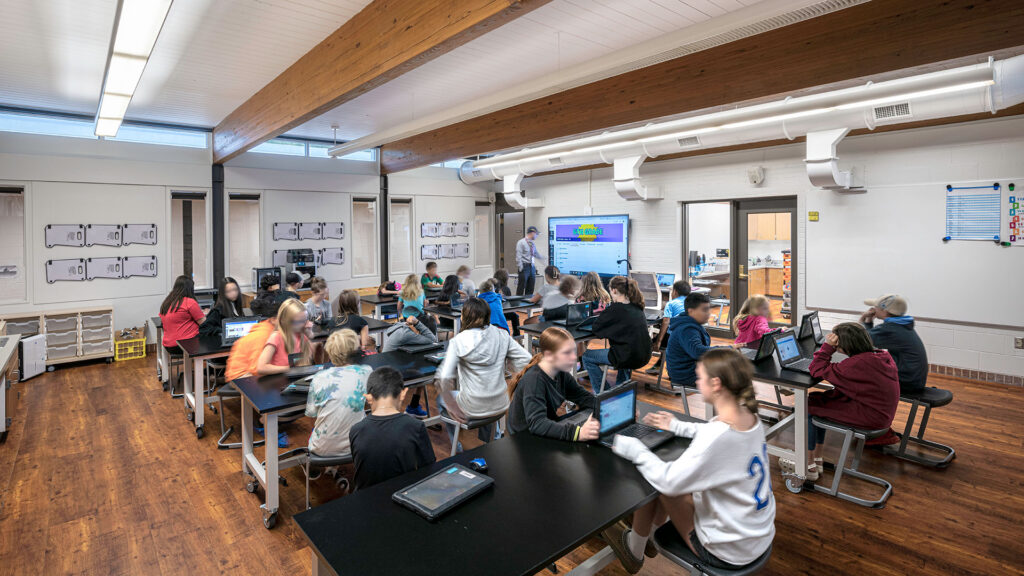
When planning major renovations, CSO honored the original design while greatly improving the functionality of the school, and positively impacting student engagement, independence, and well-being.
Project Details

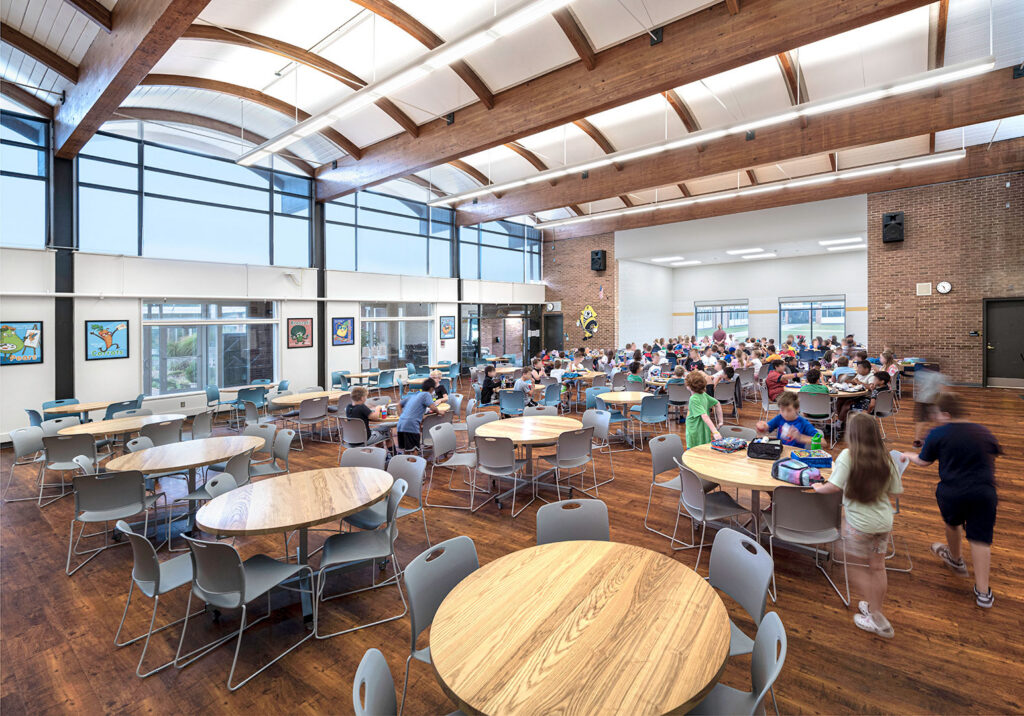
A Brighter, More Connected Cafeteria
In the cafeteria, replacing long, foldable tables with round tables has transformed the space into a more intimate, family-style setting. This change encourages quieter, more focused conversations and allows students across different grade levels to interact. The removal of a stage made room for additional windows, enhancing natural light and reinforcing a connection to the outdoors—something the original design lacked at eye level.
Celebrating Parkside’s History While Designing for Modern Educational Needs
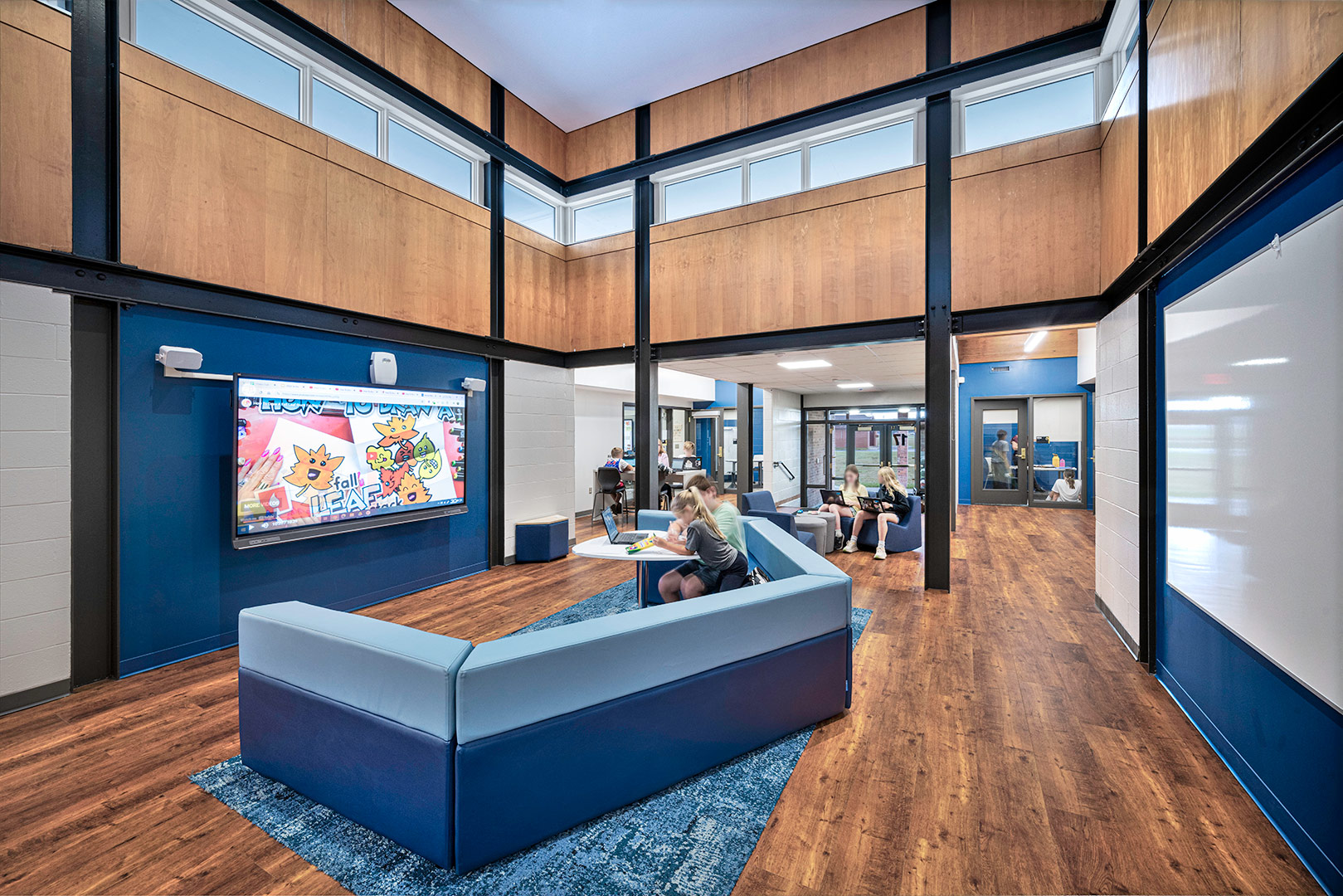
Columbus, Indiana is world-renowned for its modern architecture. One of the most notable schools, Parkside Elementary, was designed by Norman C. Fletcher of The Architects Collaborative (TAC) in 1962. CSO’s renovations honor Fletcher’s unique Arts and Crafts (Bauhaus) style that incorporated clean lines, abundant natural daylighting, geometric shapes, and use of wood beaming and decking.