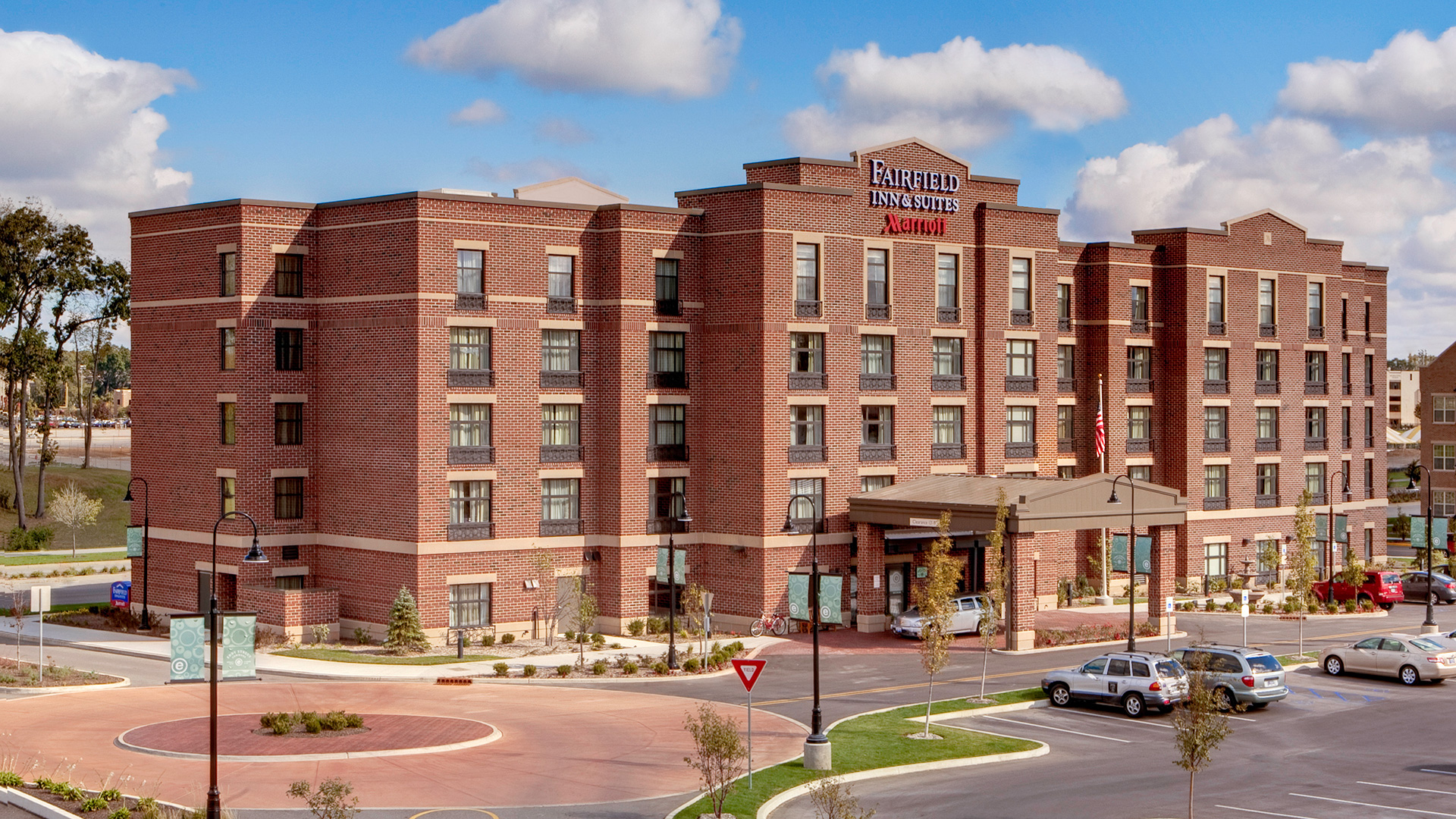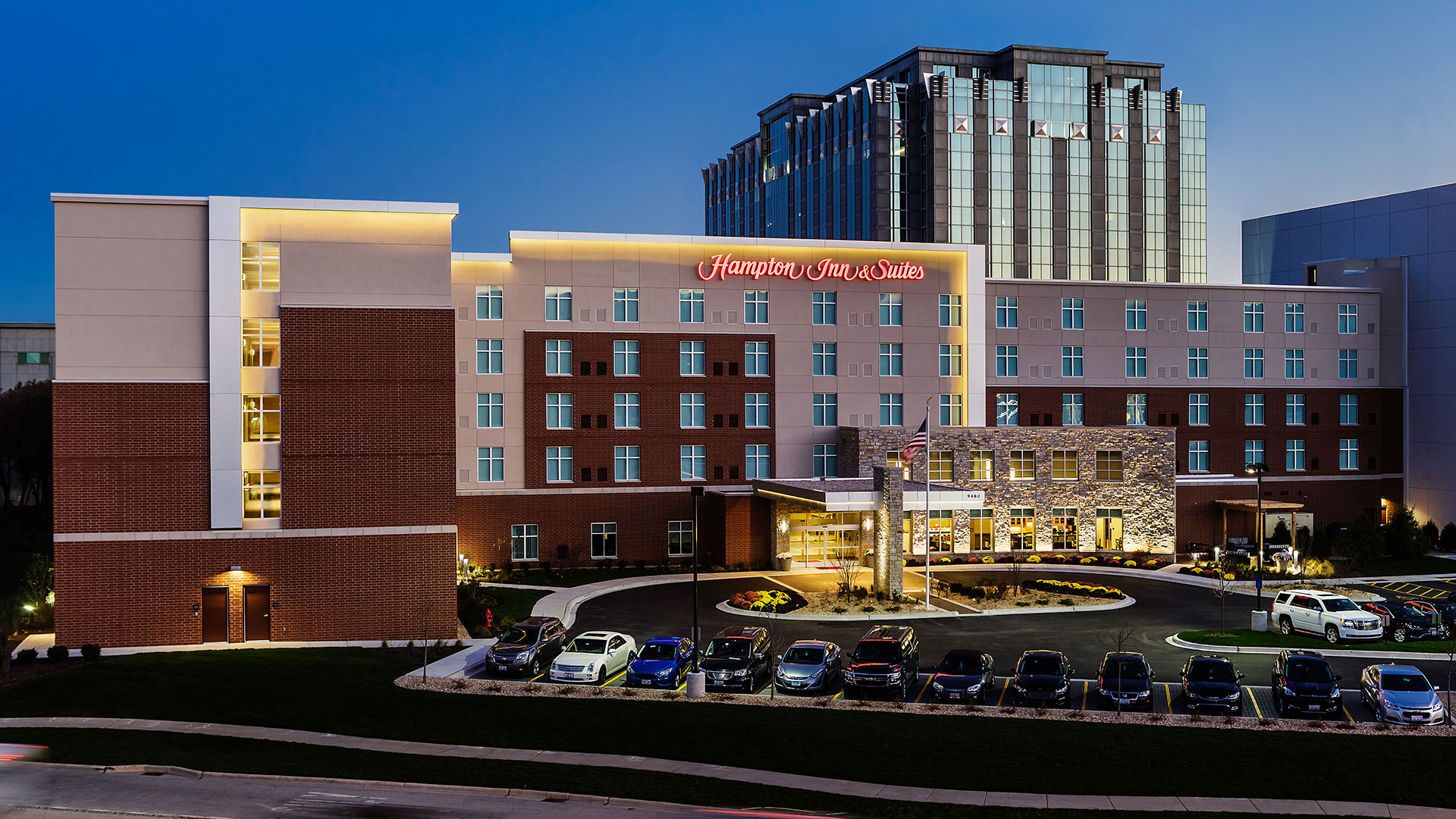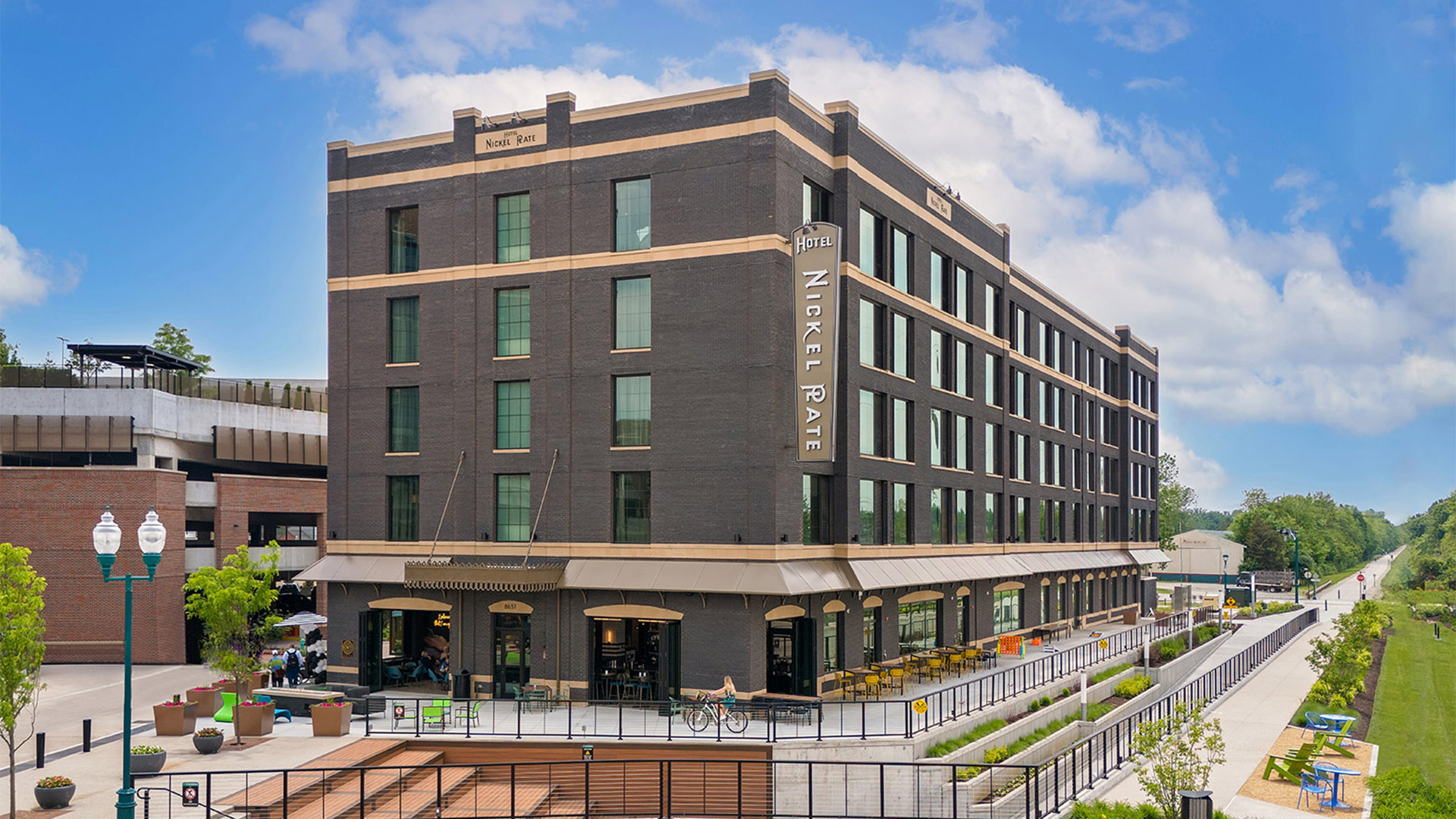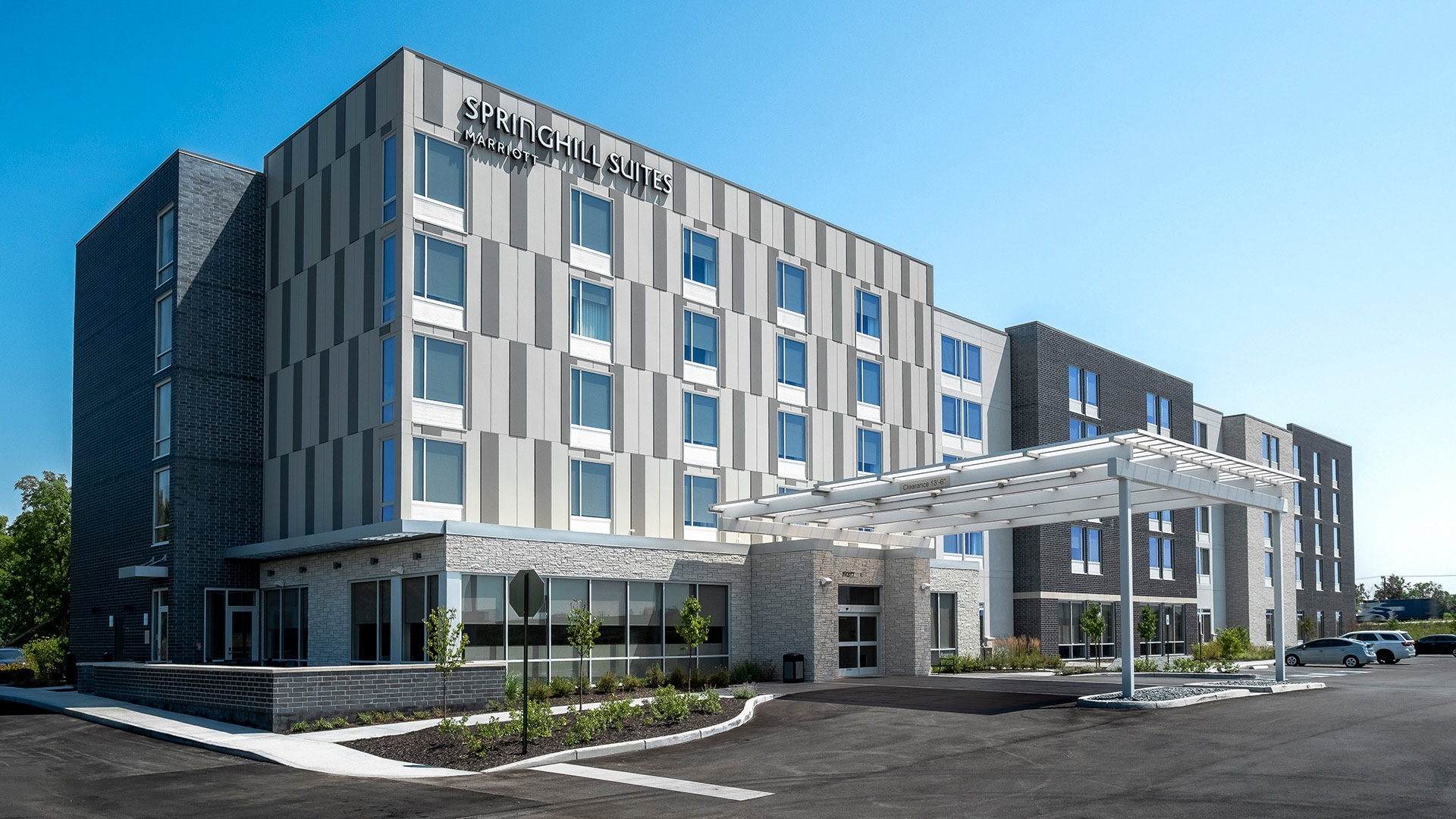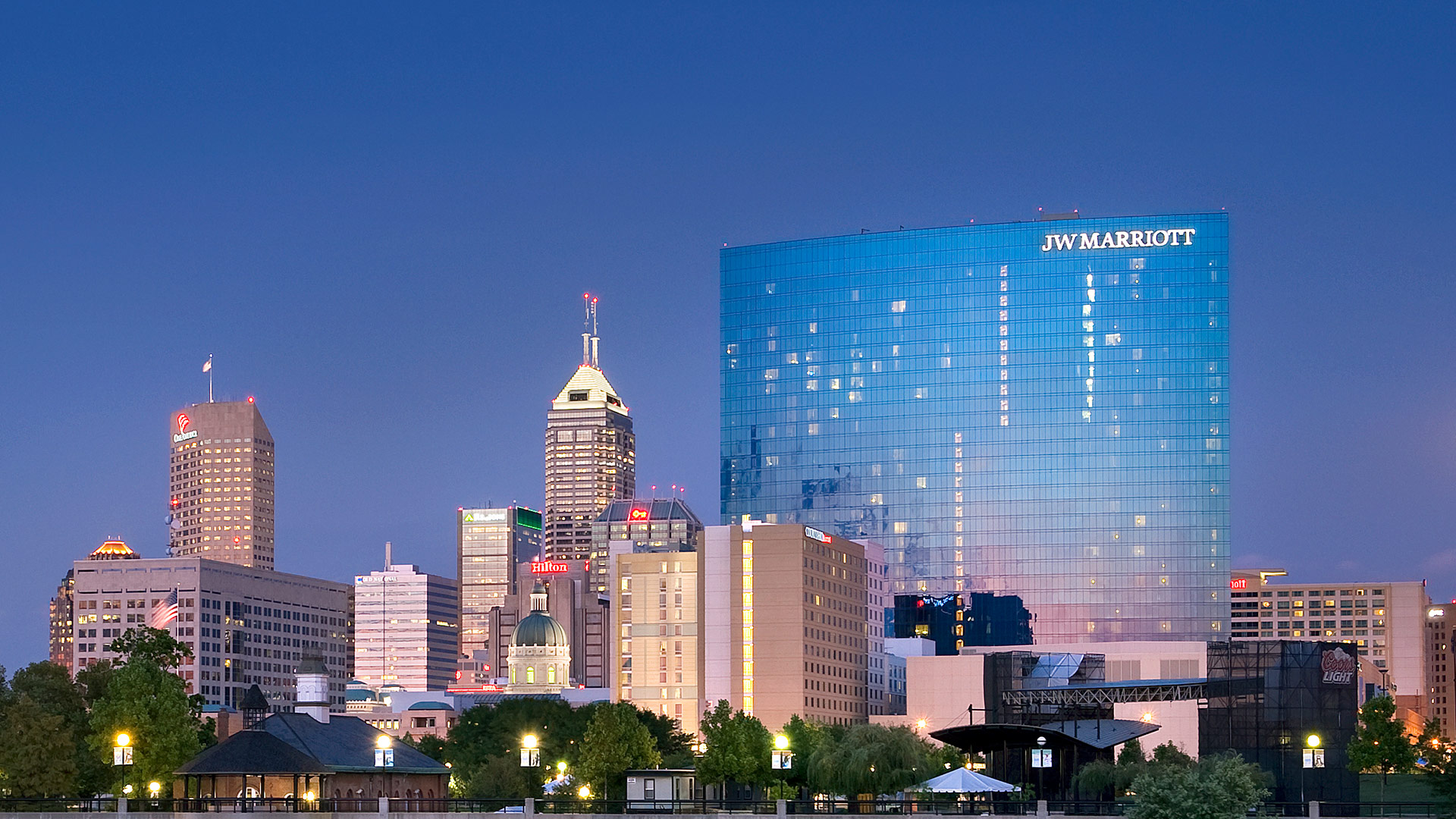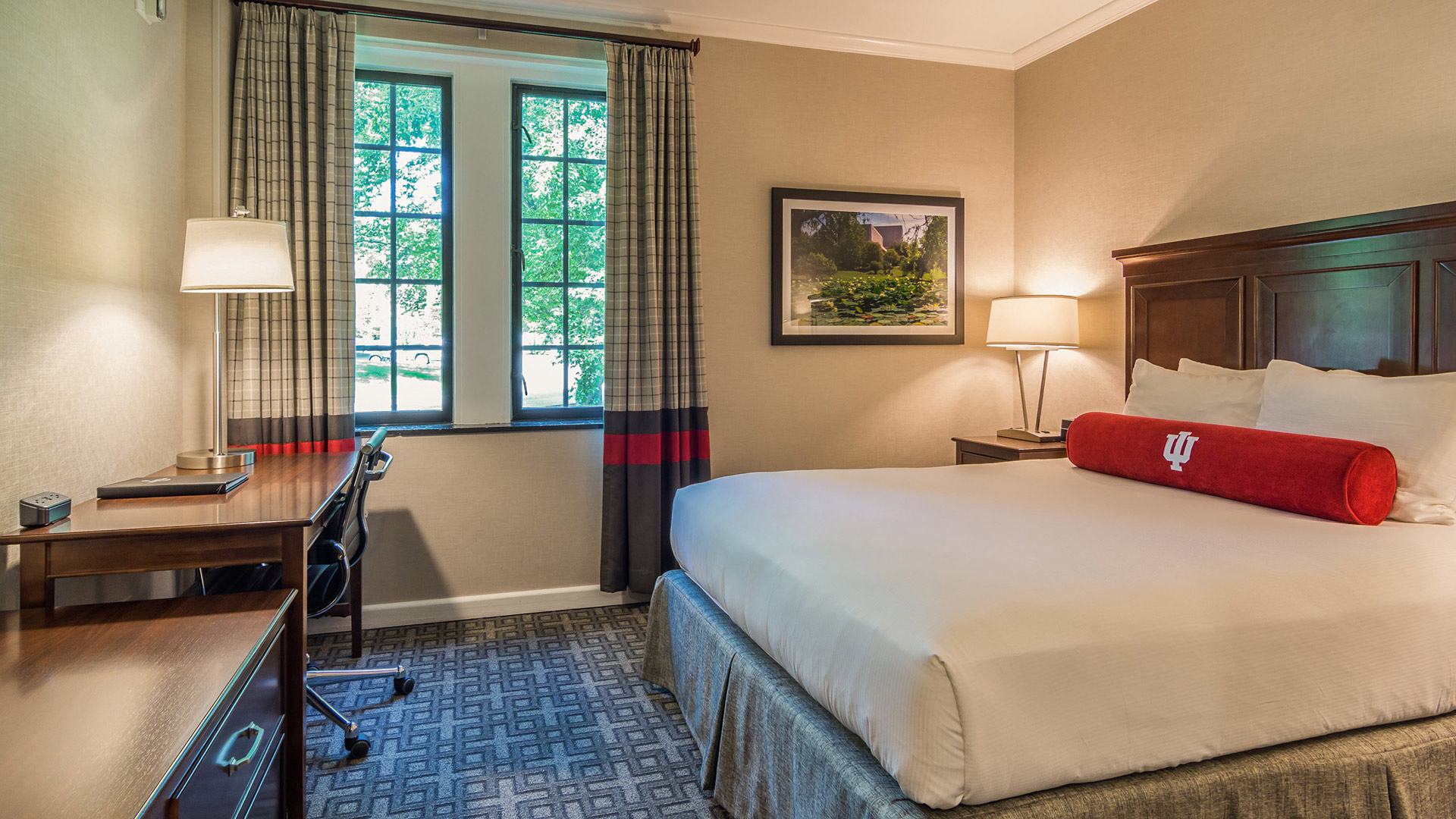
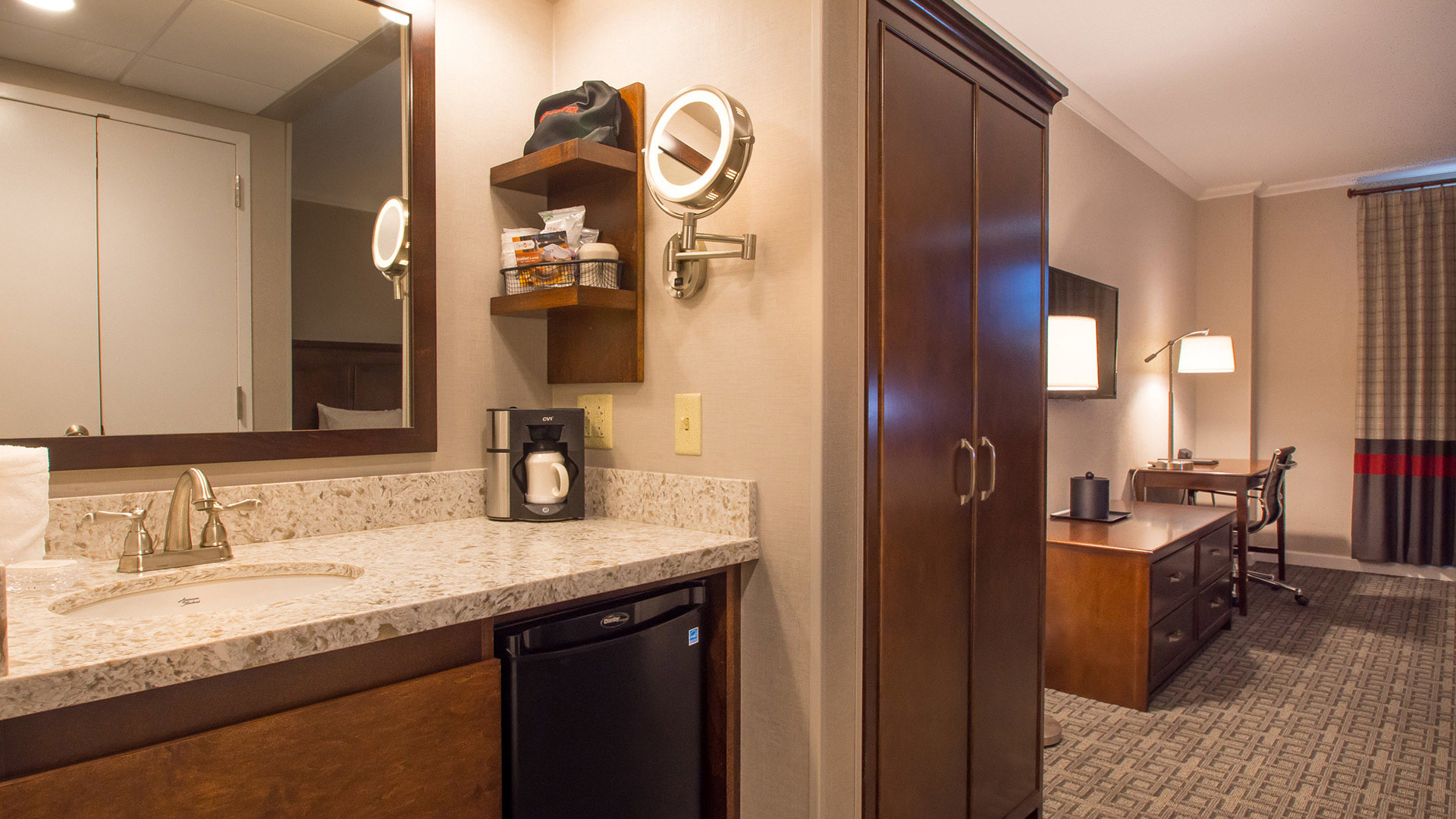
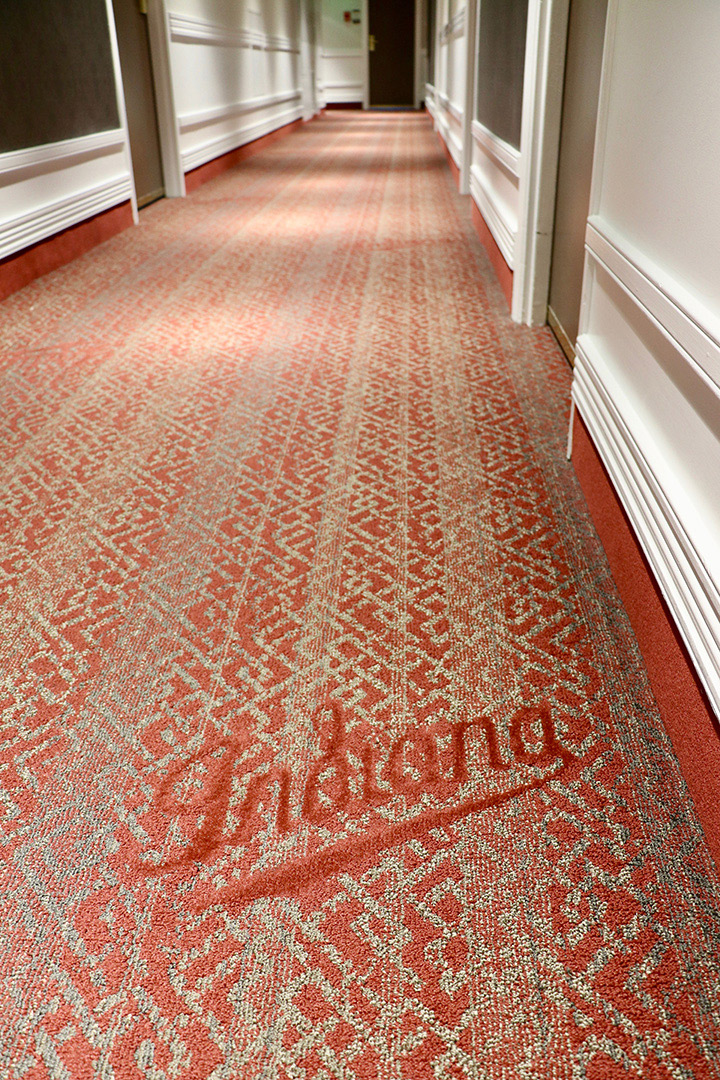
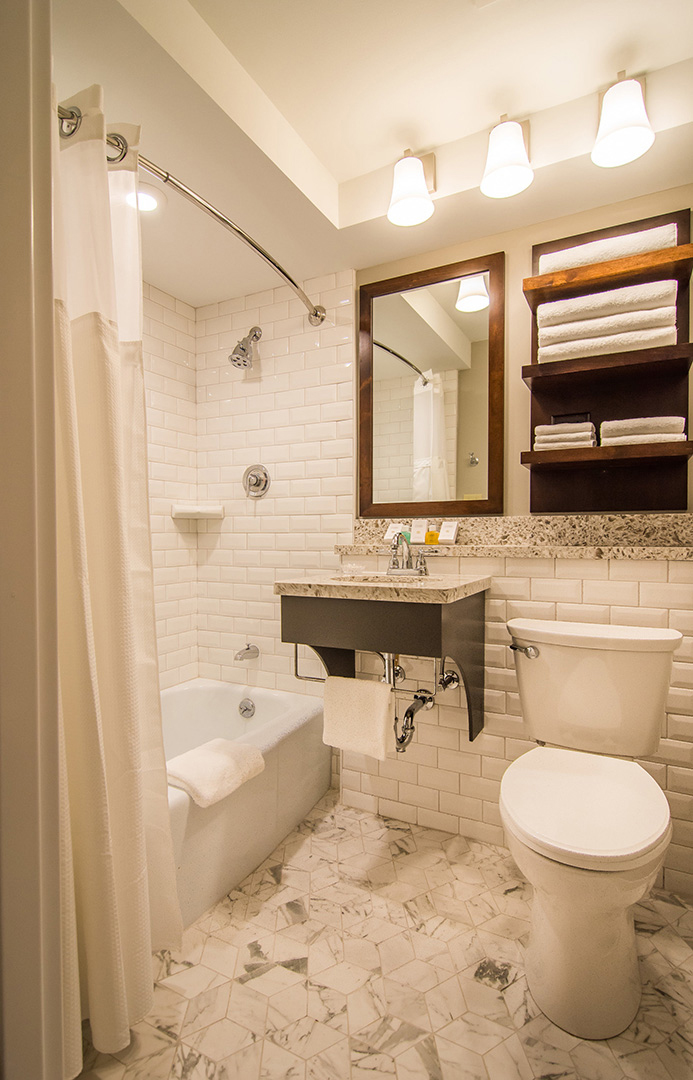
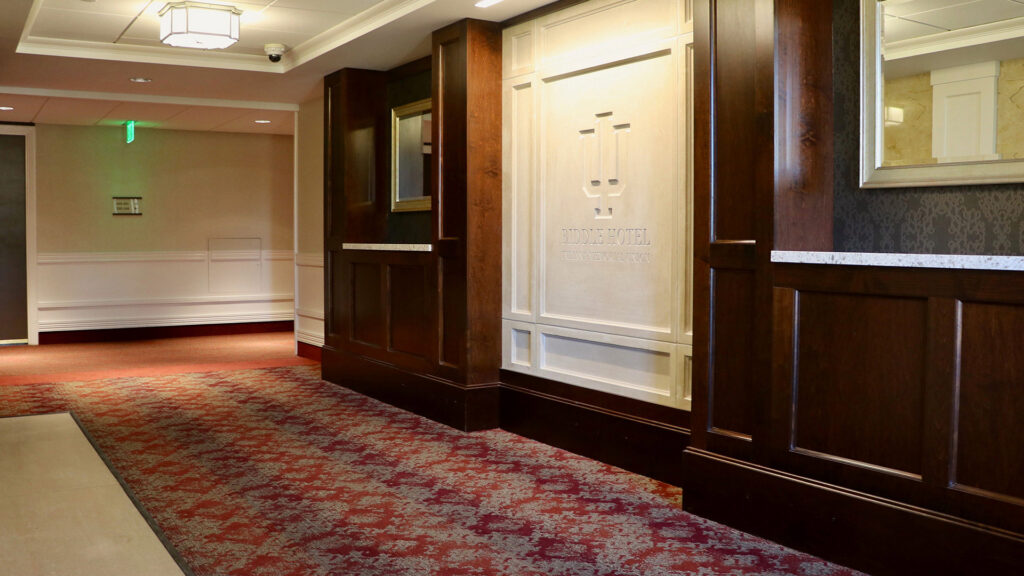

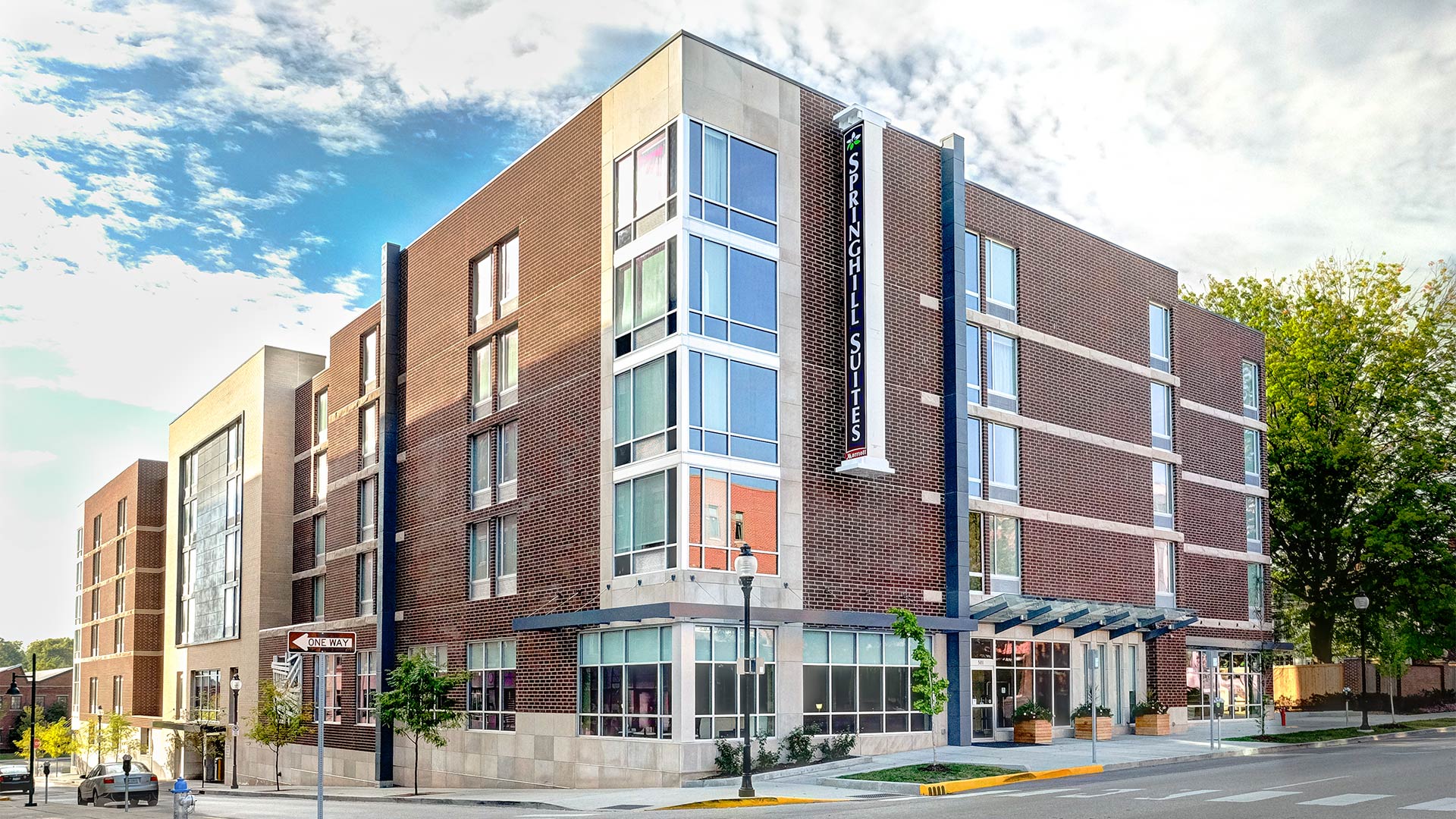
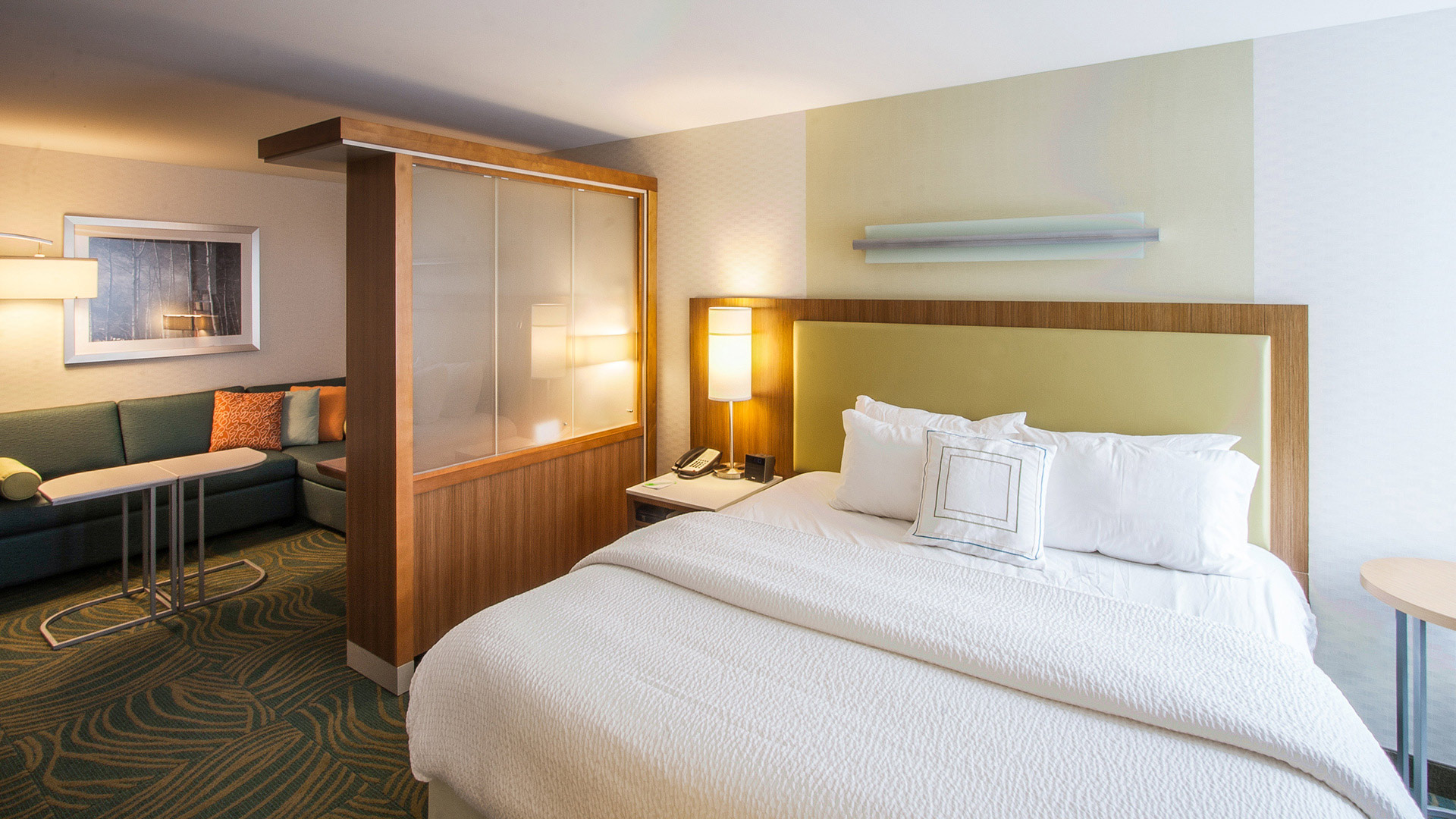
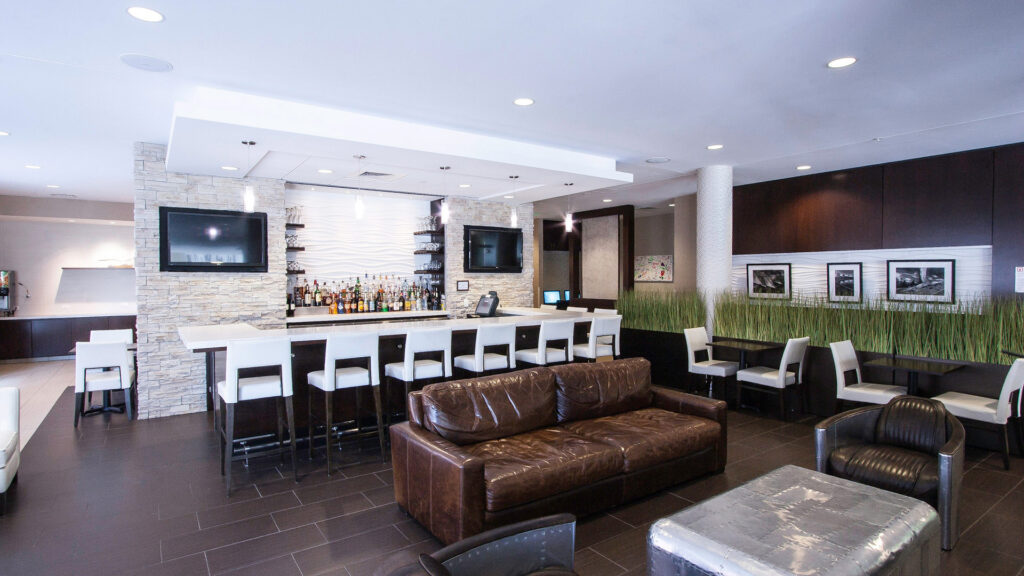
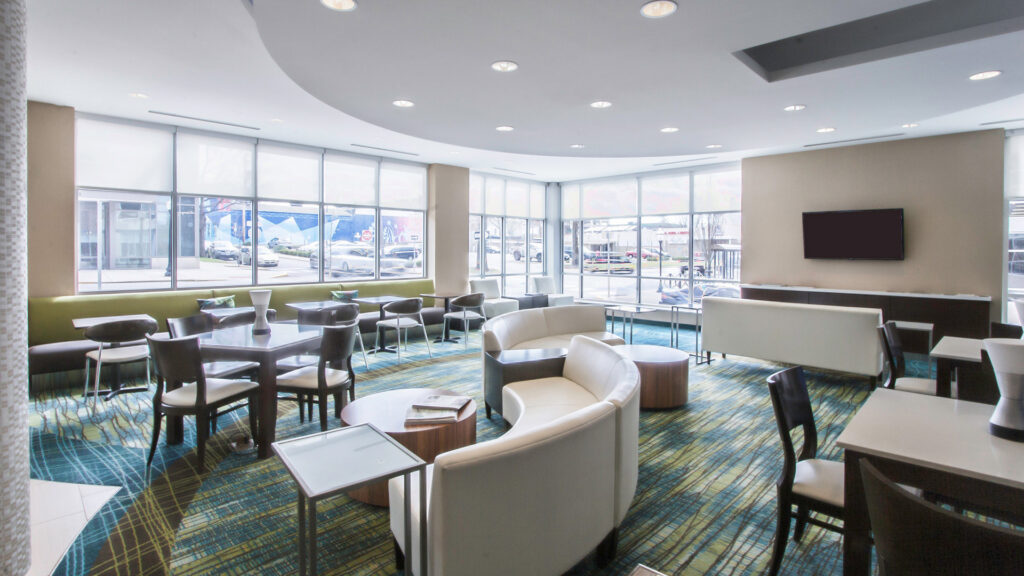
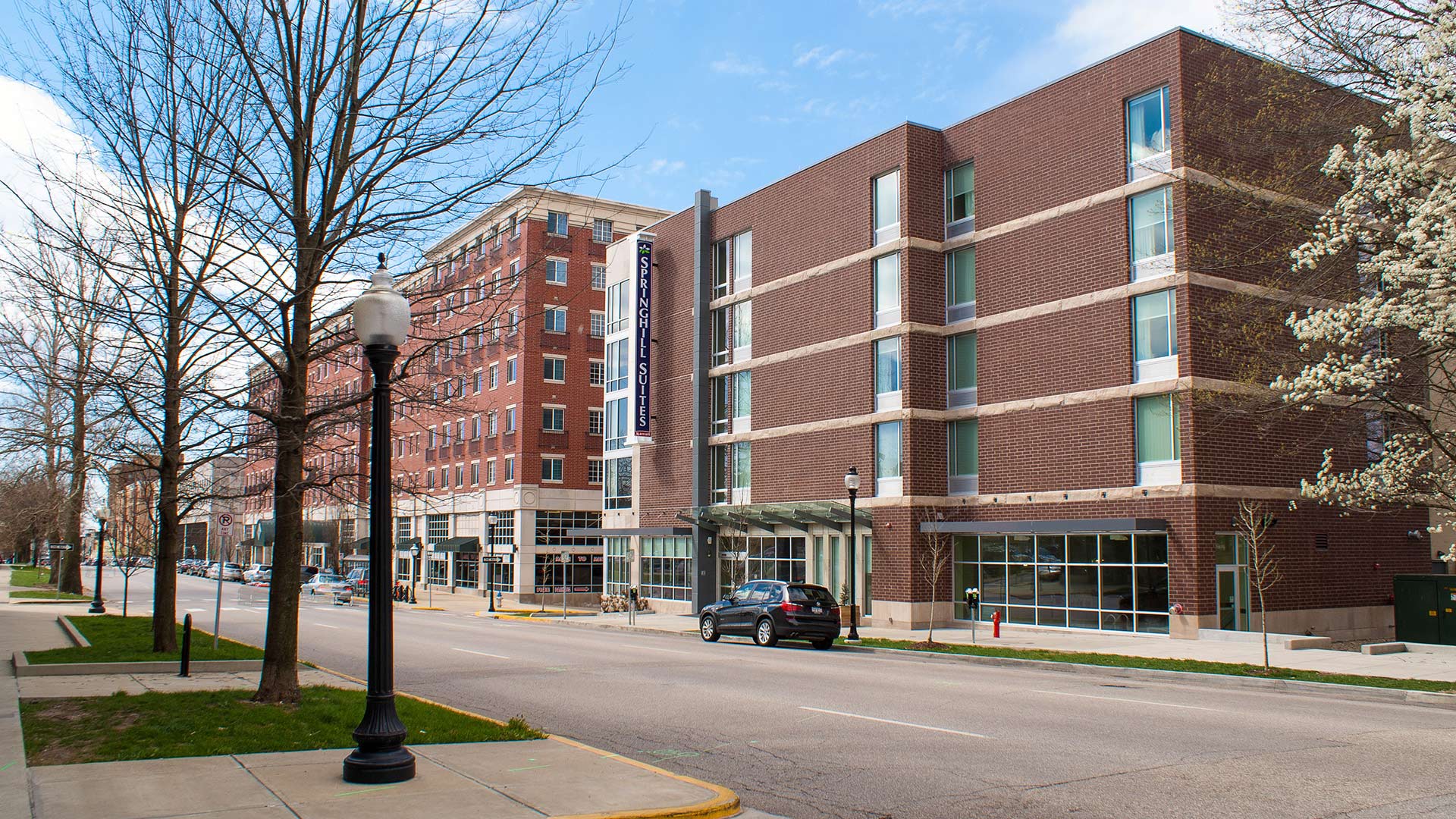
Features of the hotel include a custom lobby bar with fireplace and lounge areas, an indoor pool, 24-hour fitness center, business center, and laundry facility. The hotel suites are 25% larger/more spacious than traditional guest rooms within other hotels in downtown Bloomington to better accommodate families visiting campus. Each hotel room is equipped with a desk, pull-out sofa, local art, and views of downtown Bloomington.
,
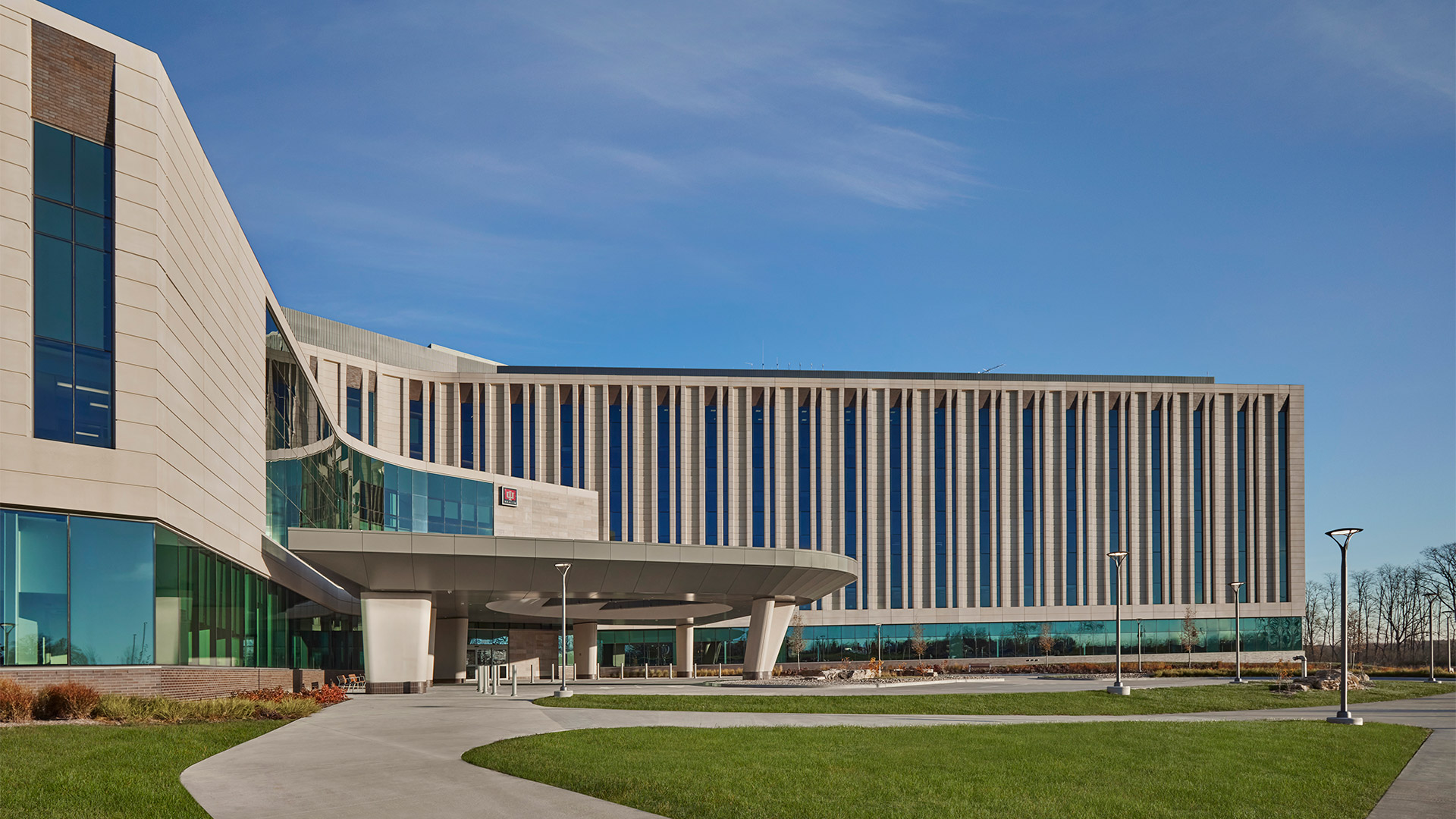
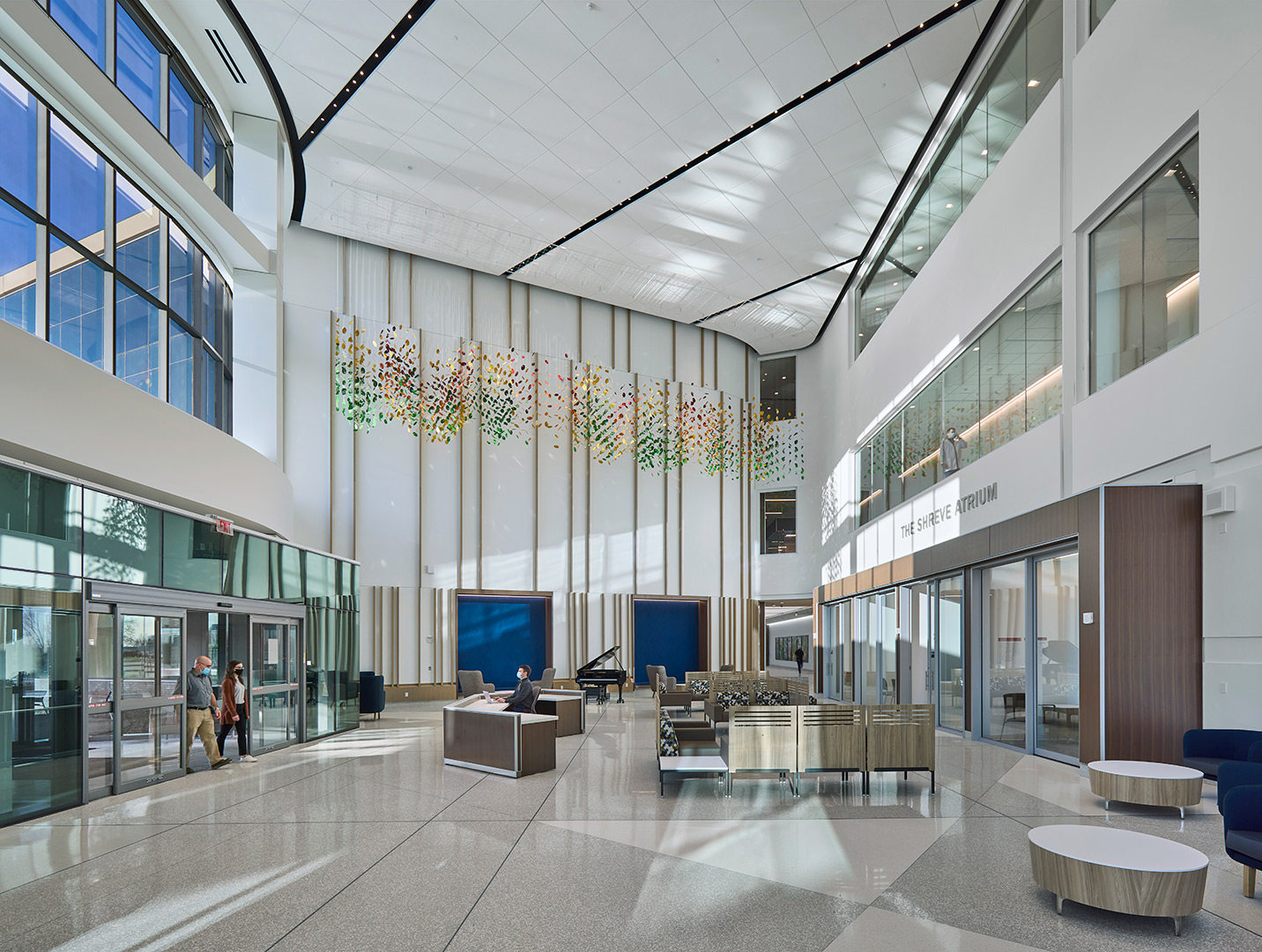
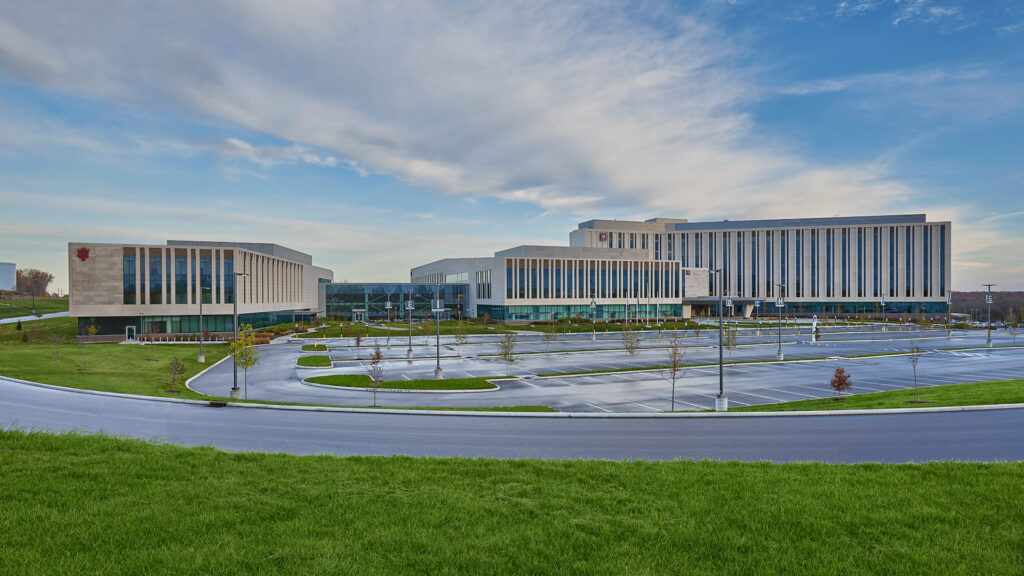
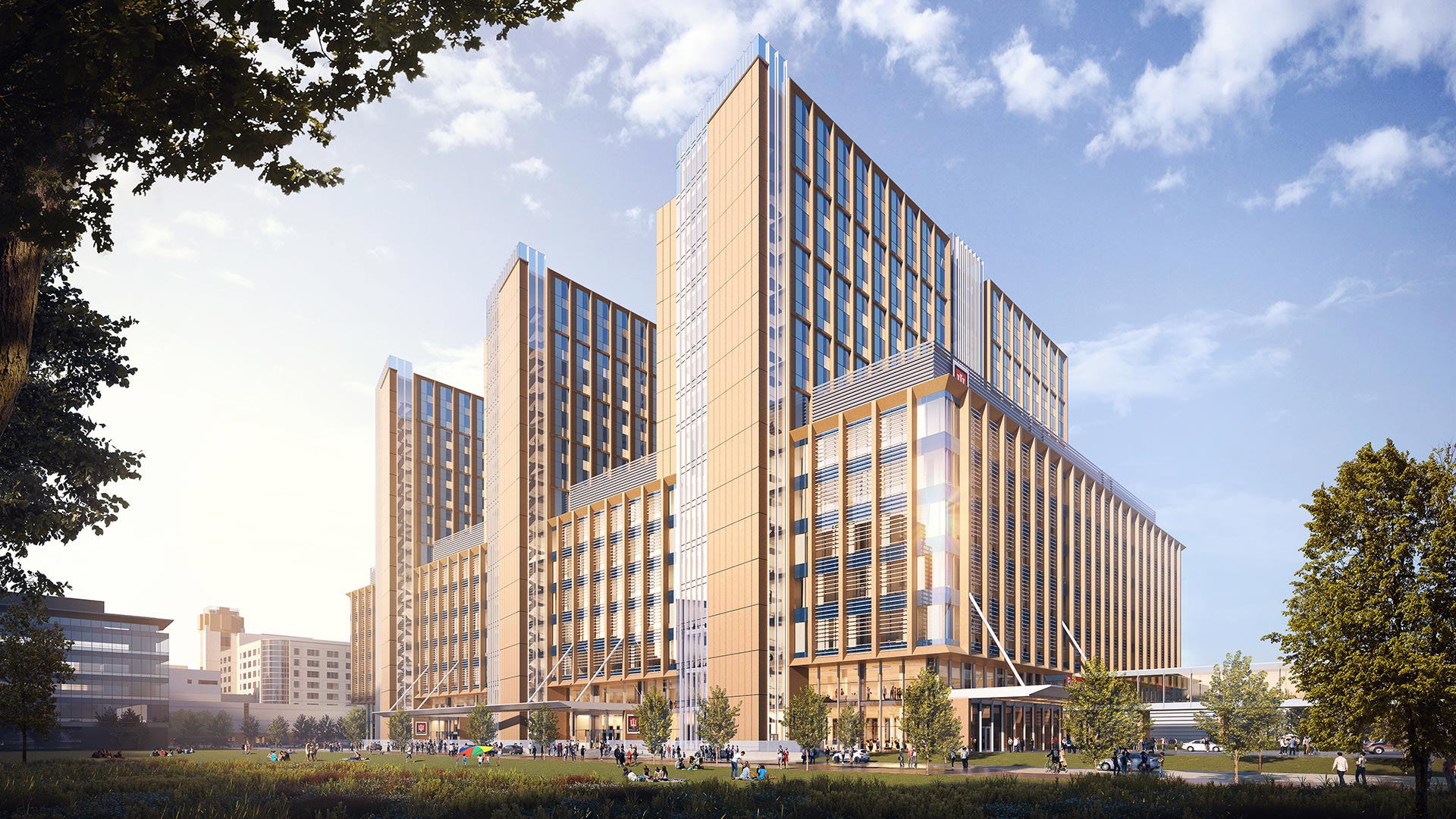
The new hospital goes beyond replacing an existing facility, offering an environment that supports practice, teaching, learning, and healing while elevating the quality of life for its community.
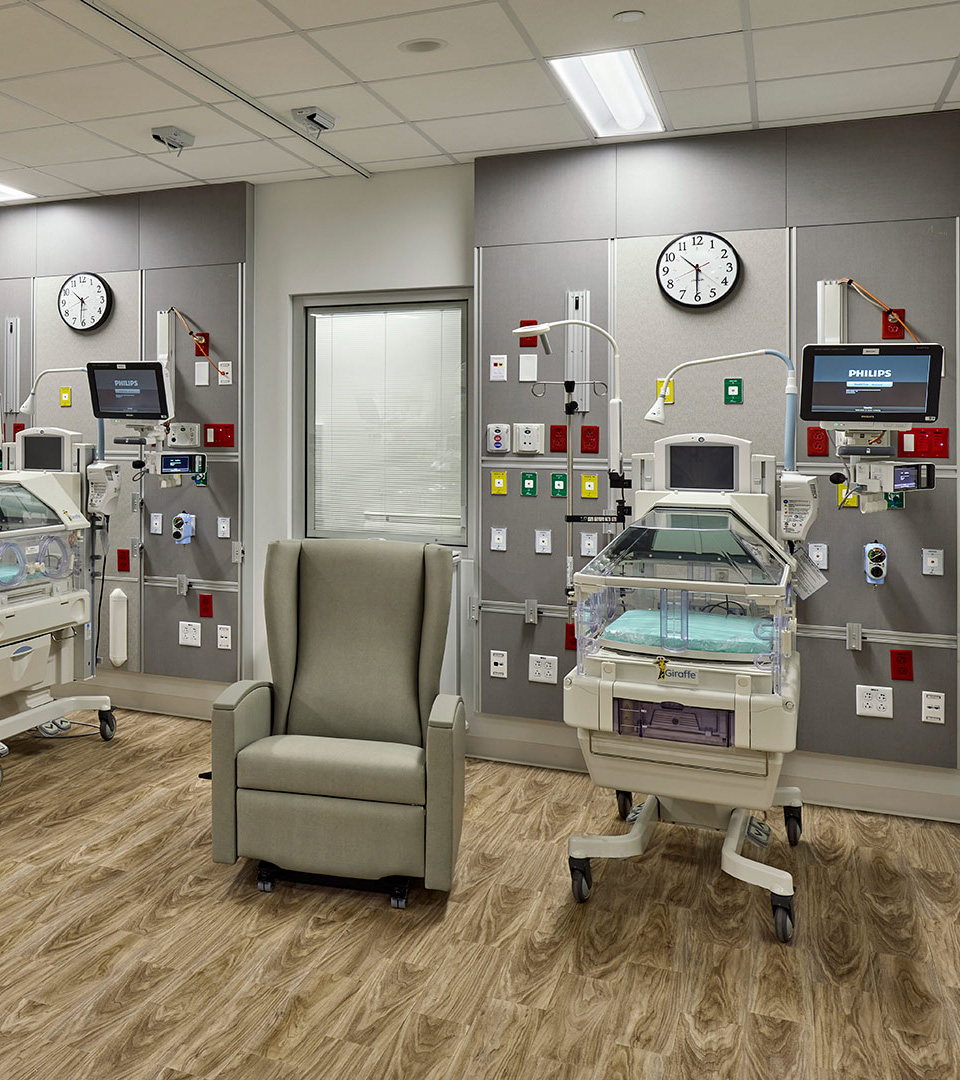
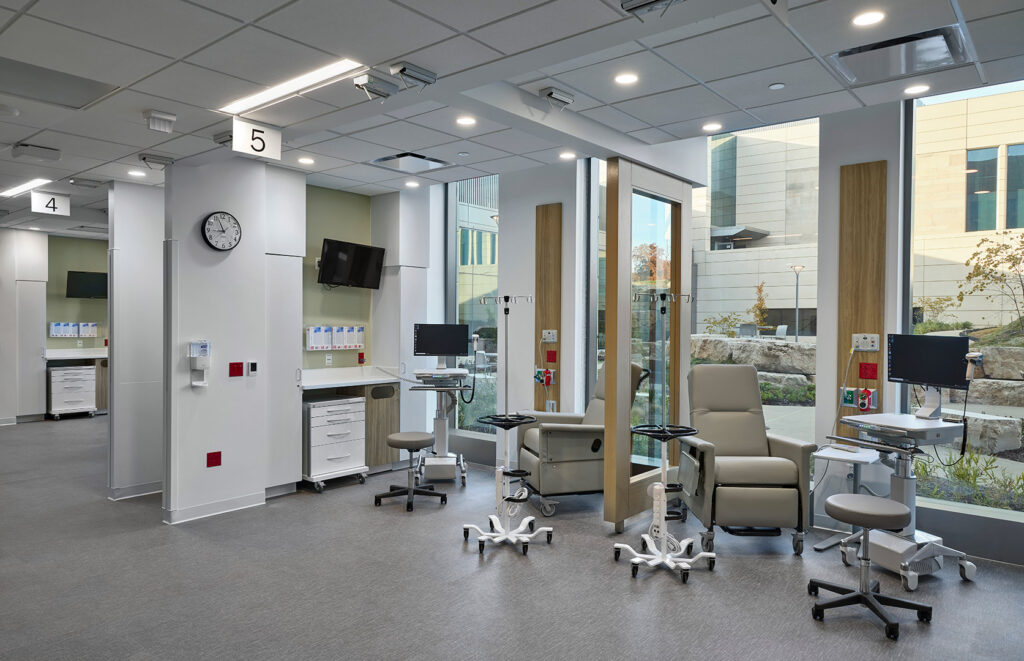
The result of a collaborative process with IU Health, project partners, and CSO, the new IU Health Bloomington Hospital provides a patient, family, physician and employee experience that is welcoming, intuitive, and serene.
CSO guided IU Health through a process for incorporating the work of regional artists.
Connecting the facility with its surroundings, art installations underscore IU Health’s commitment to cultivating community pride while enhancing the emotional wellbeing of those served by the facility.
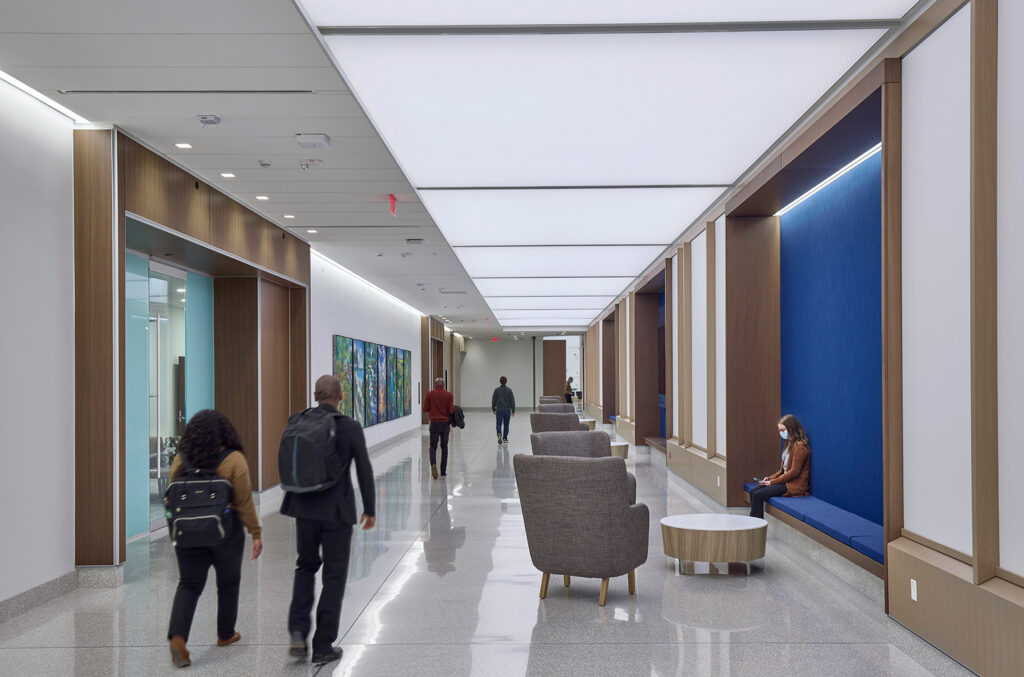
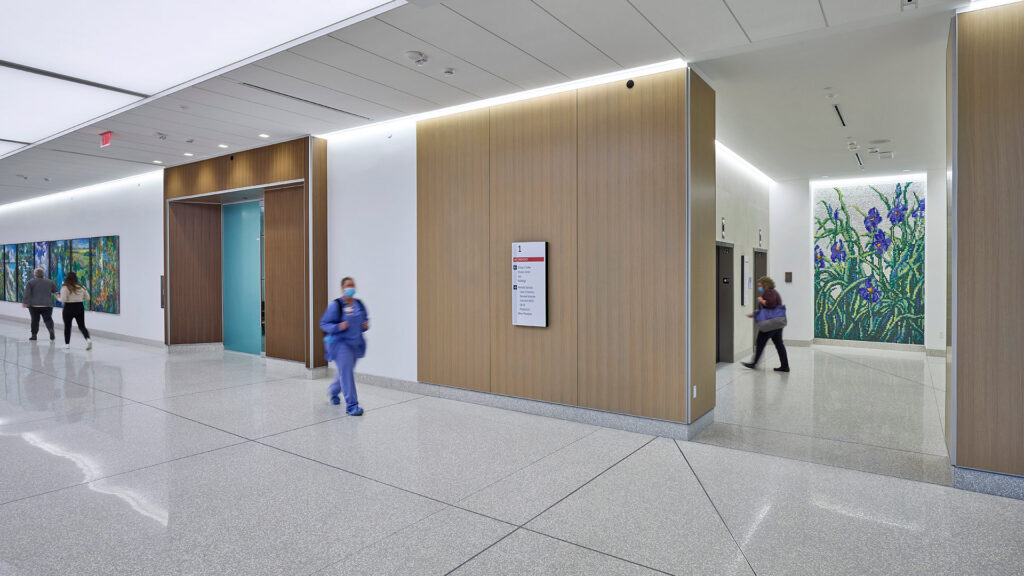
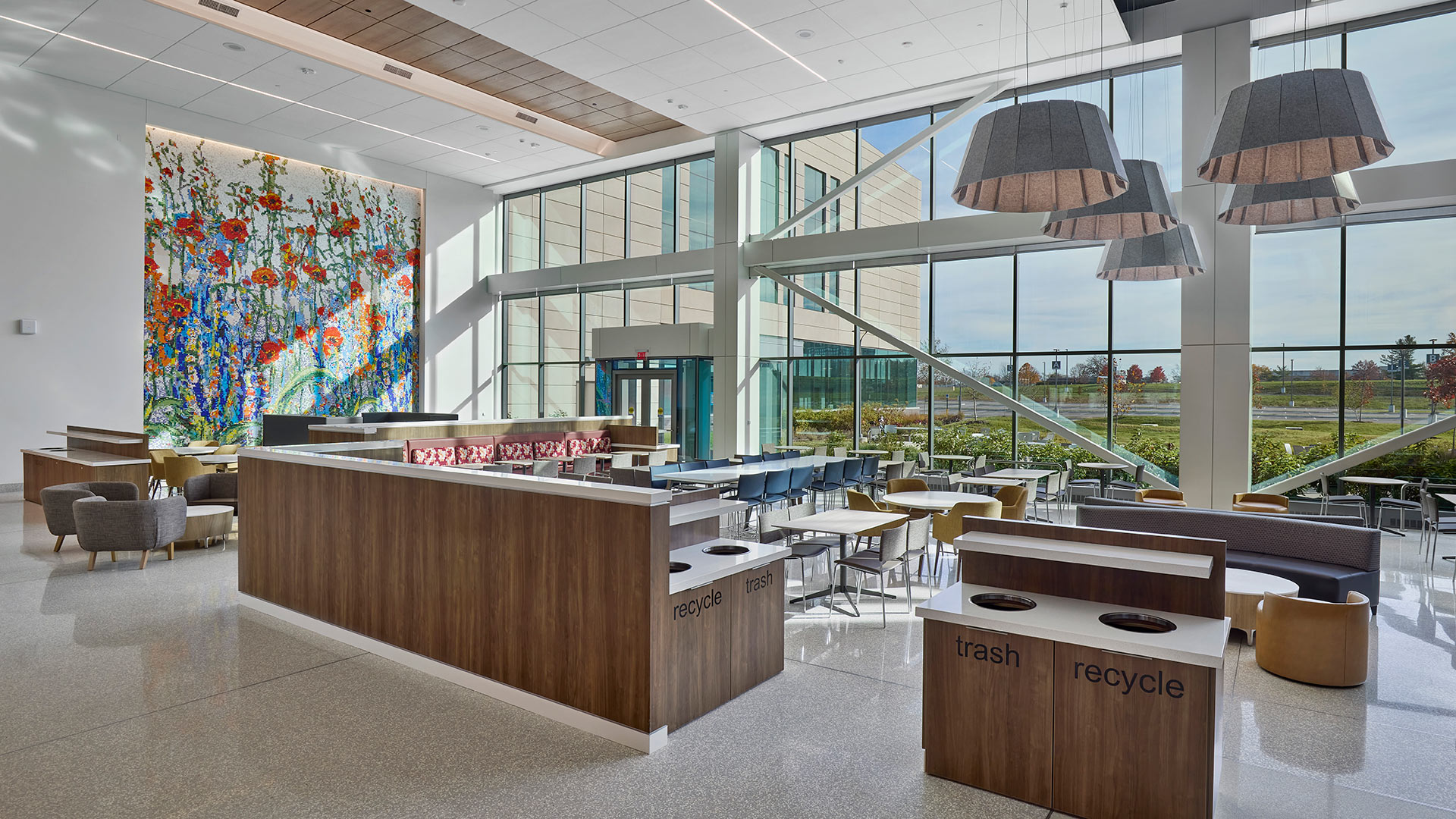
With the budget in mind, designers combined building elements, finishes, and art in the form of unique mosaics in public spaces. Each mosaic was custom-designed using artwork submitted by local artists.
,
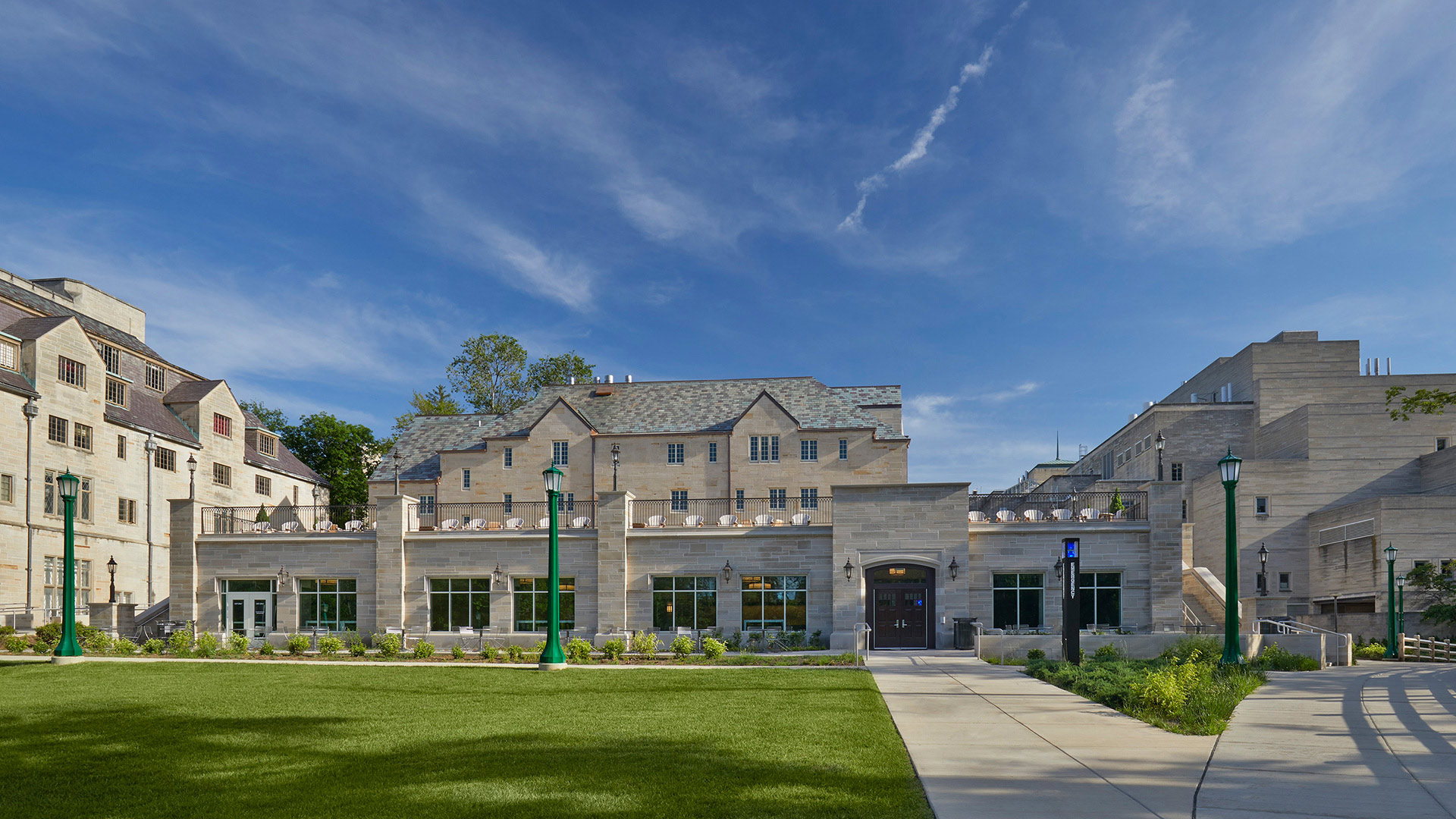
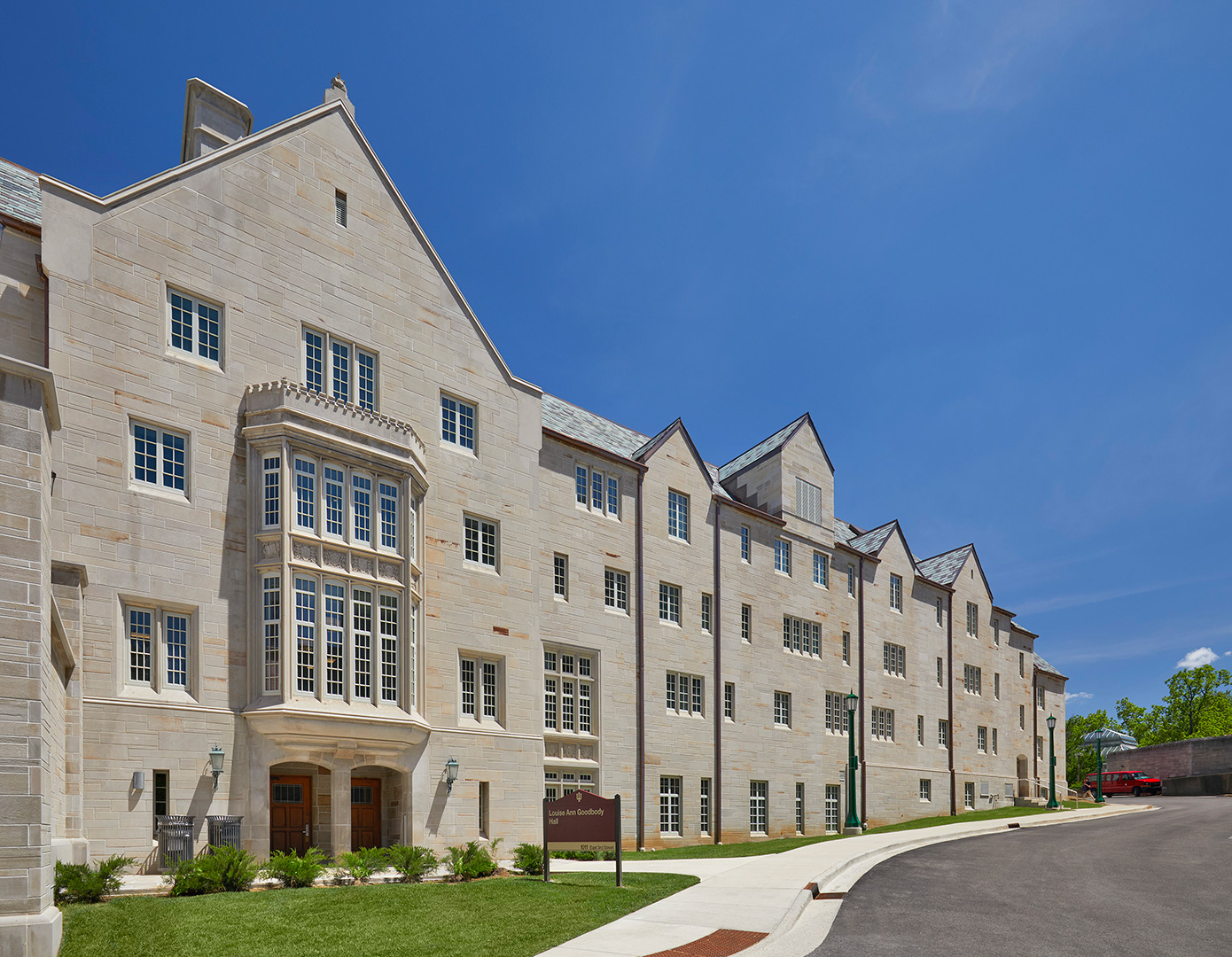
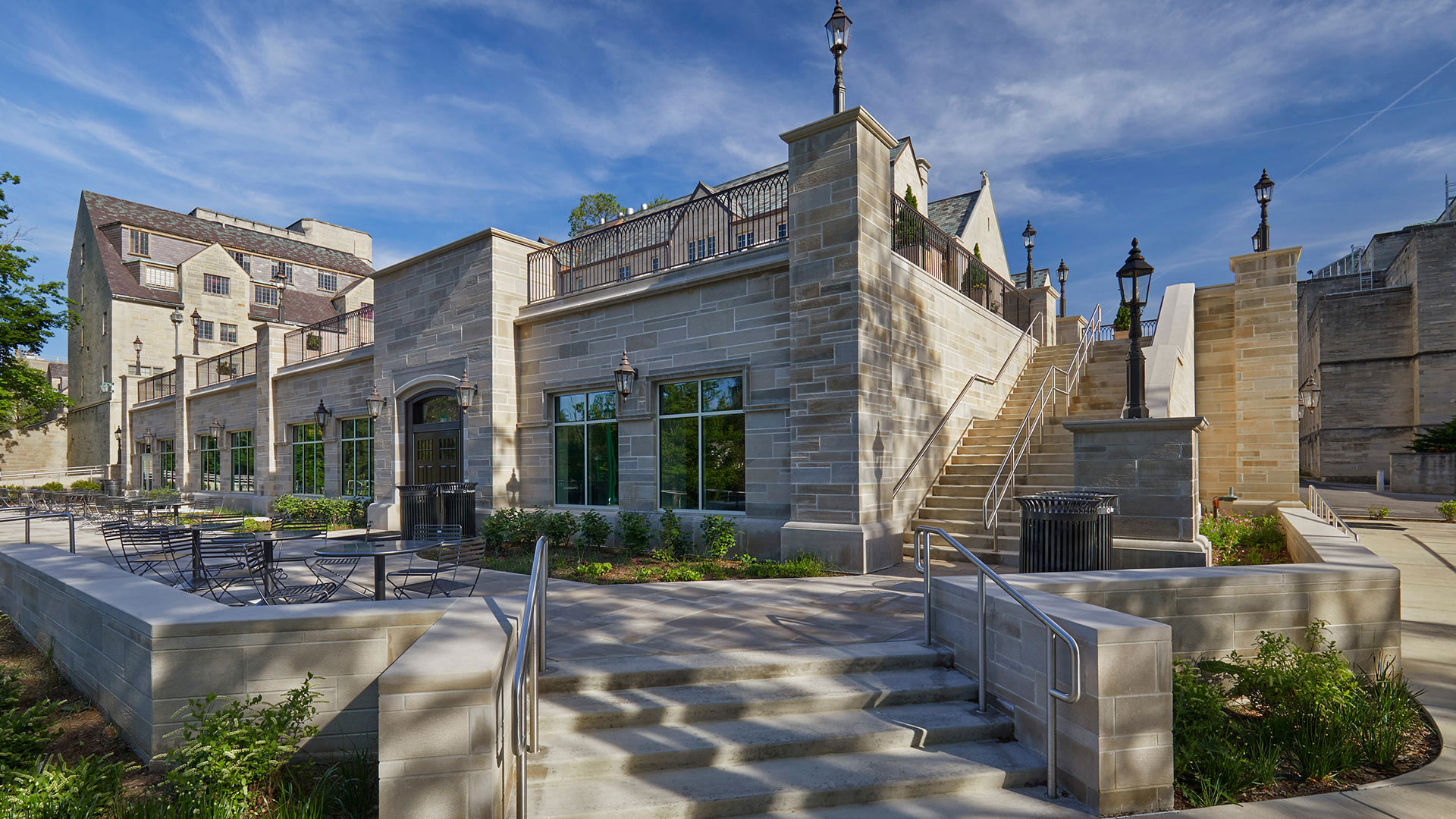
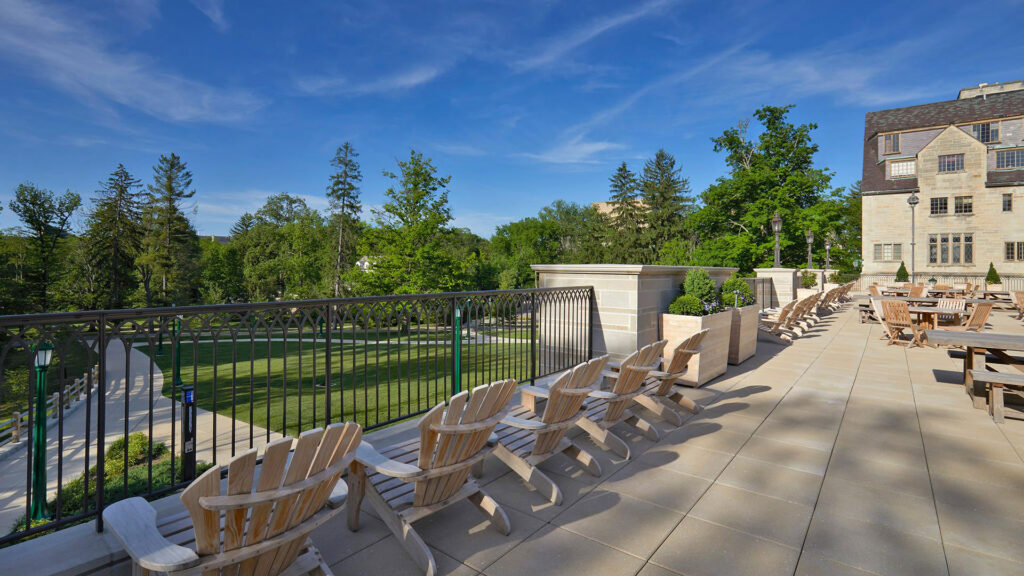
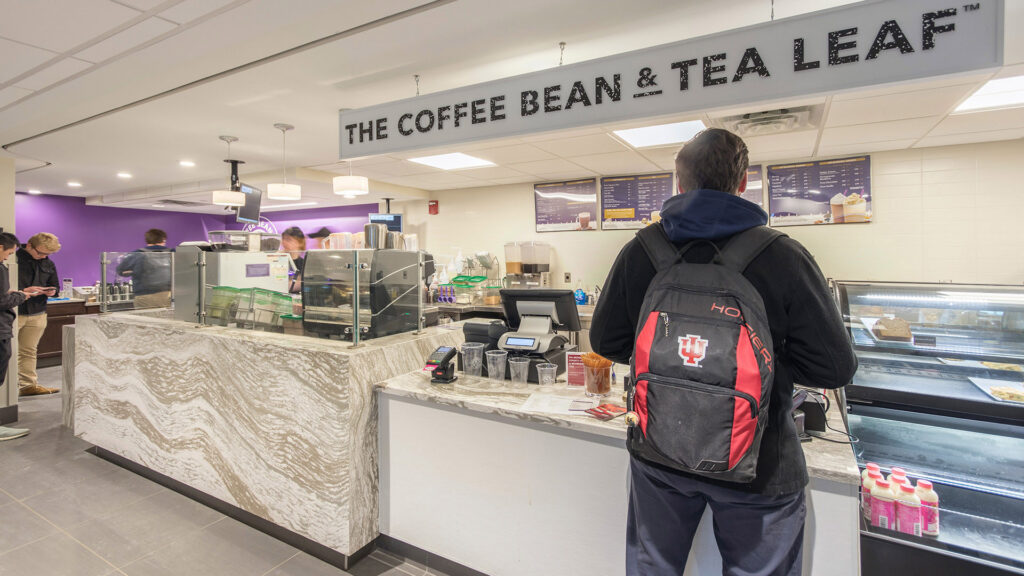
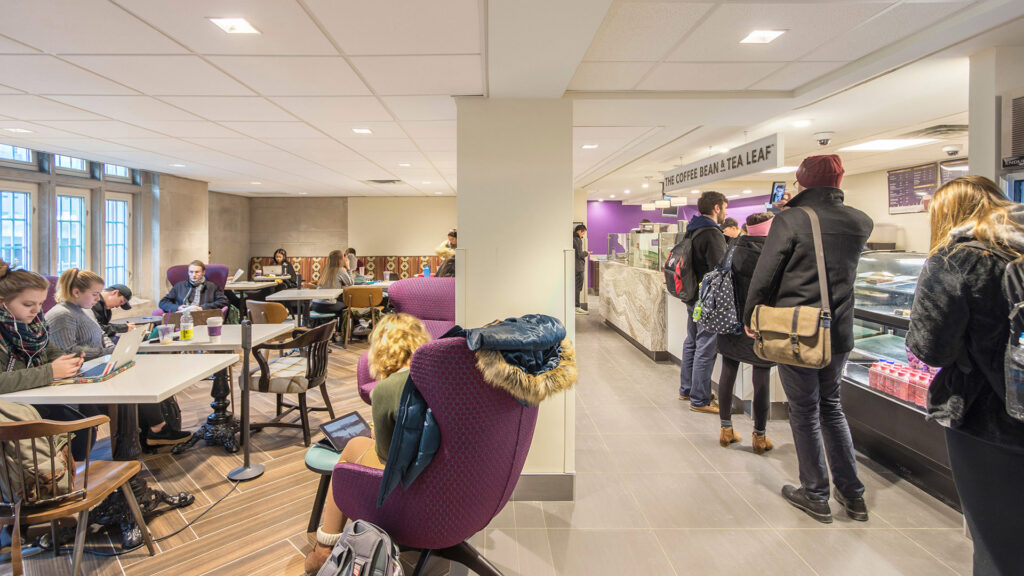
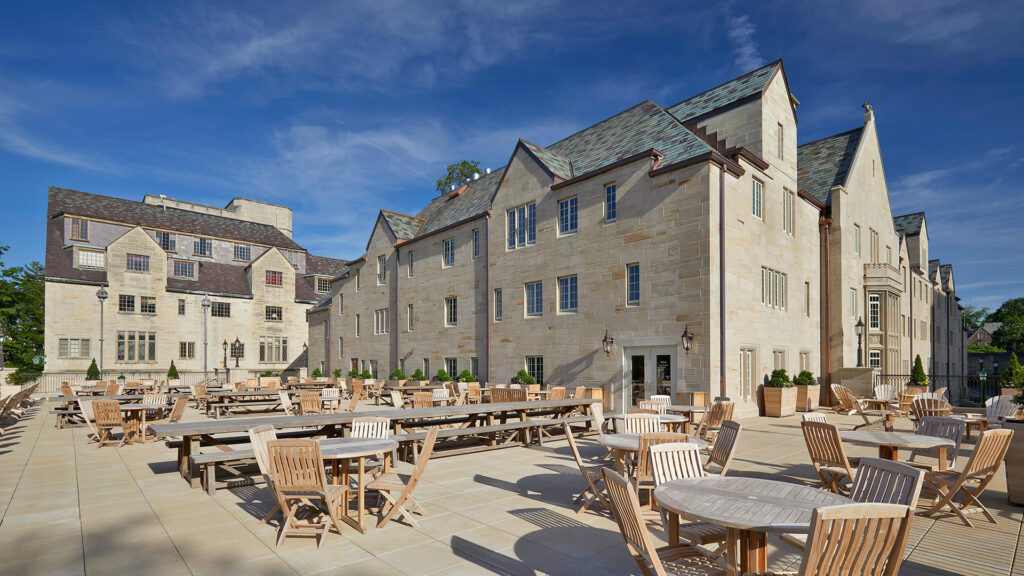
The design of the addition to Goodbody Hall required a solution that integrated seamlessly into the architectural character of Wells Quadrangle. The 1-story addition emerges from the base of the existing Goodbody Hall, and houses a dining area with open views toward the quad. A roof terrace above is accessed from both the exterior grade and the second level. This elevated terrace provides options for outdoor seating and a sweeping overlook to the quad.
The overall project required careful coordination to maximize usable space while accommodating updated MEP systems and the technology infrastructure demanded by today’s residence halls.
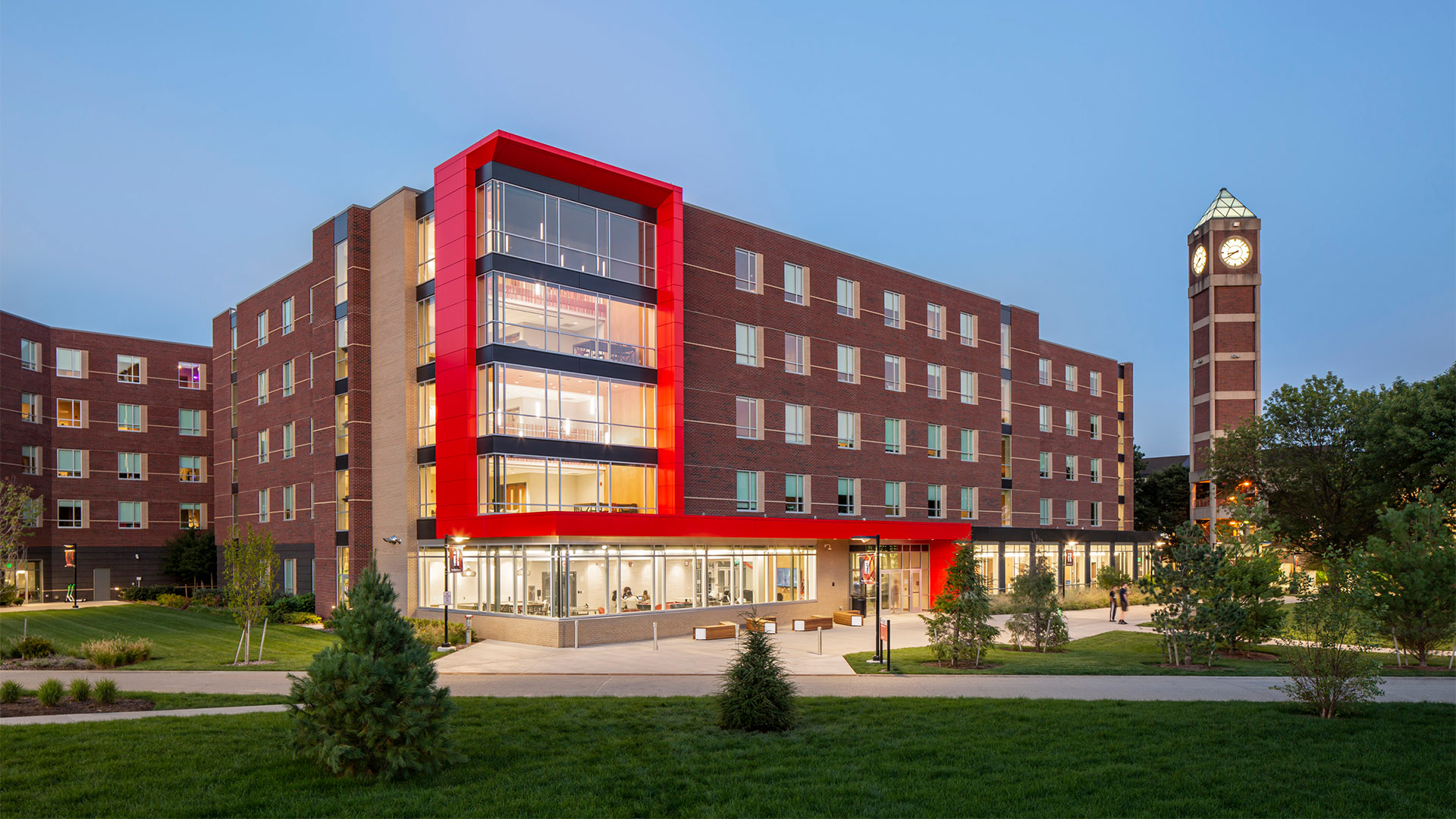
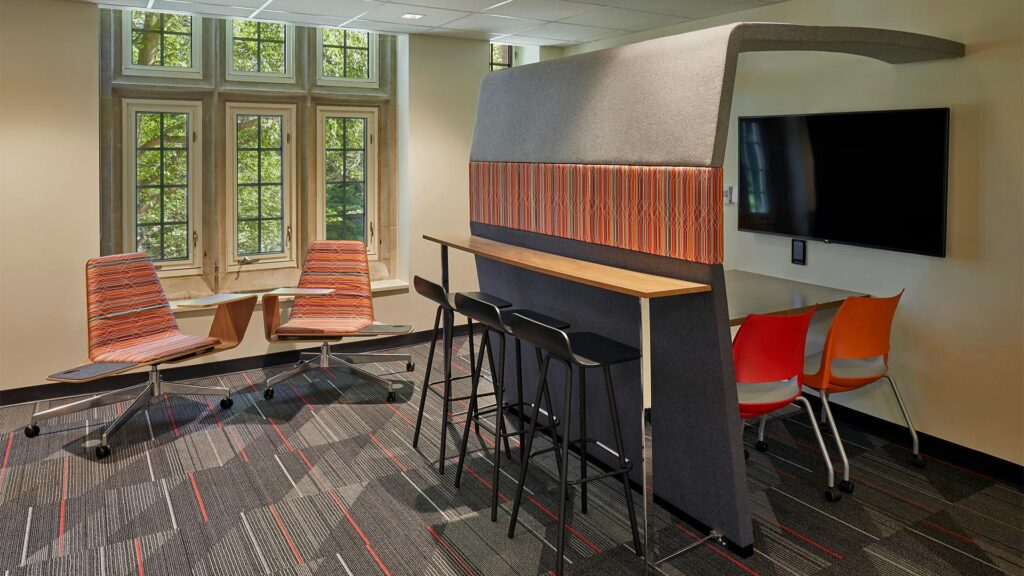
The renovation created accommodations for 174 students. The room configuration is comprised of a mix of 2-bedroom apartments, 2-bedrooms suites, single rooms, and double rooms. A variety of restroom configurations are available depending on the room type.
,
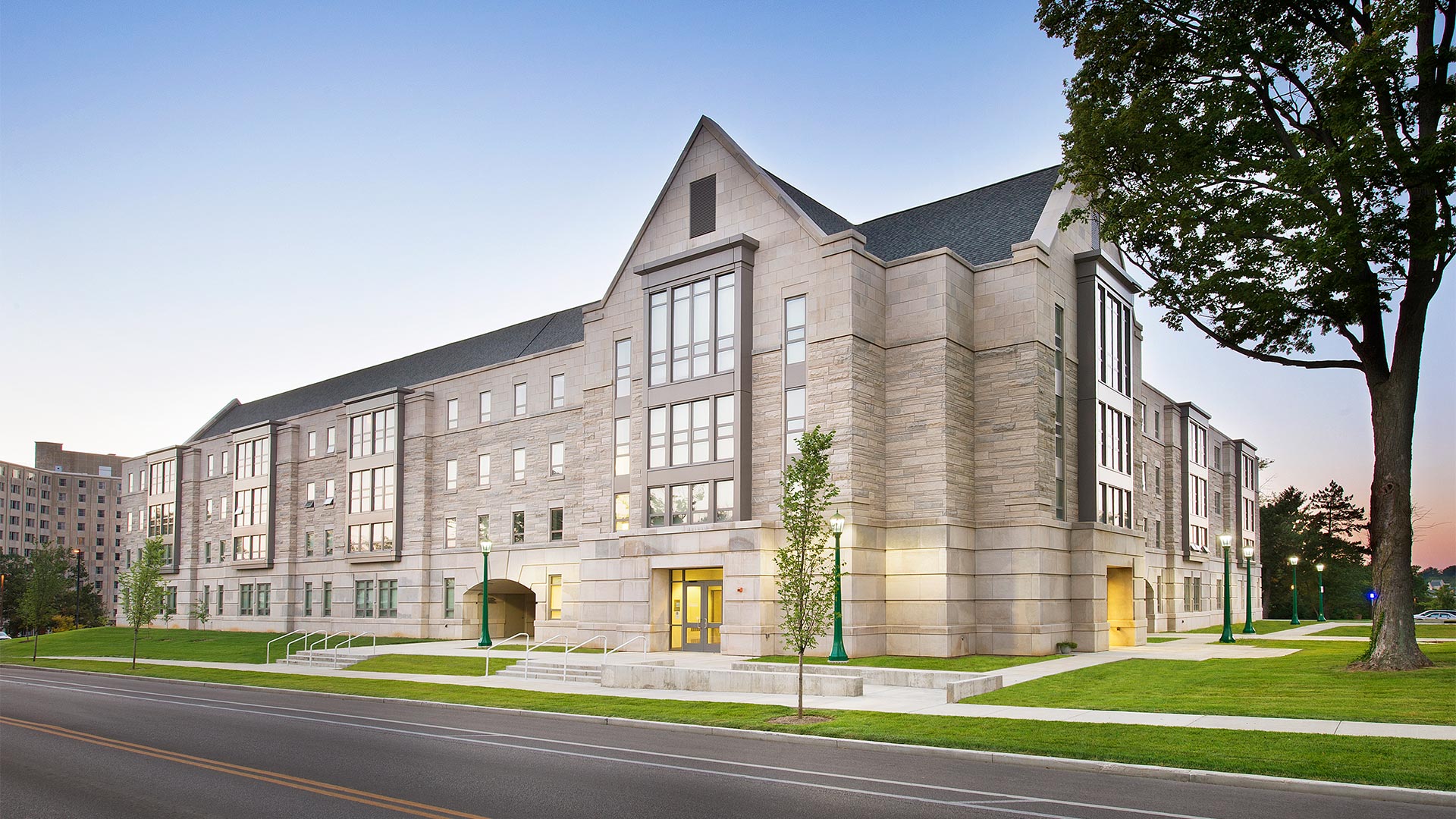
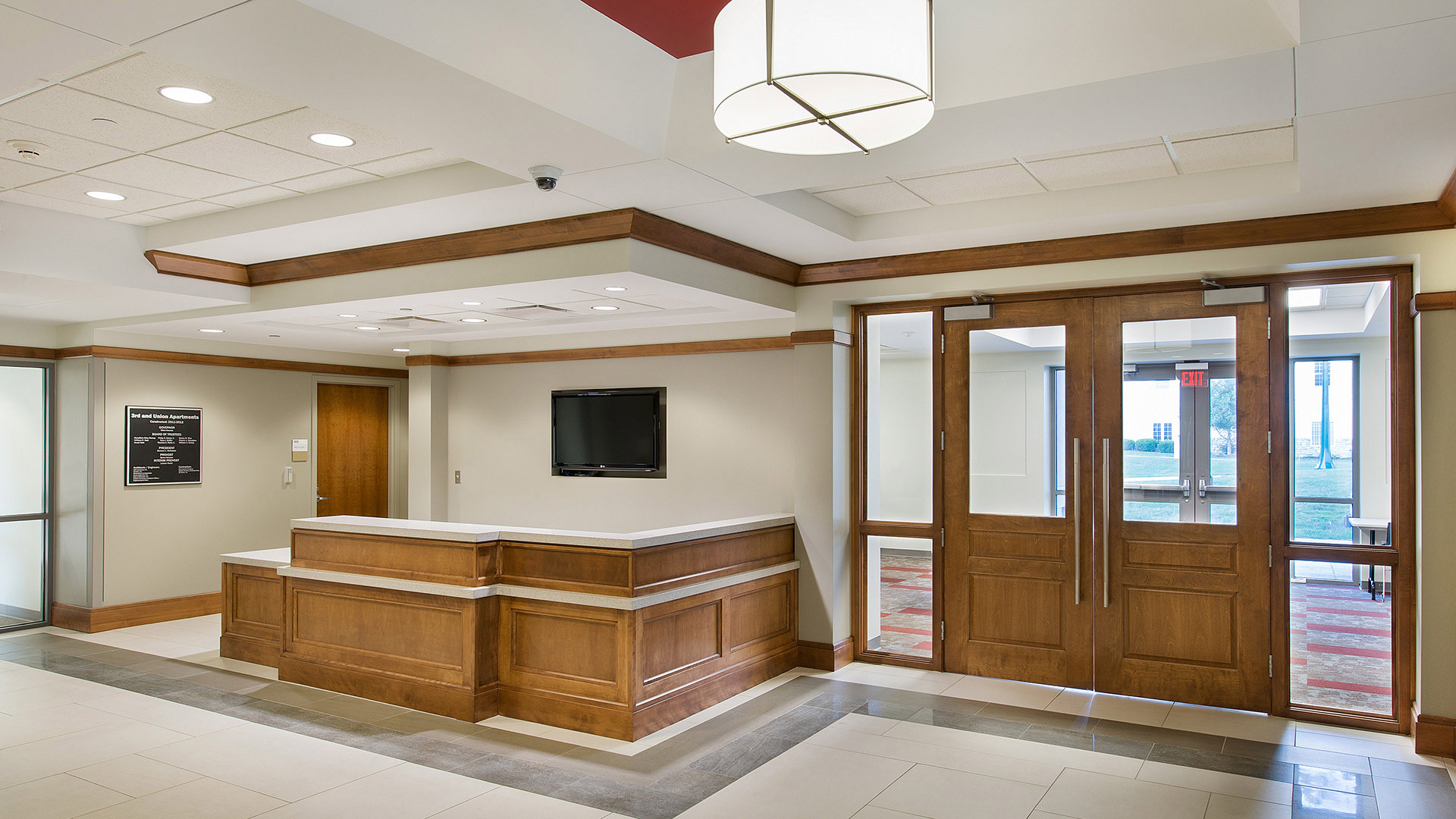
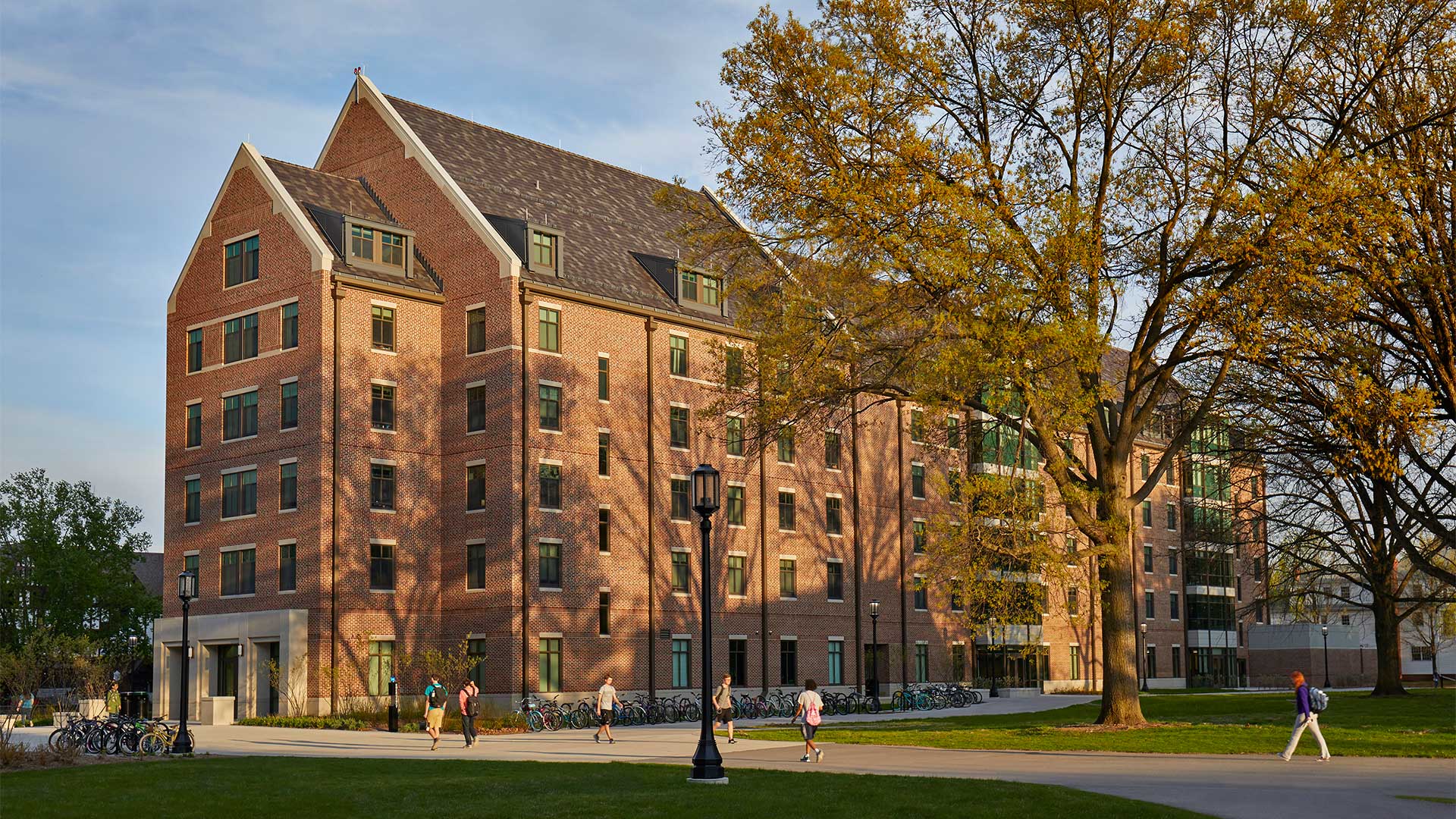
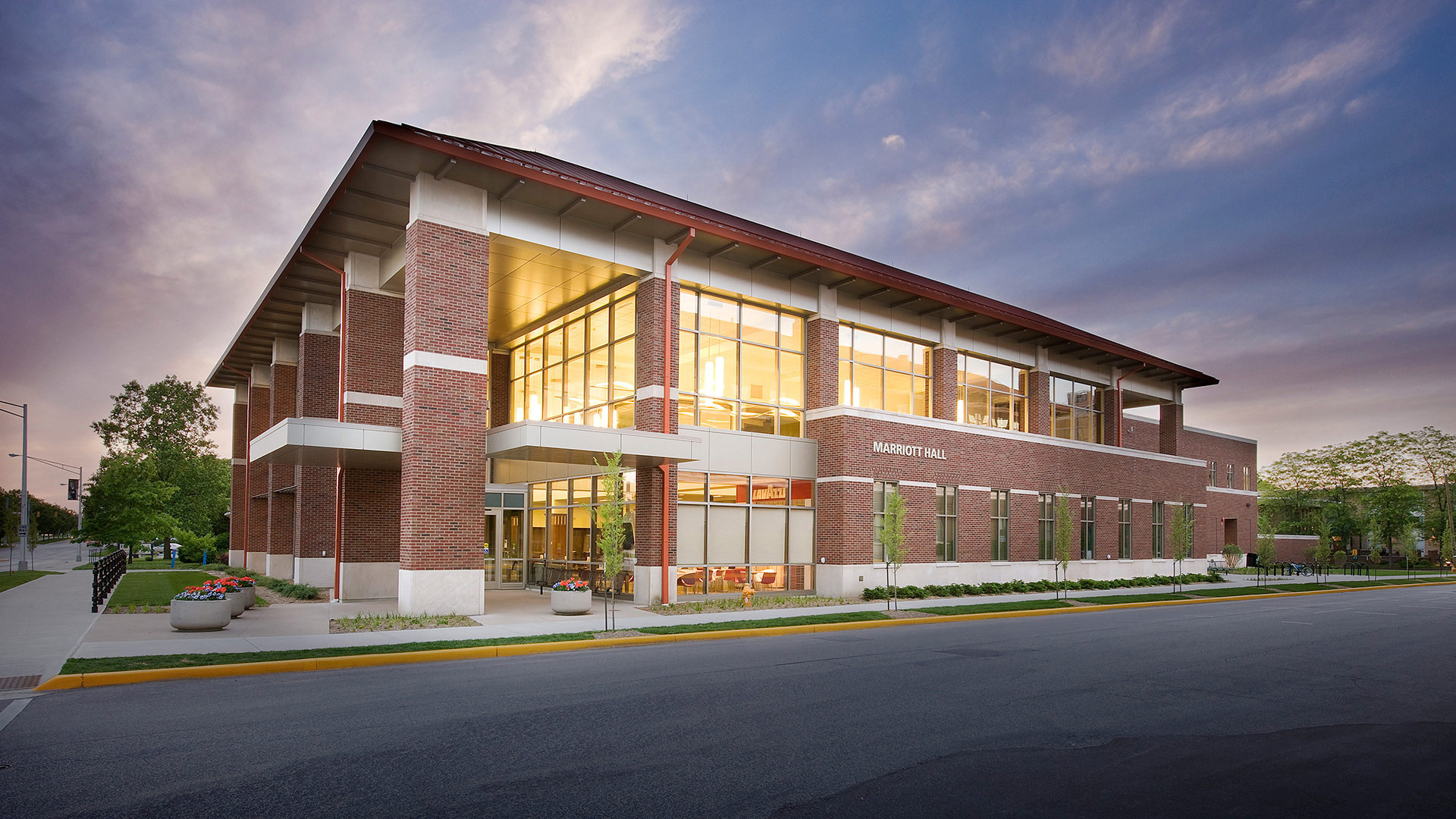
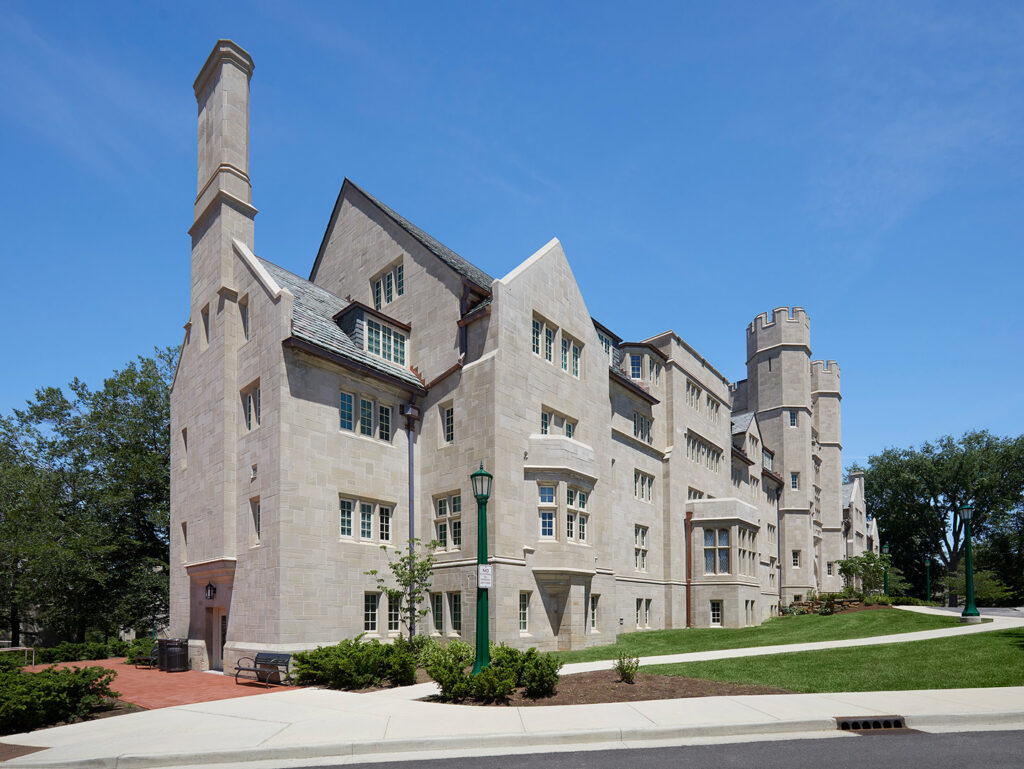
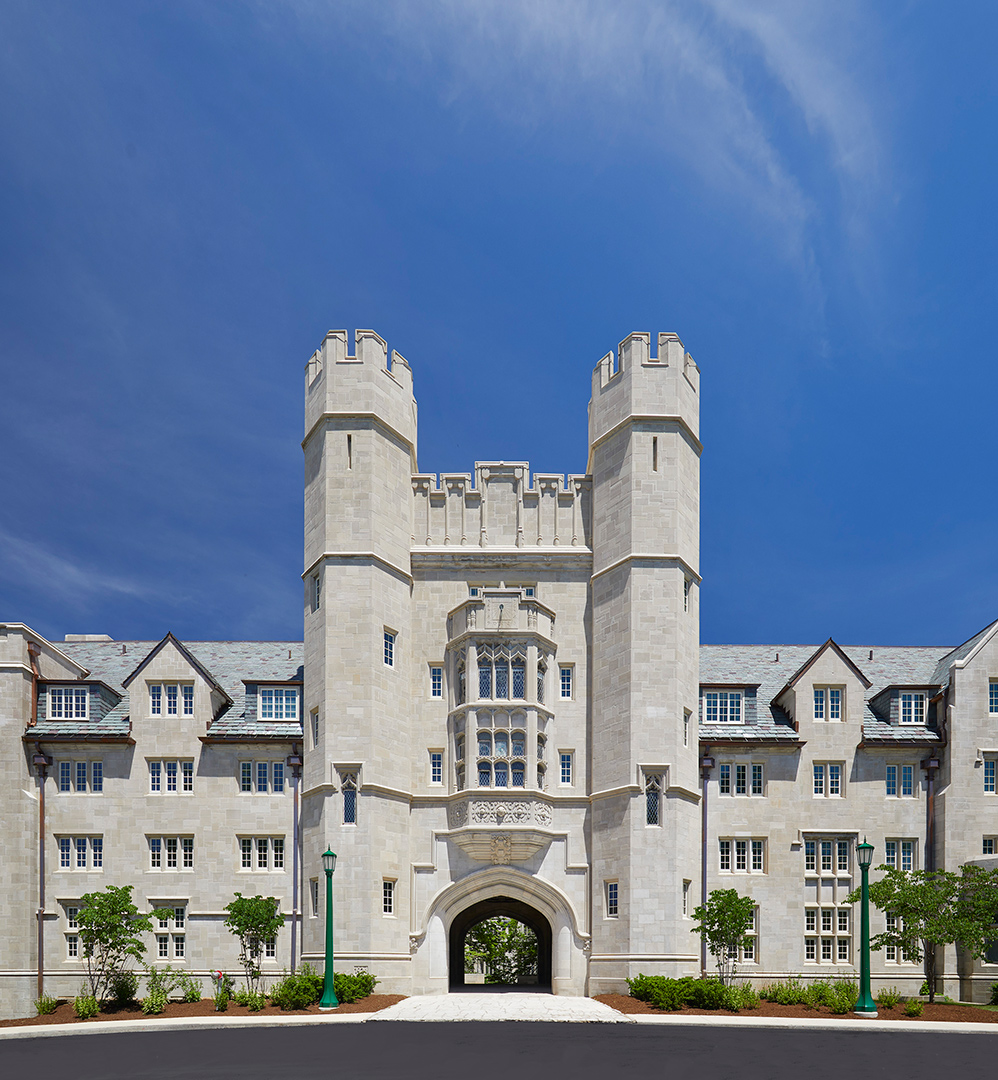
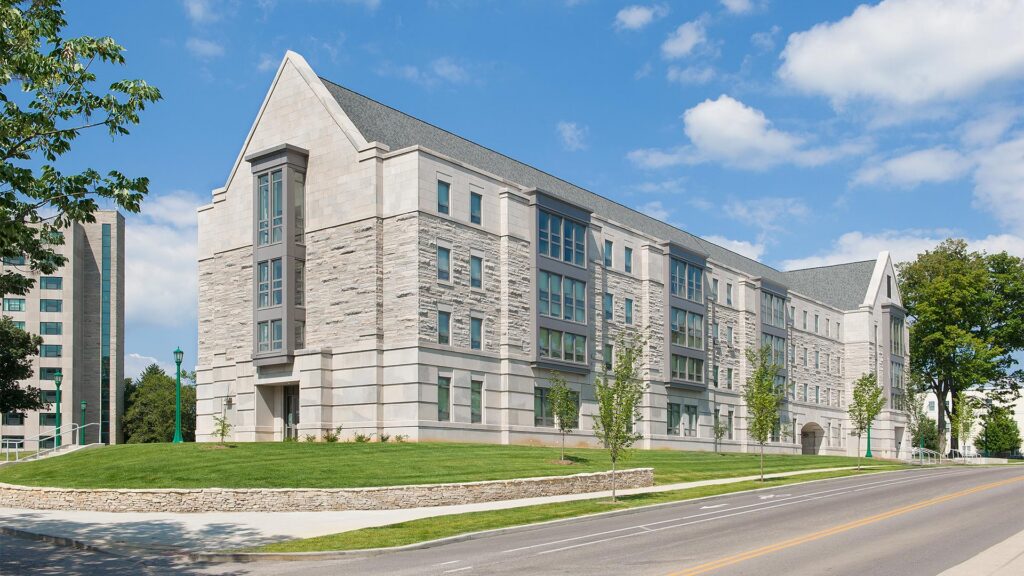
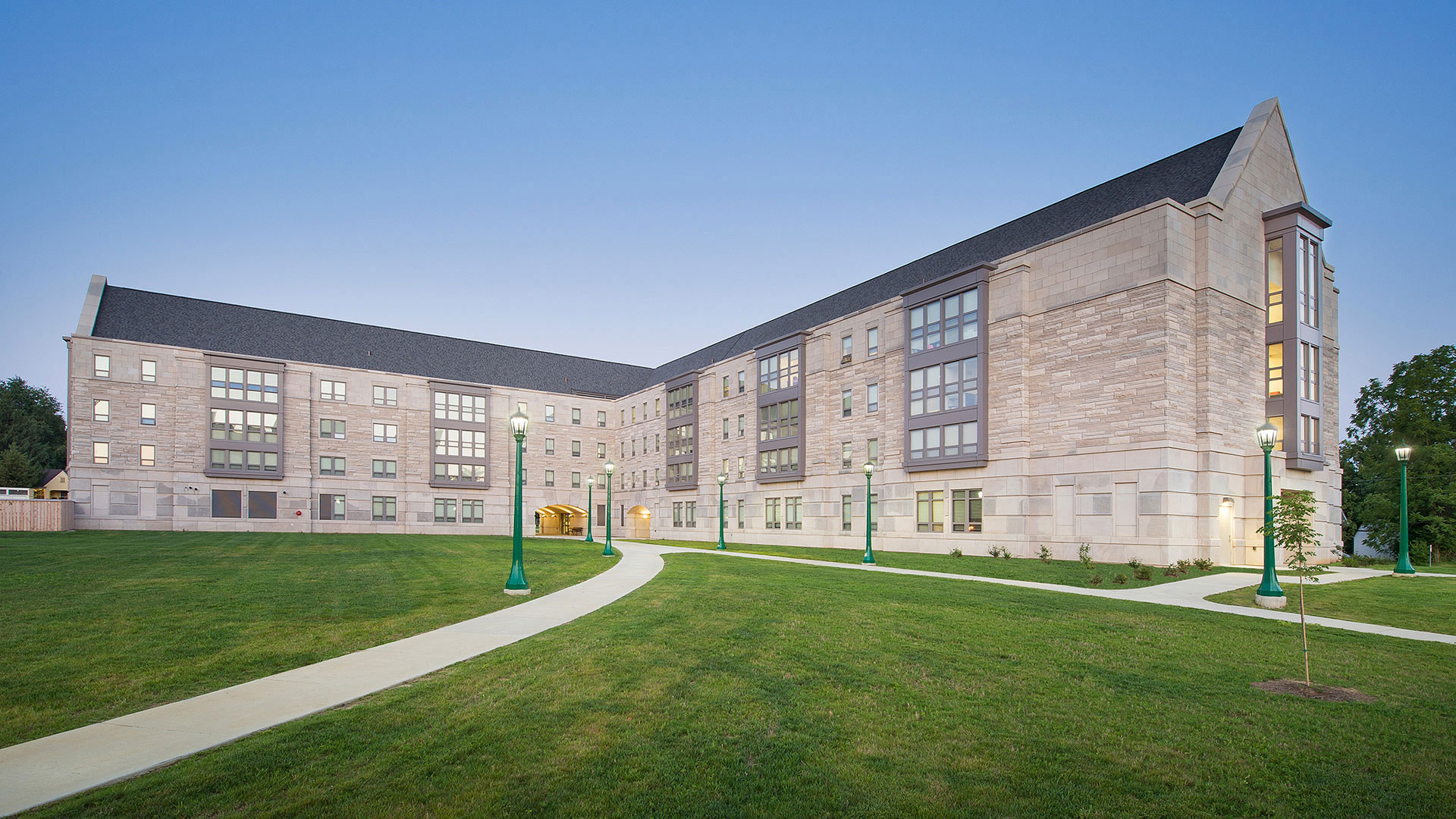
Located in Indiana University’s Southeast Neighborhood, 3rd & Union provides students with a low-cost on-campus apartment option. The design blends traditional Gothic features with state-of-the-art amenities and sustainable design. The building features a limestone façade, steep roof with slate-look shingles, and a tunnel-like breezeway between its south and north wings.
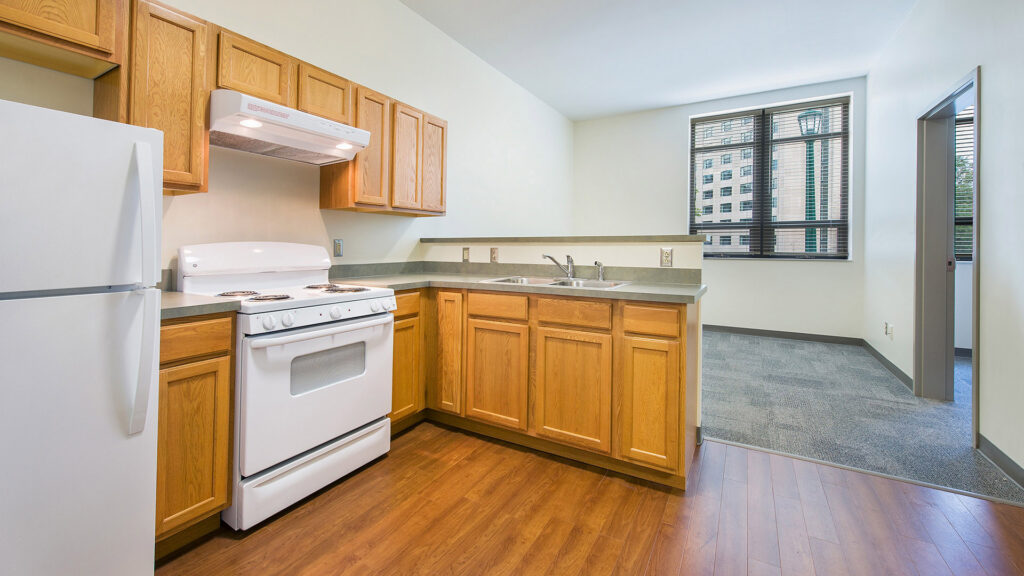
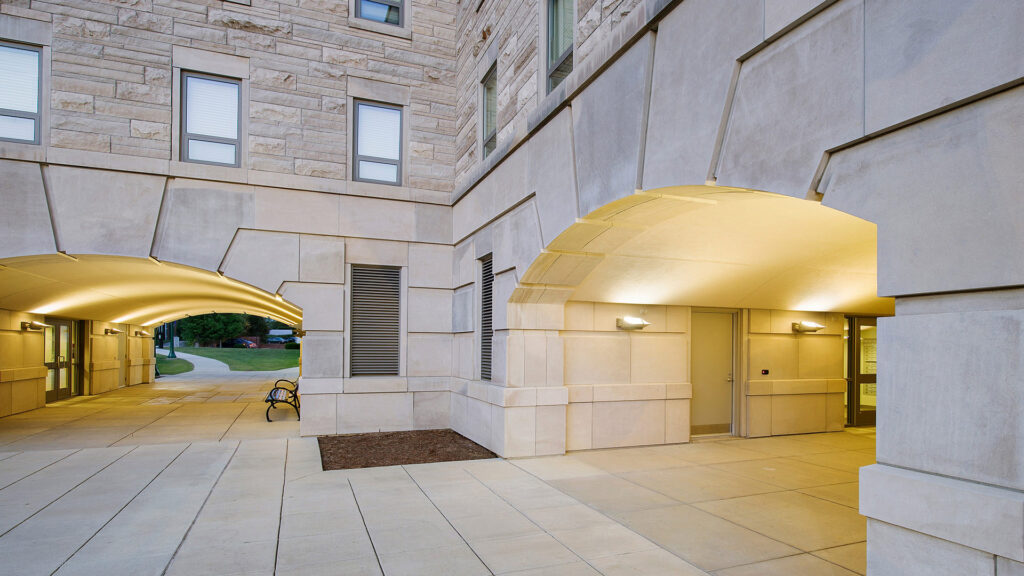
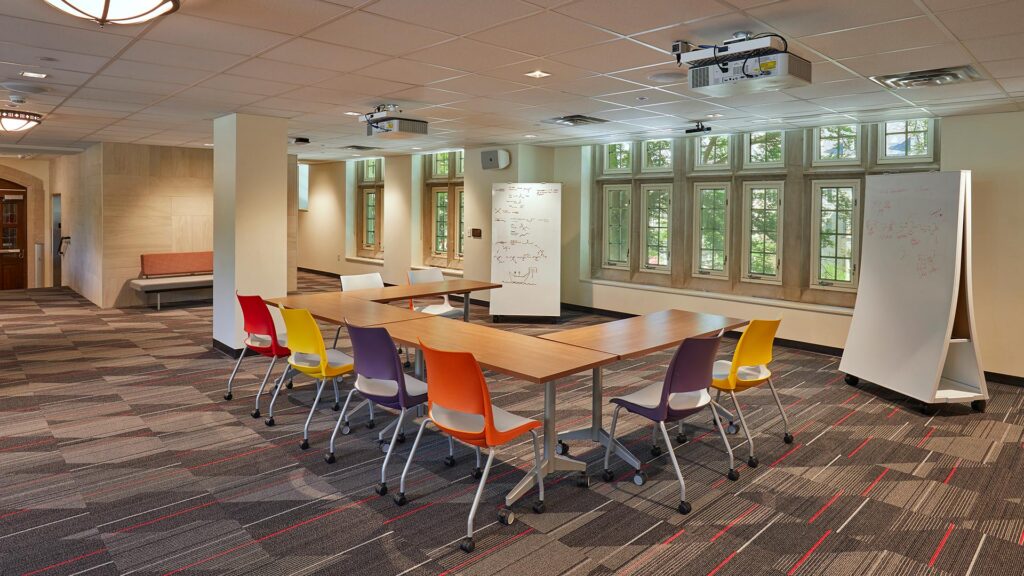
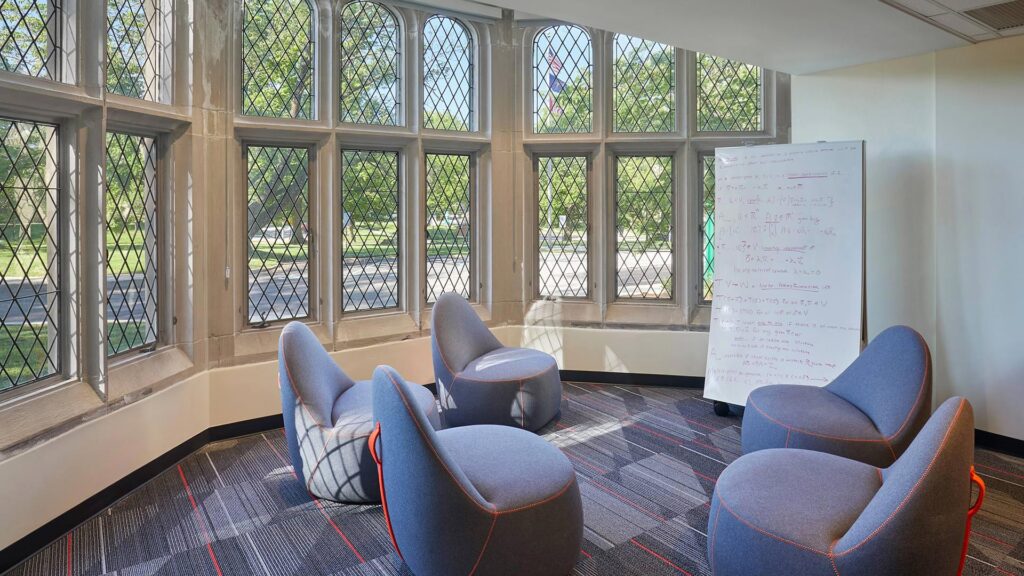
The facility houses a combination of 102 one-bedroom and studio apartments designed to attract and retain upperclassmen and graduate students on campus. Each unit features a full kitchen, living area, bedroom, and private bathroom. The programming for the facility is rounded out with multipurpose spaces, a technology center, and laundry facilities that allow the building to facilitate a true living-learning community. In addition, the facility has two storage areas tucked into the exterior walls of the building providing complete shelter for bikes hanging on wall-mounted racks and a spacious recycling room conveniently located next to the exit.
,
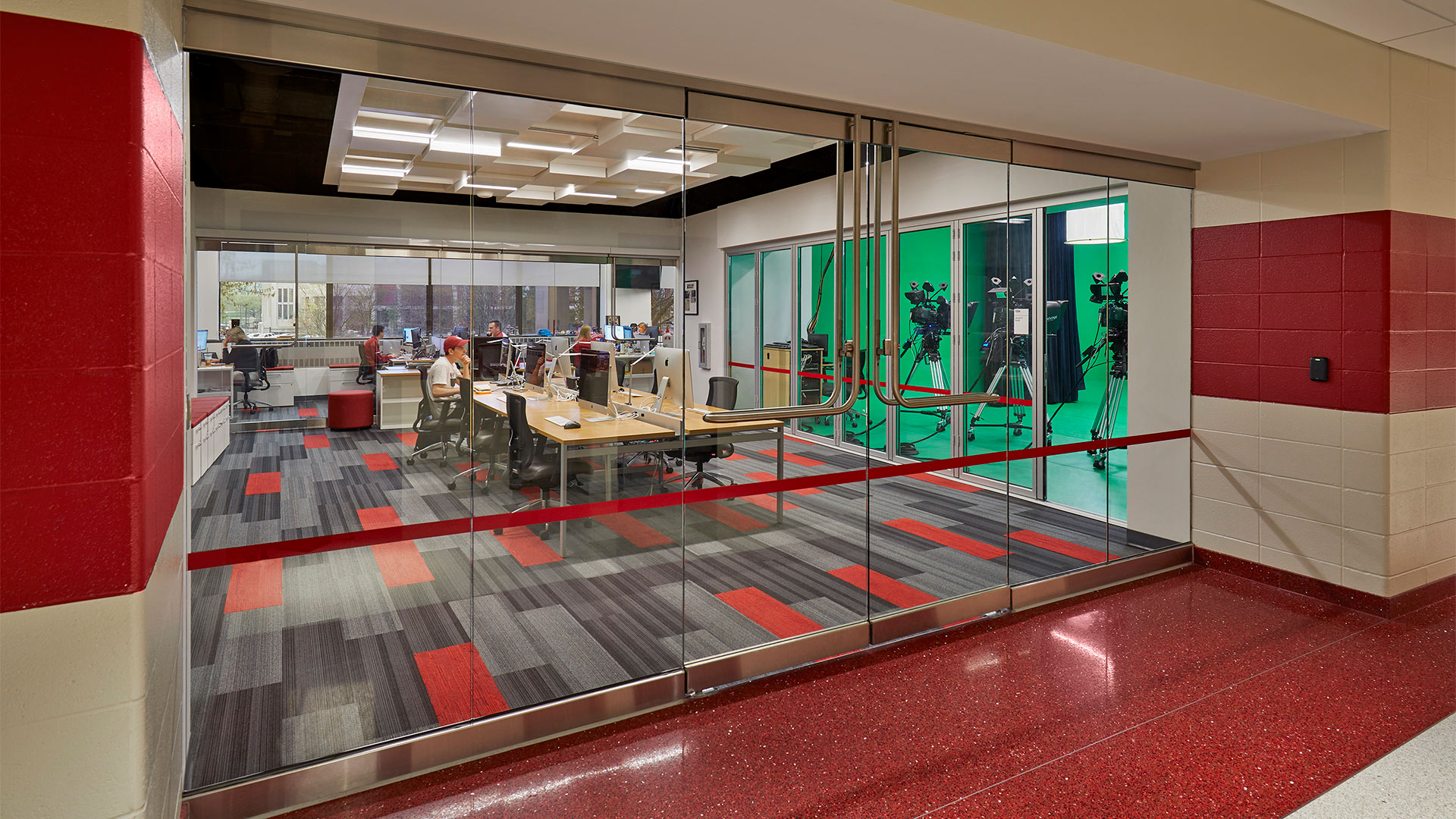
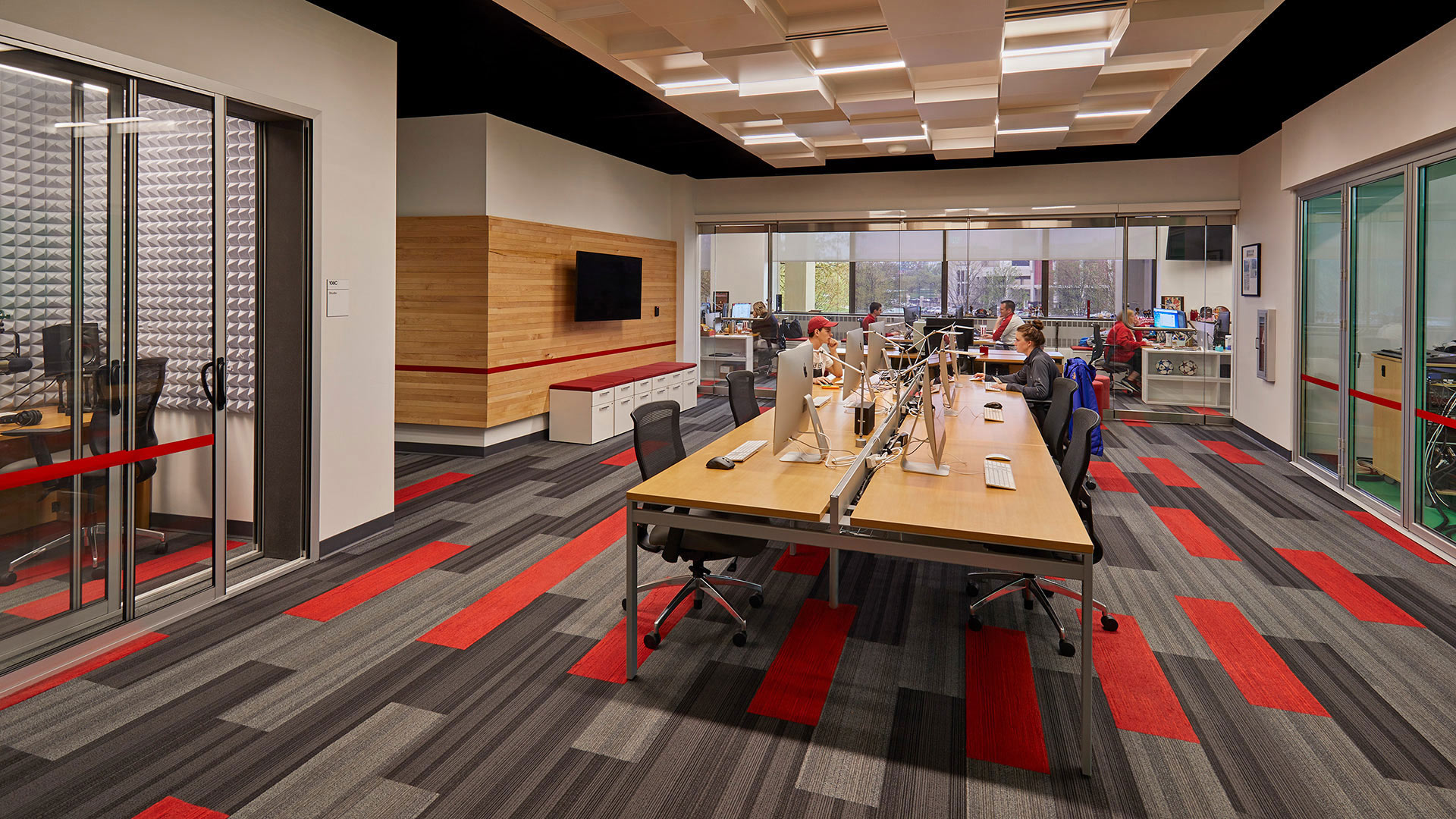
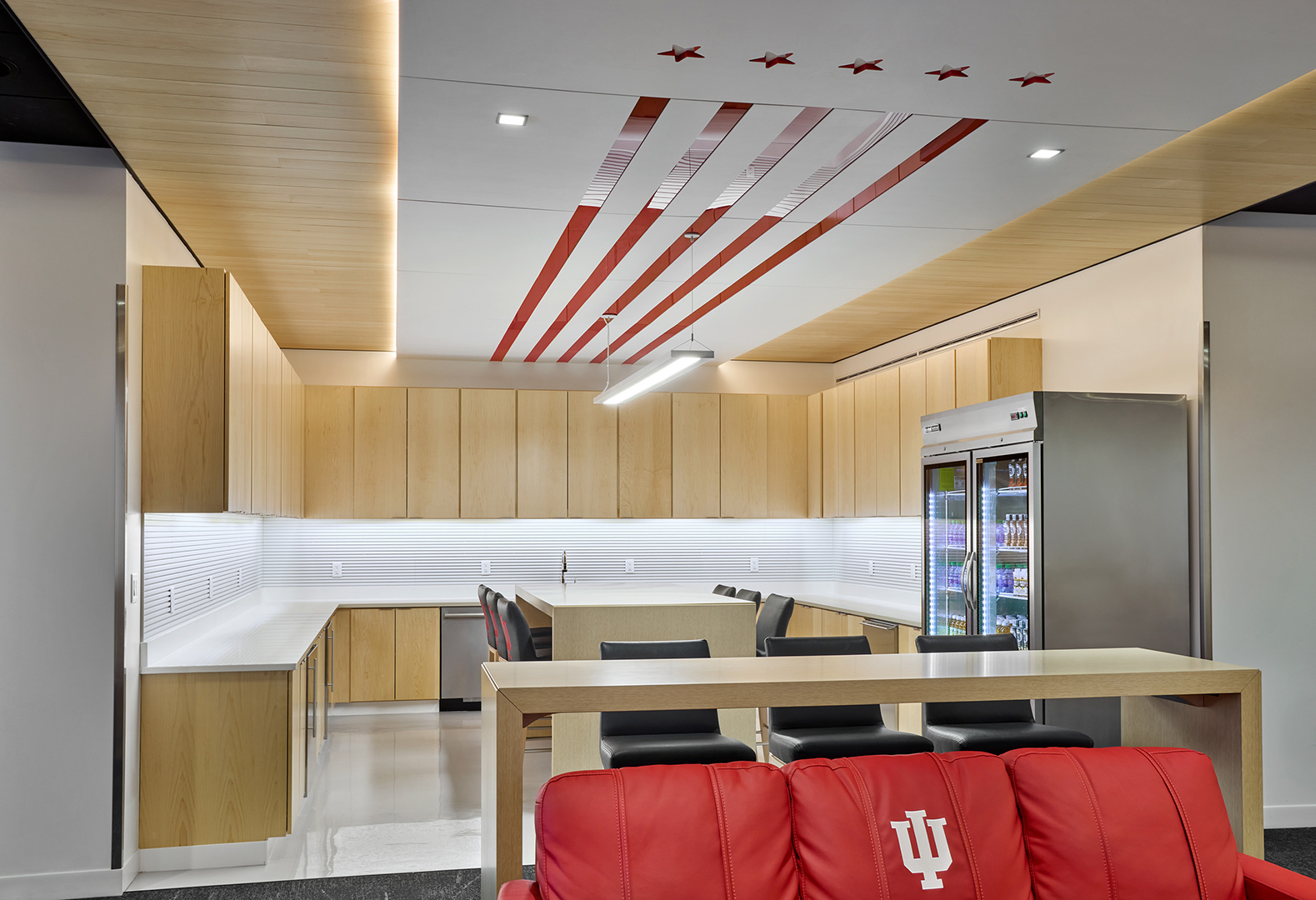
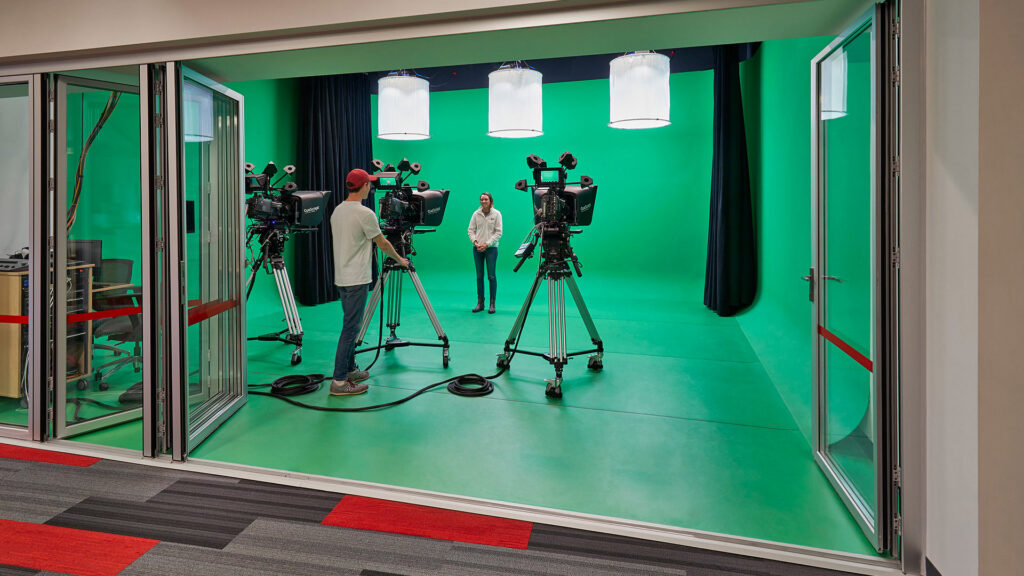
The spaces that make up the Cuban Center include a virtual reality TV studio, video editing room, sound editing room, conference room, photography studio, media storage room, and offices for the Indiana University Sports Media Department. Court-level renovations were necessary to accommodate a supporting control room and server room.
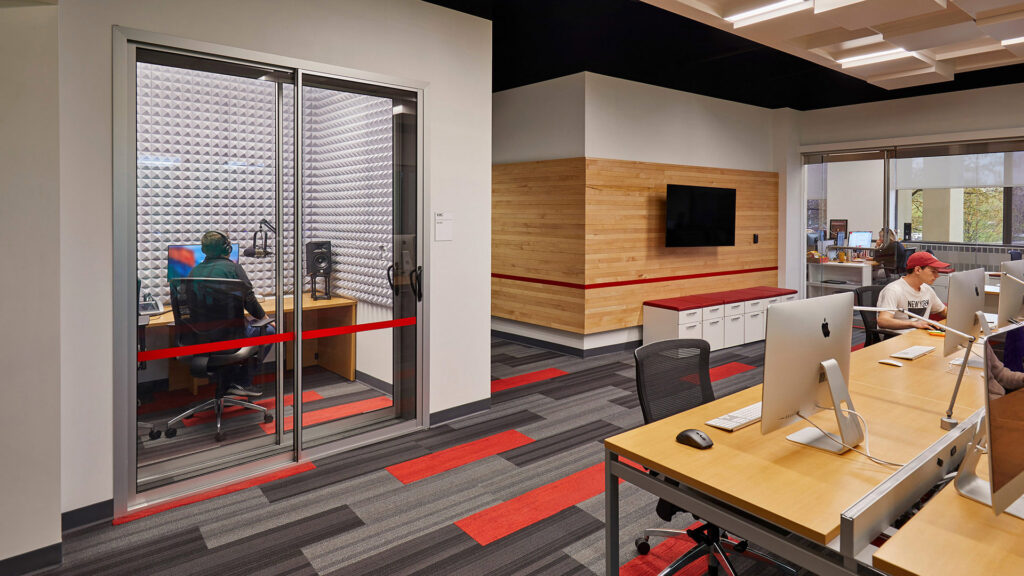
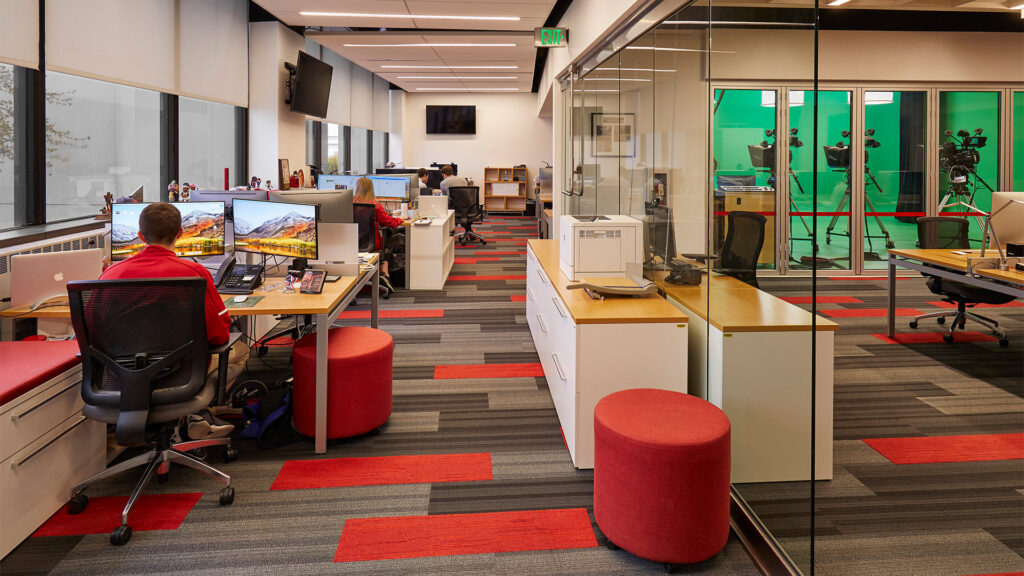
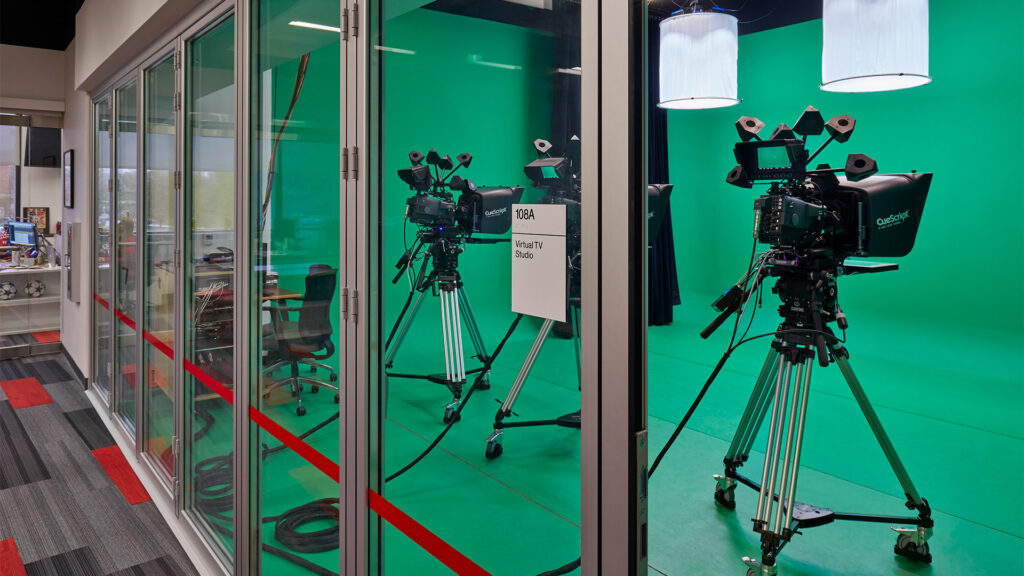
The Center is designed to be very modern, open, visible, and collaborative while still maintaining sound control by utilizing sound-resistant glass walls to separate spaces.
,
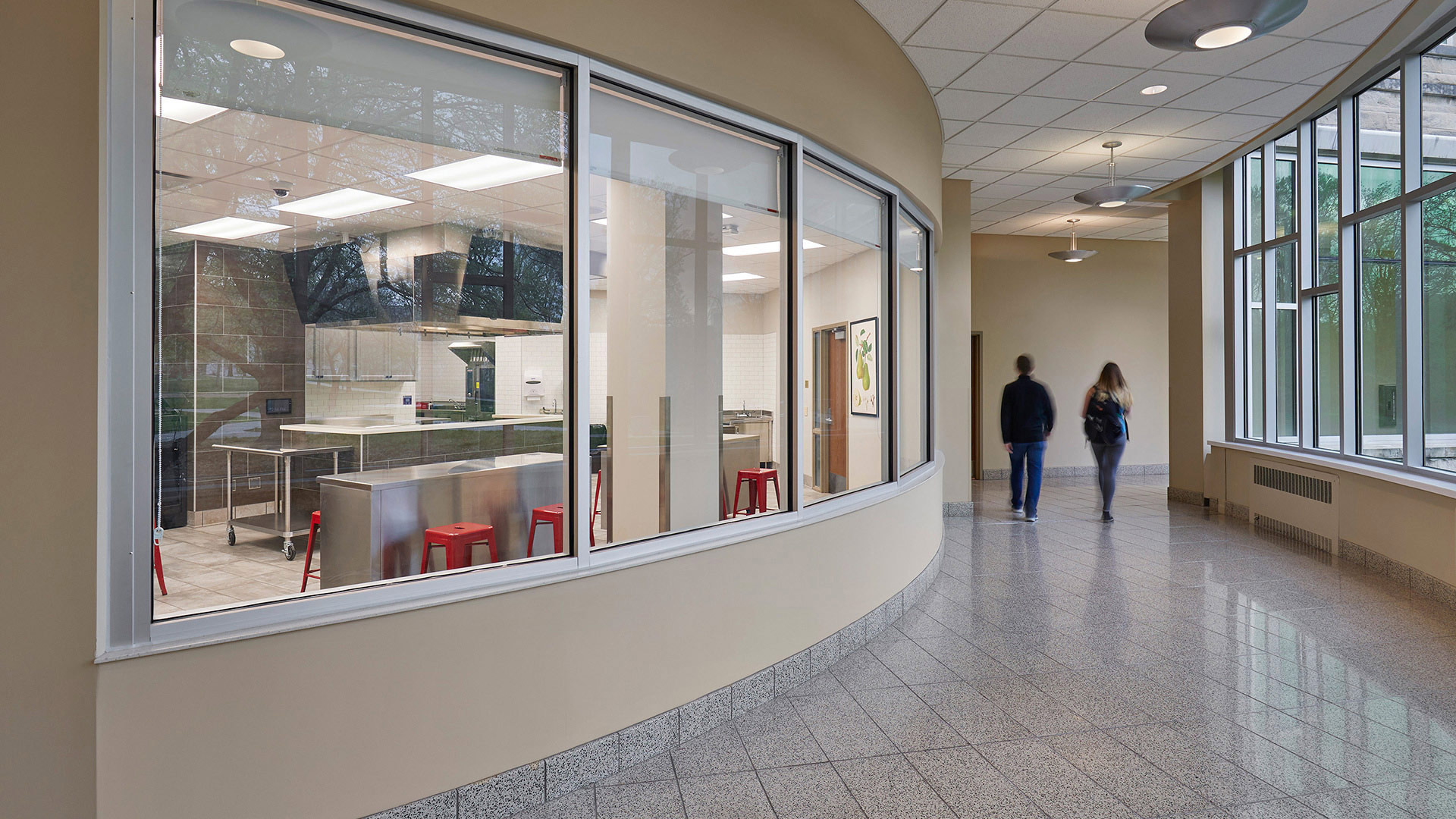
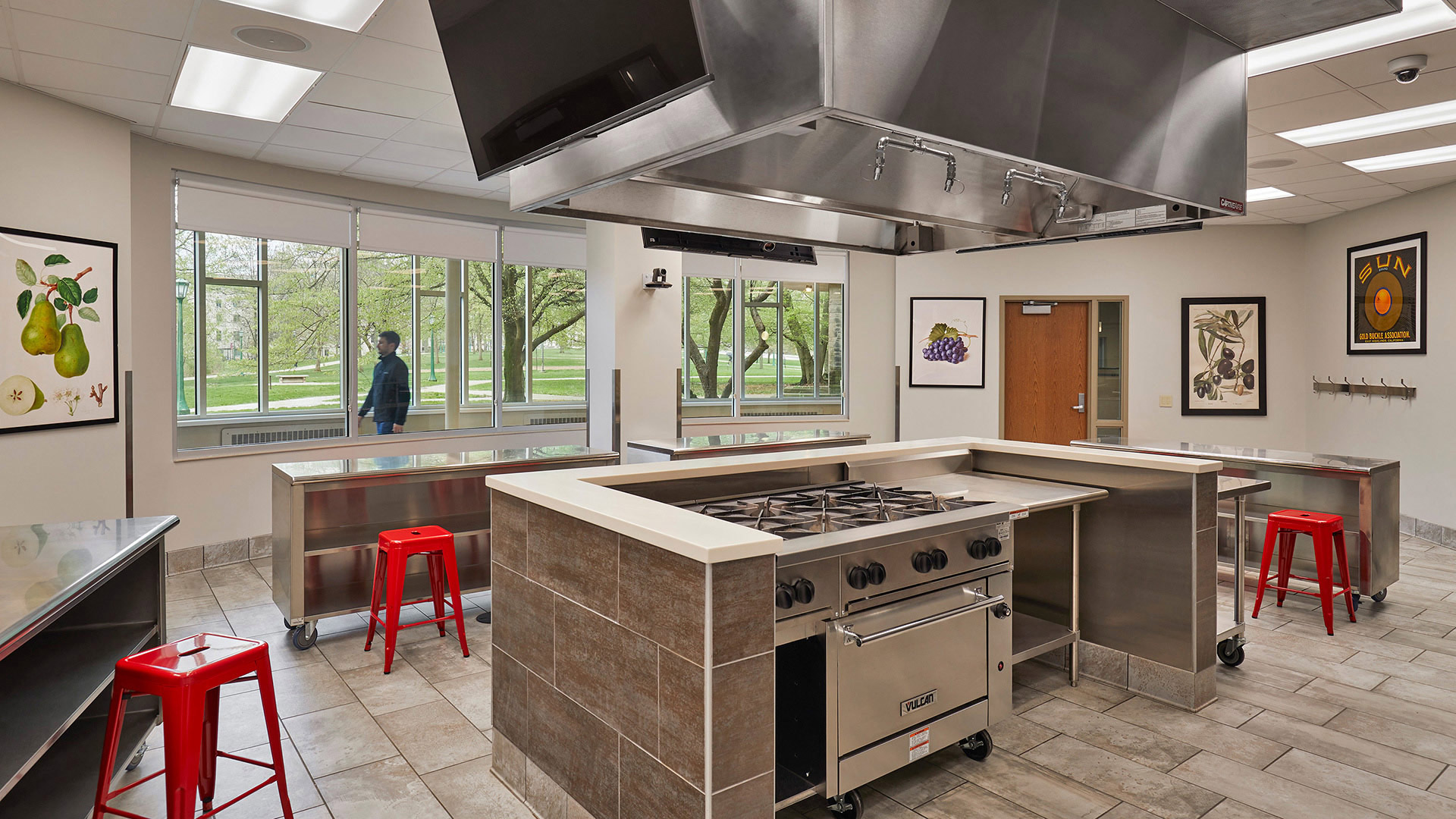
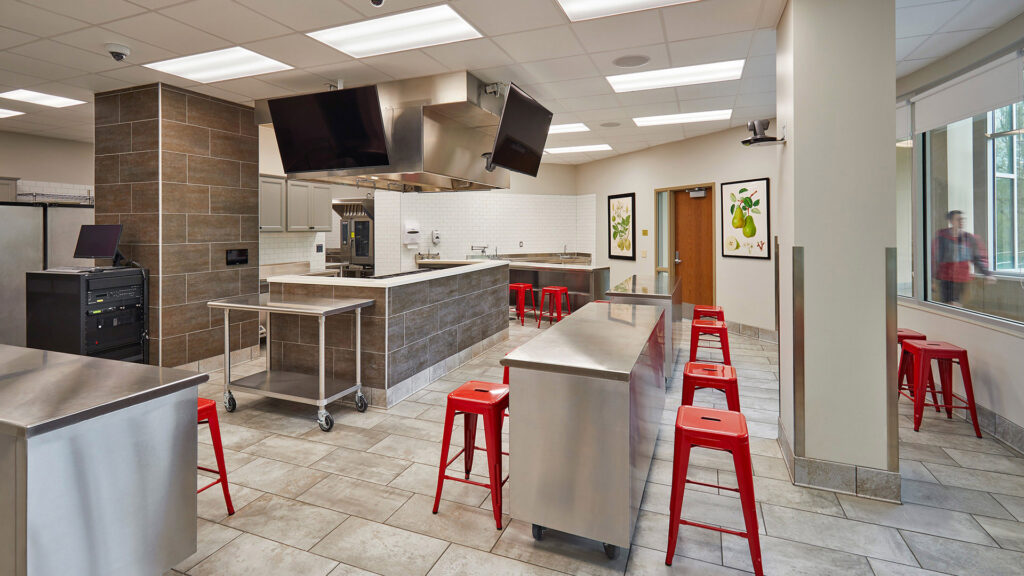
Attached to the working kitchen, a student learning space with 5 team learning stations creates a classroom for approximately 20 to 25 students for demonstrations and hands on learning – similar to that found in a culinary program or school. All students can observe the work in the classroom, which is also equipped with video capabilities for recording and distance learning.
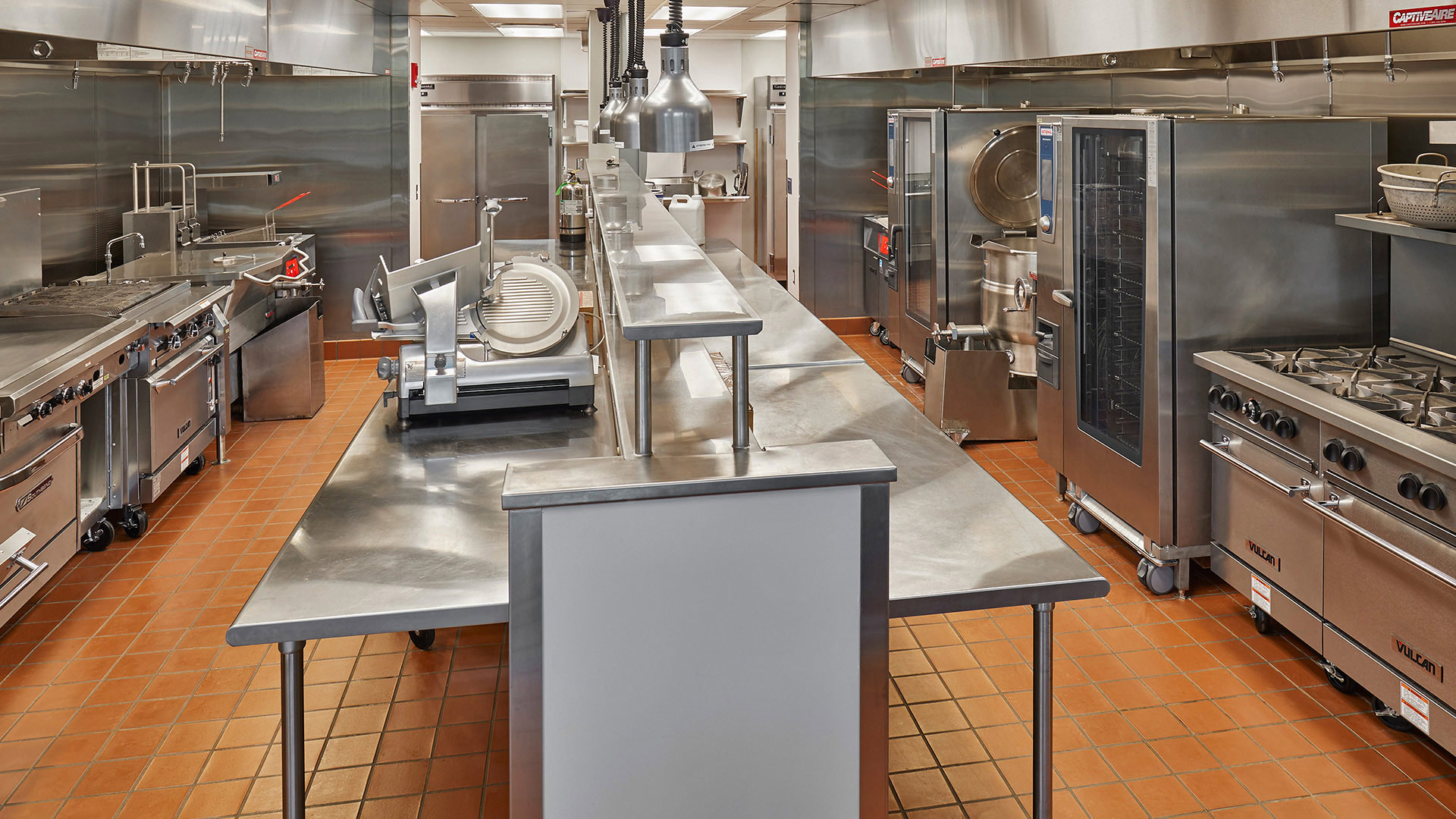
The design implementation challenges included the constraints of the space in a 1952 six-story residential dormitory building. Special skill was required to include seven exhaust hoods and make-up air equipment in an existing limited first floor space, with dormitory spaces above. The geometry of the available areas, a raised concrete floor area in the middle of the proposed kitchen, and the limits of the structural grid required a unique approach for the plan and equipment layouts. Through collaboration by team members and University staff, the project succeeded in meeting the working needs of the catering staff, despite the limits.
,
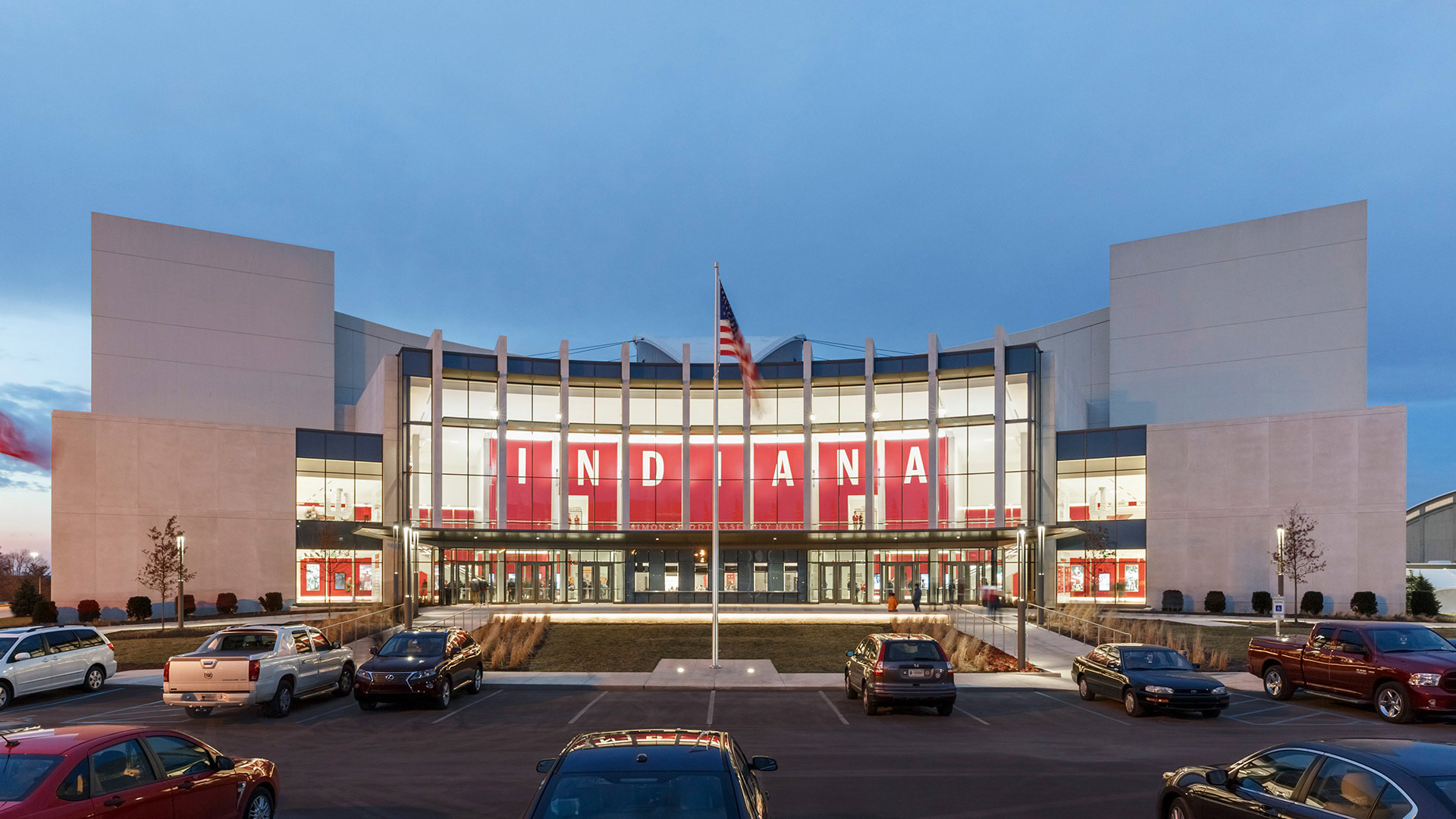
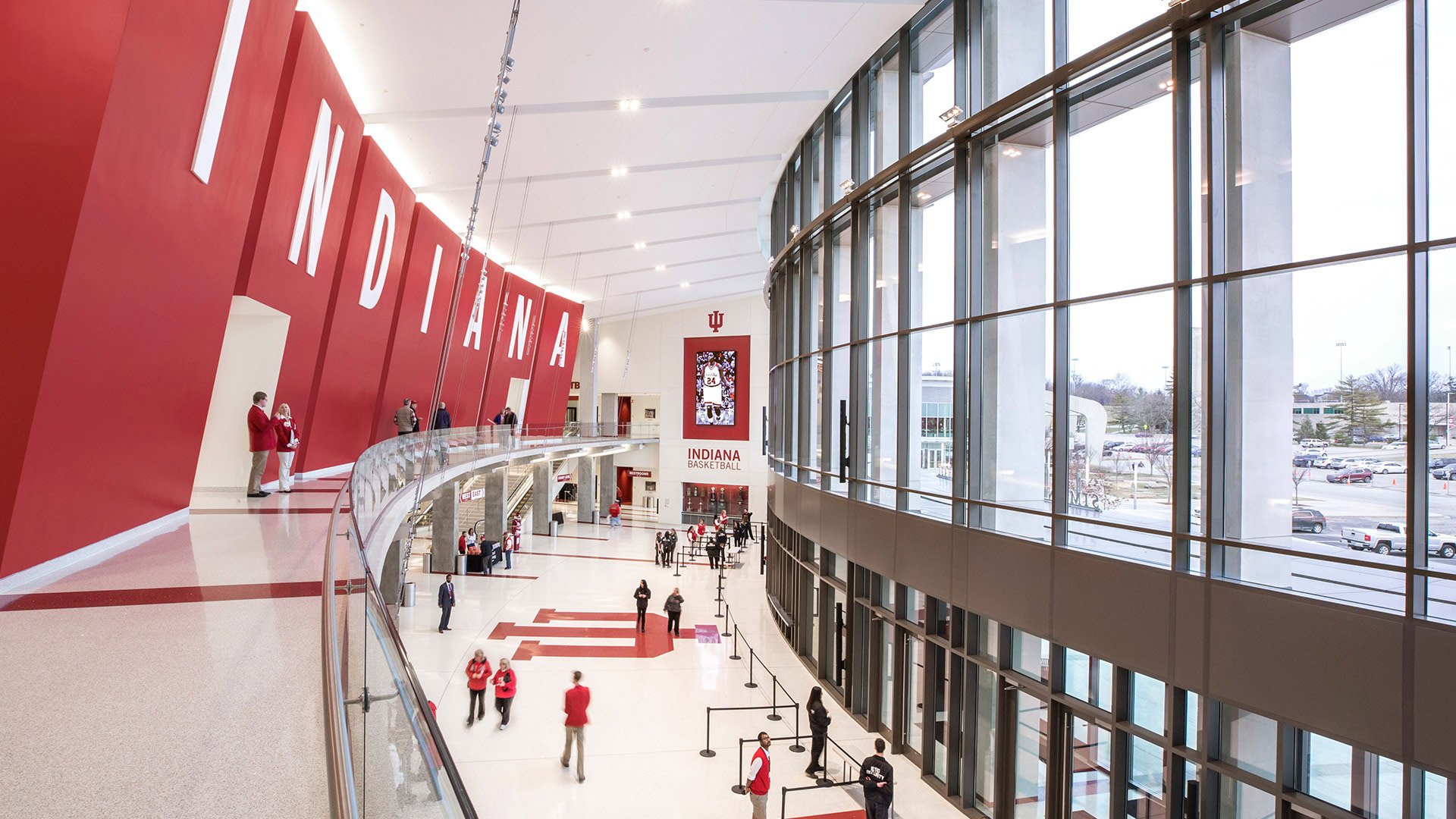
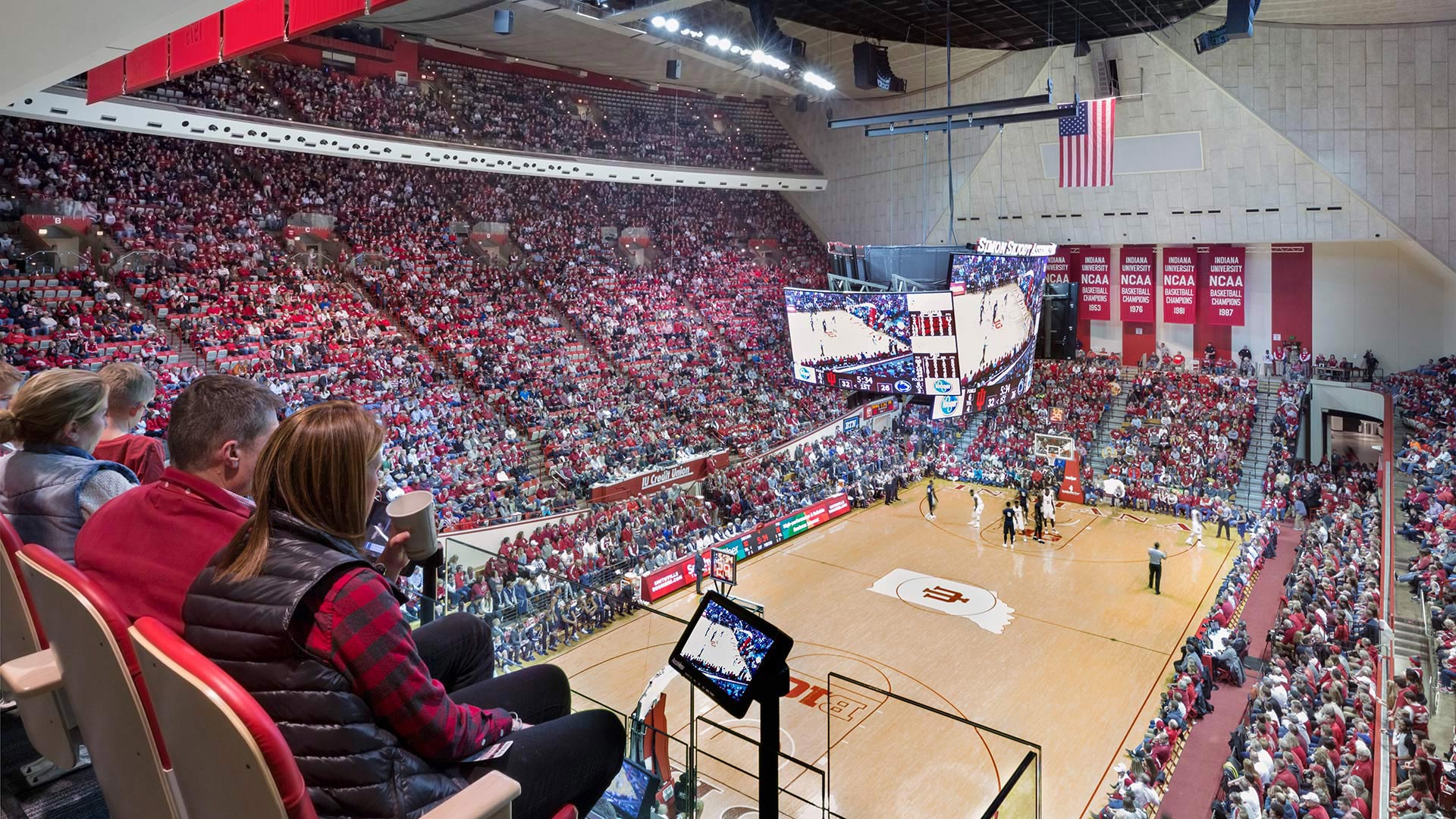
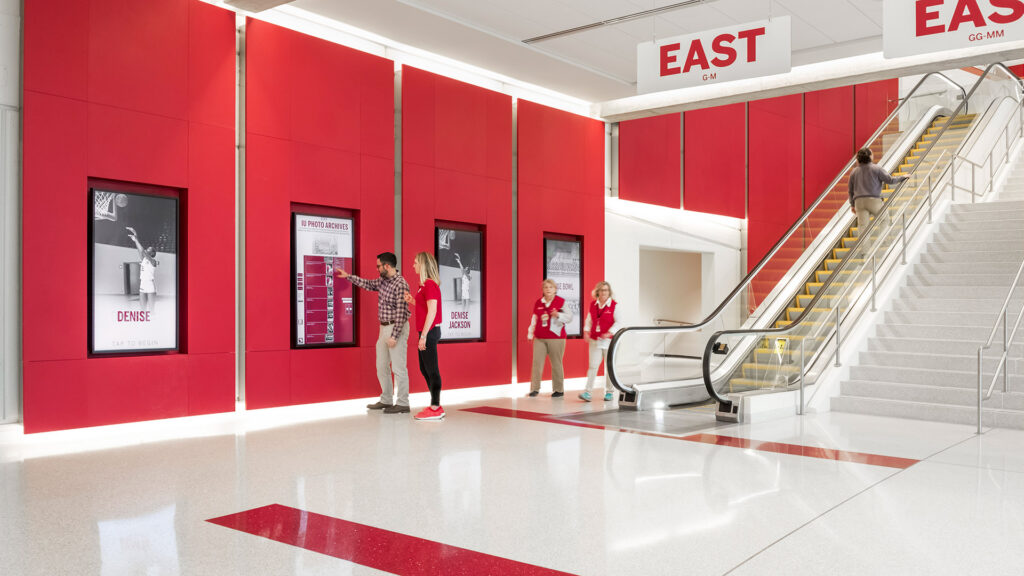
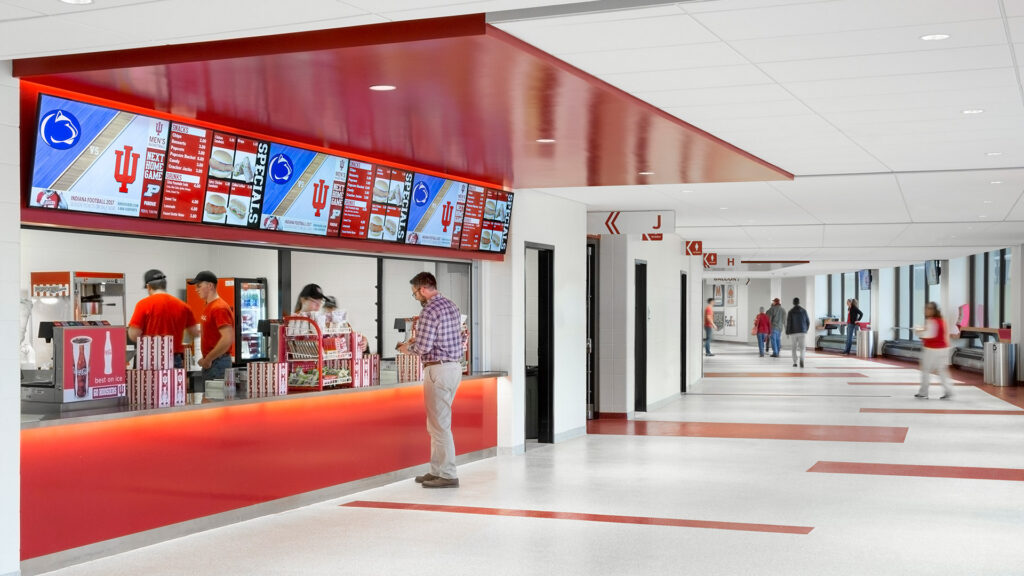
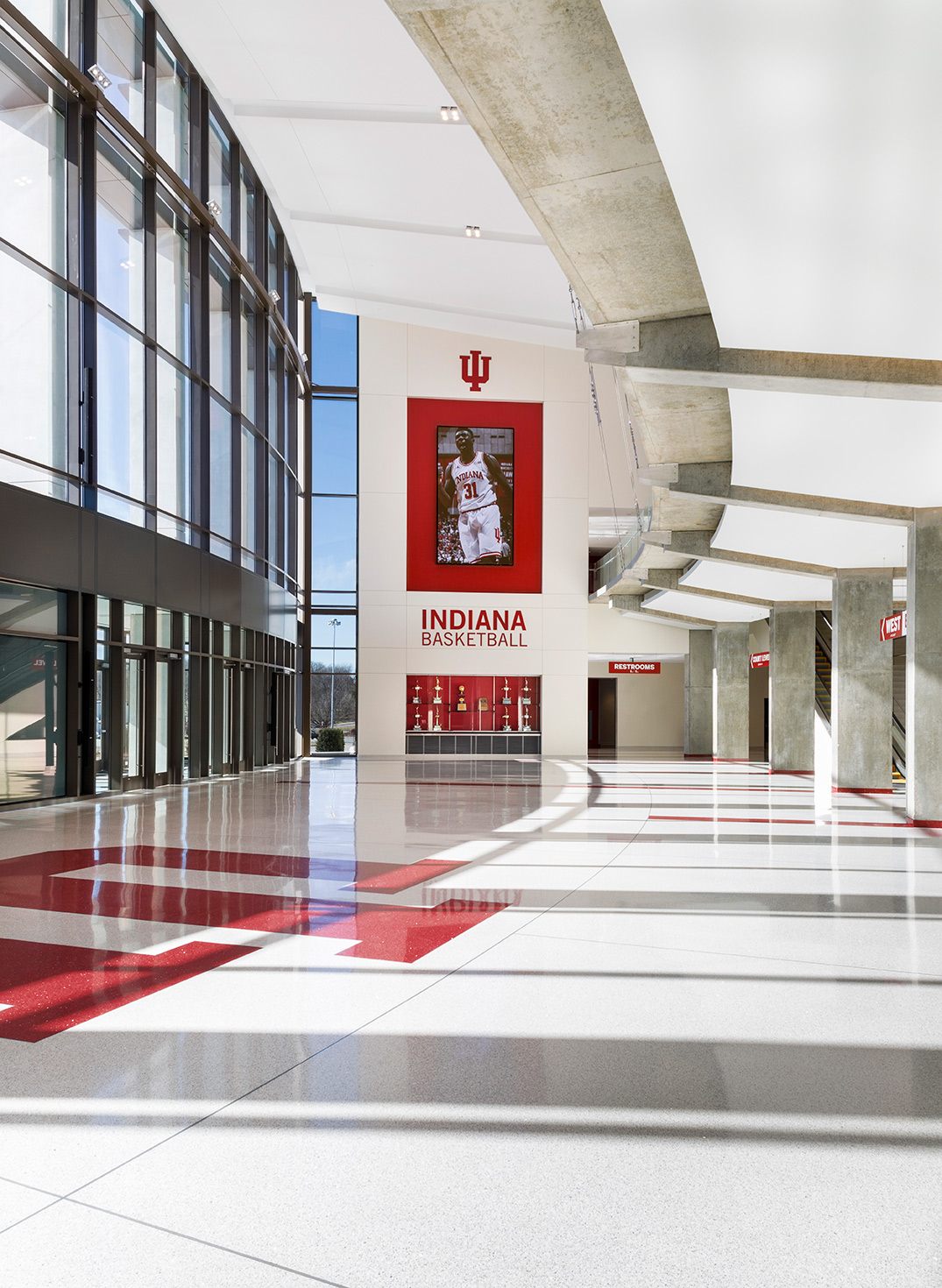
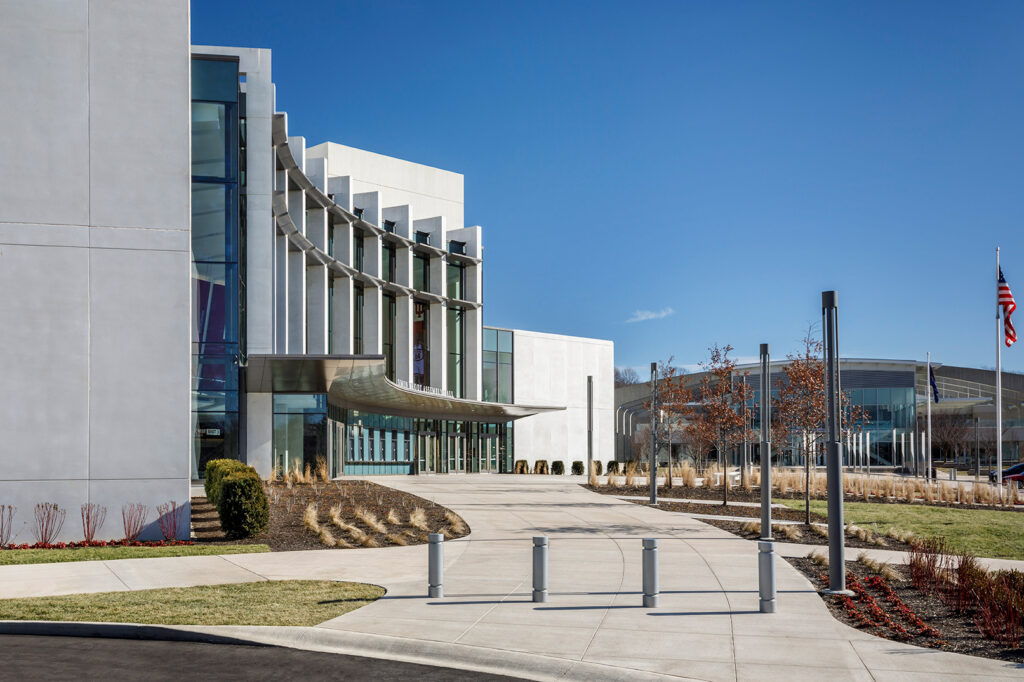
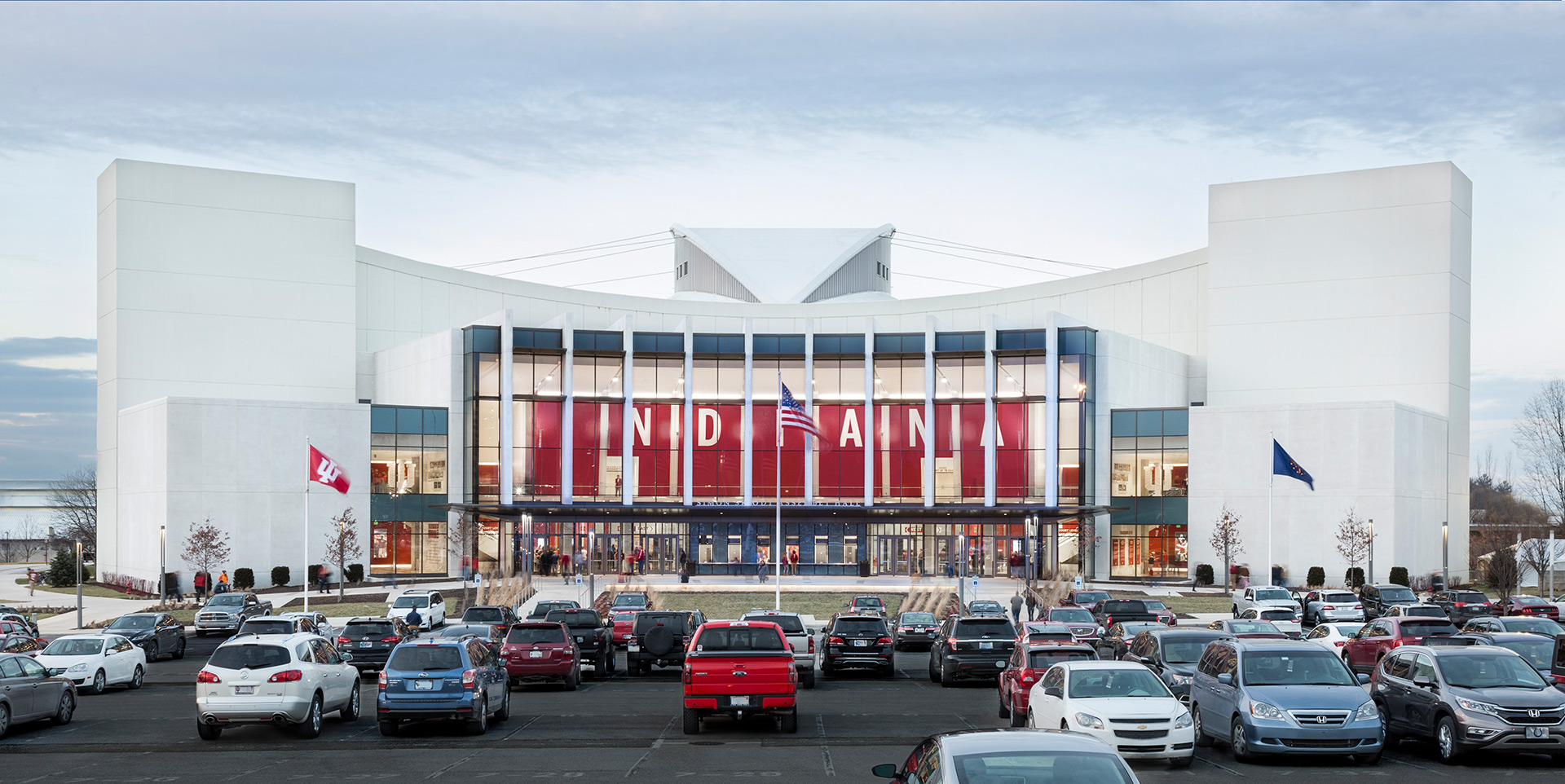
A new atrium space allows views between the entry and main concourse. This is the center of the new space and features a reinvented version of Athlete’s Hall and a panoramic window allowing views into the arena. The new arrival area supports existing traditions while offering a space for new traditions, events, and ceremonies to take place. The new entry is conveniently located, and visible escalators create a clear and efficient means for moving spectators through the space into the arena.
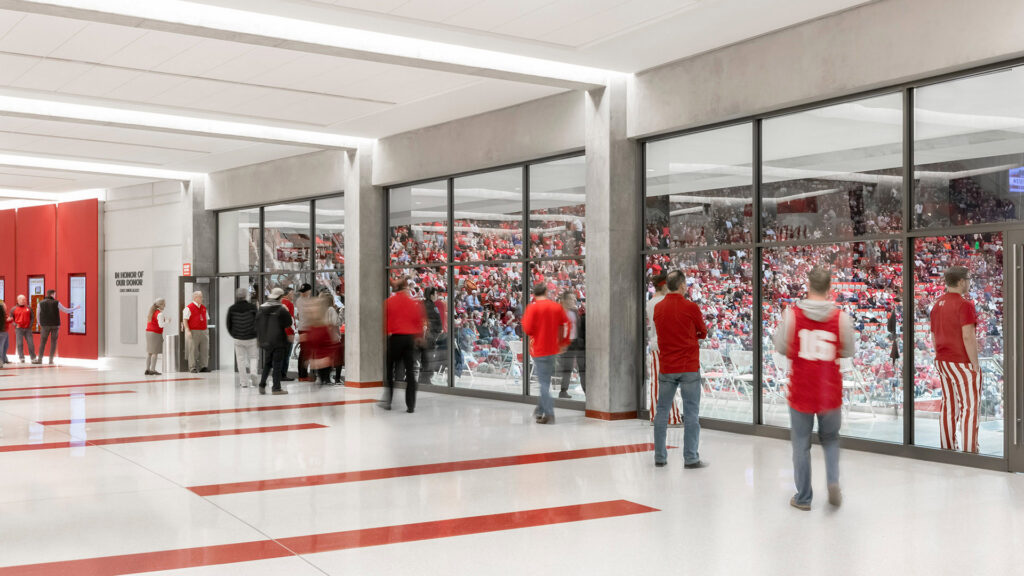
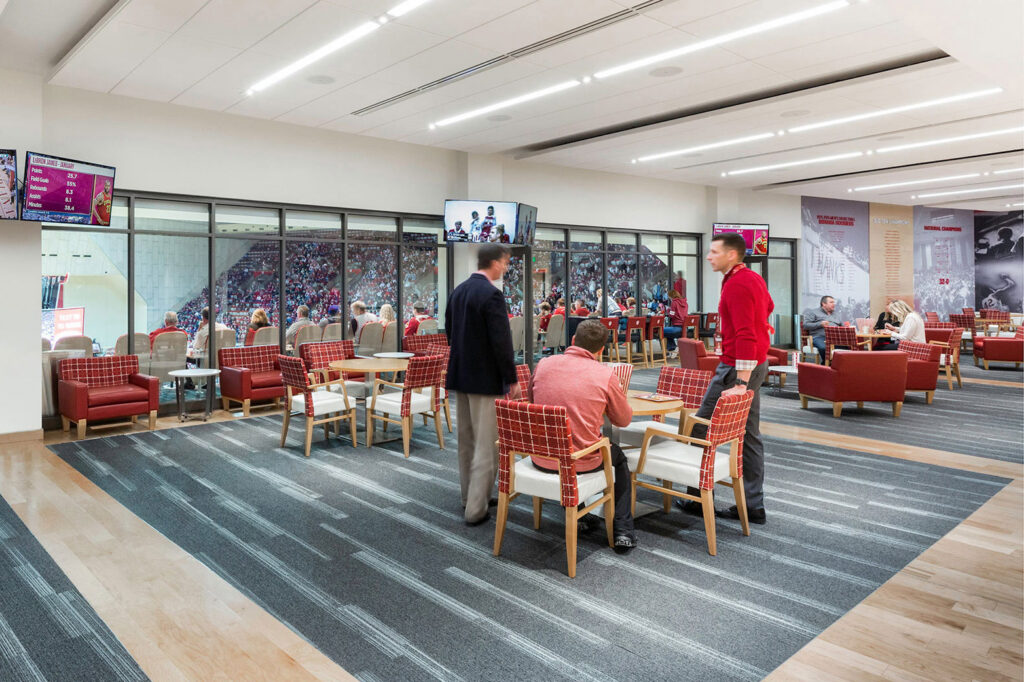
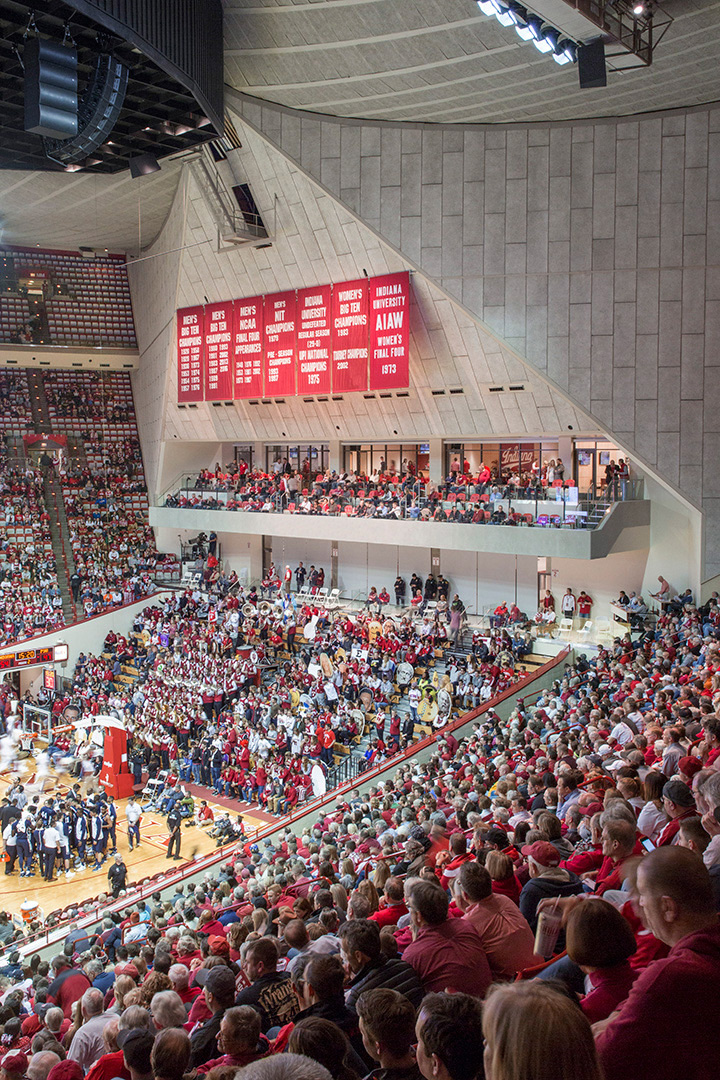
A new Box Seat Club offers an exceptional viewing experience of events.
,
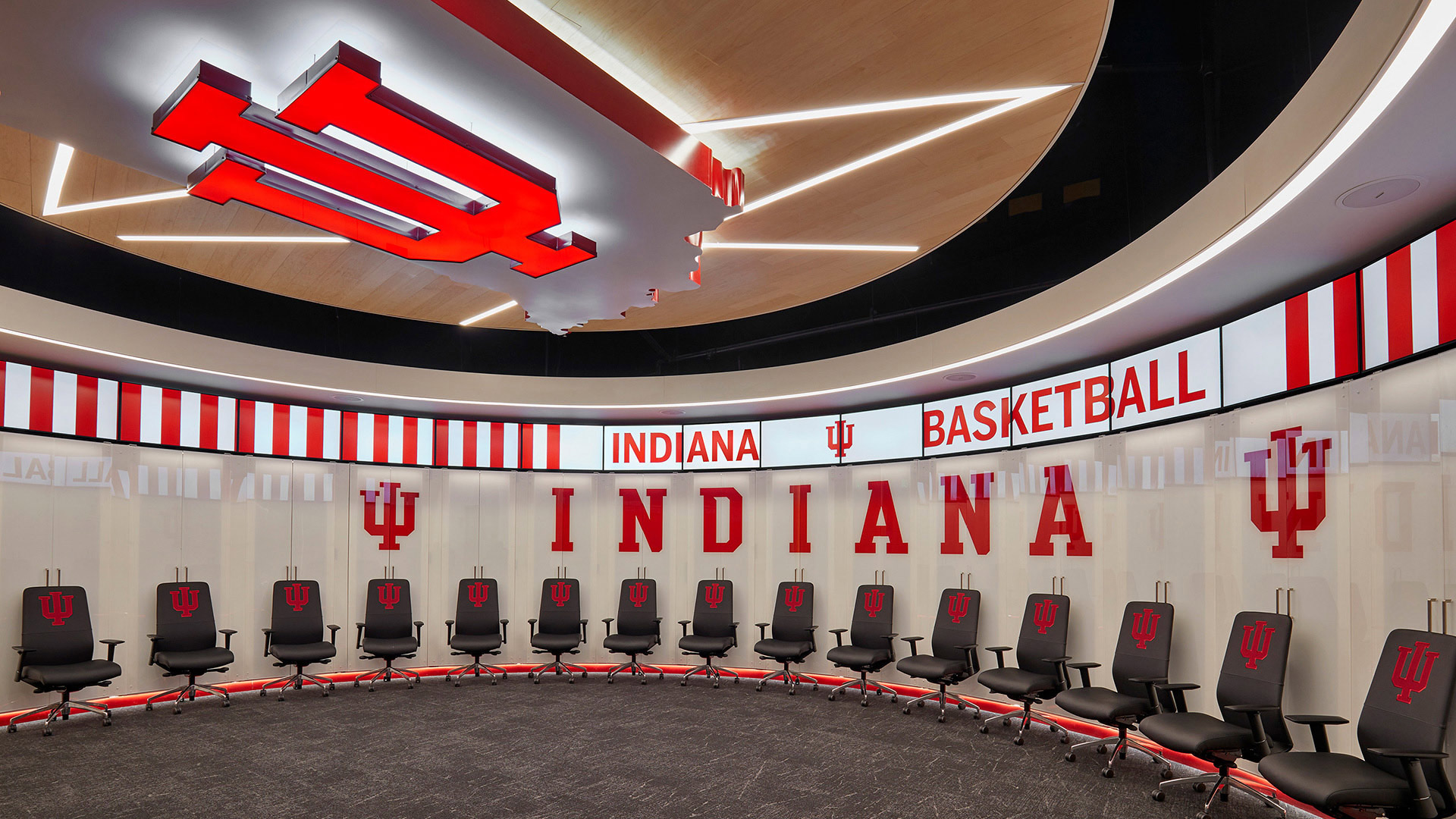
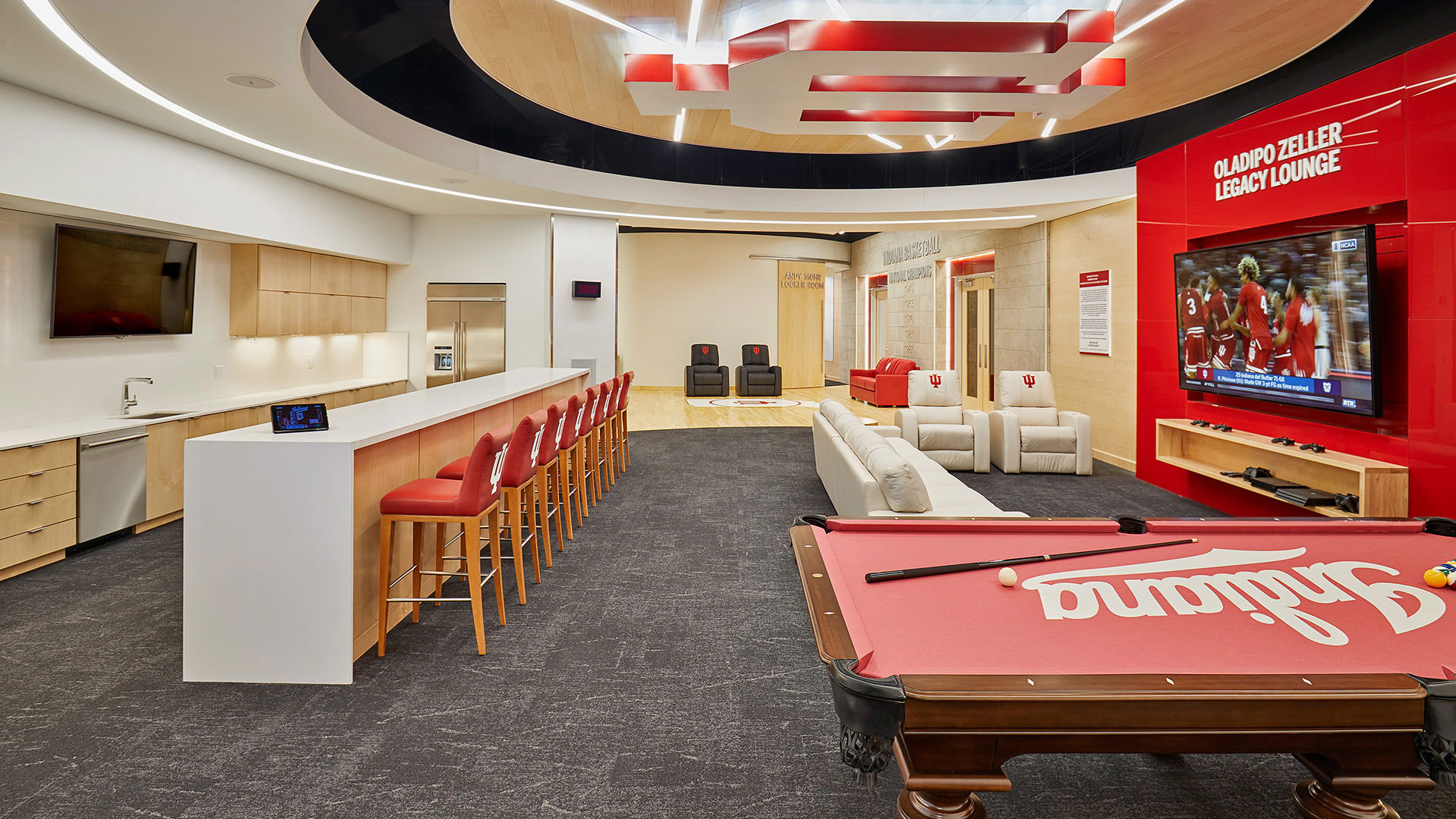
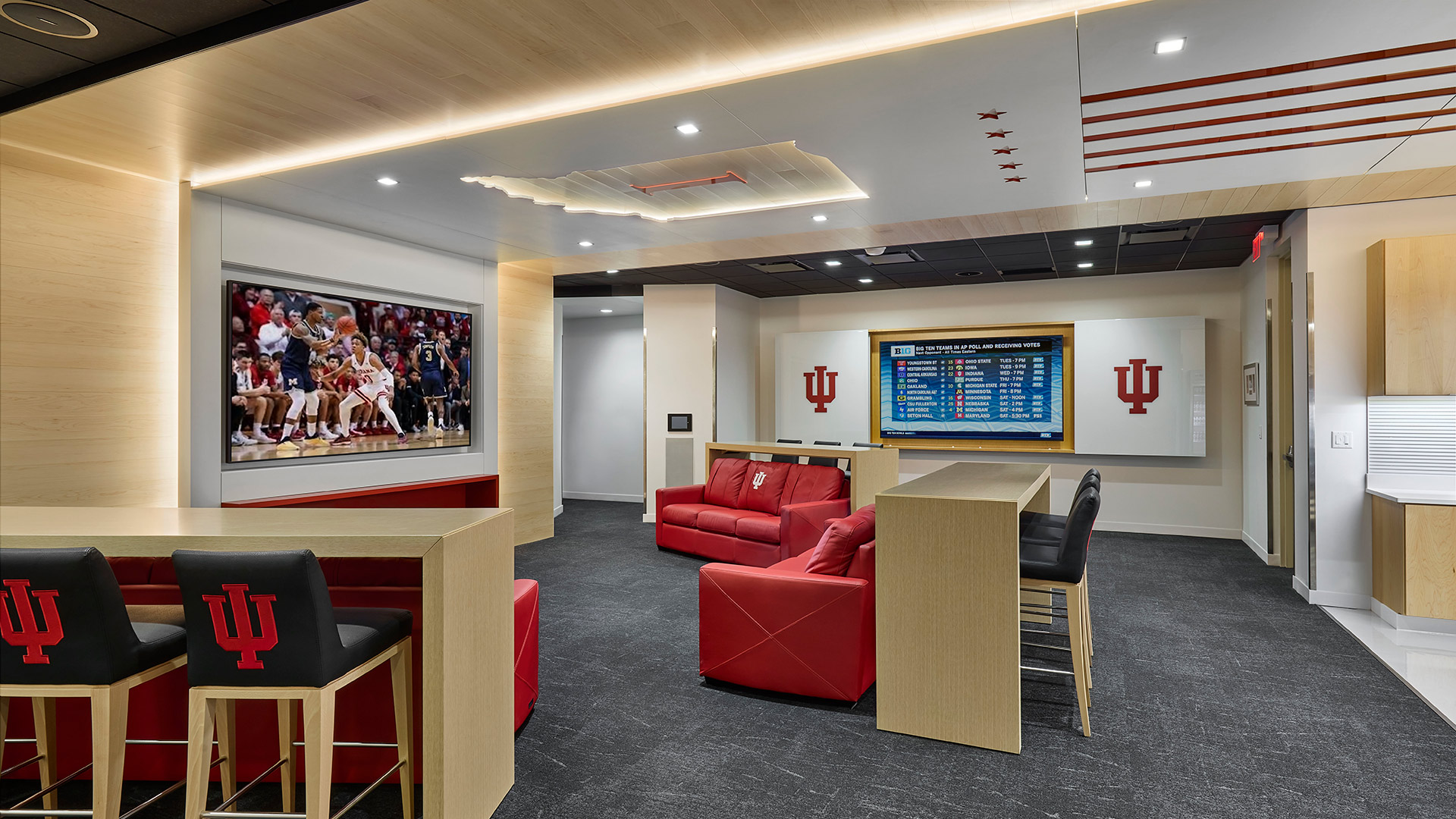
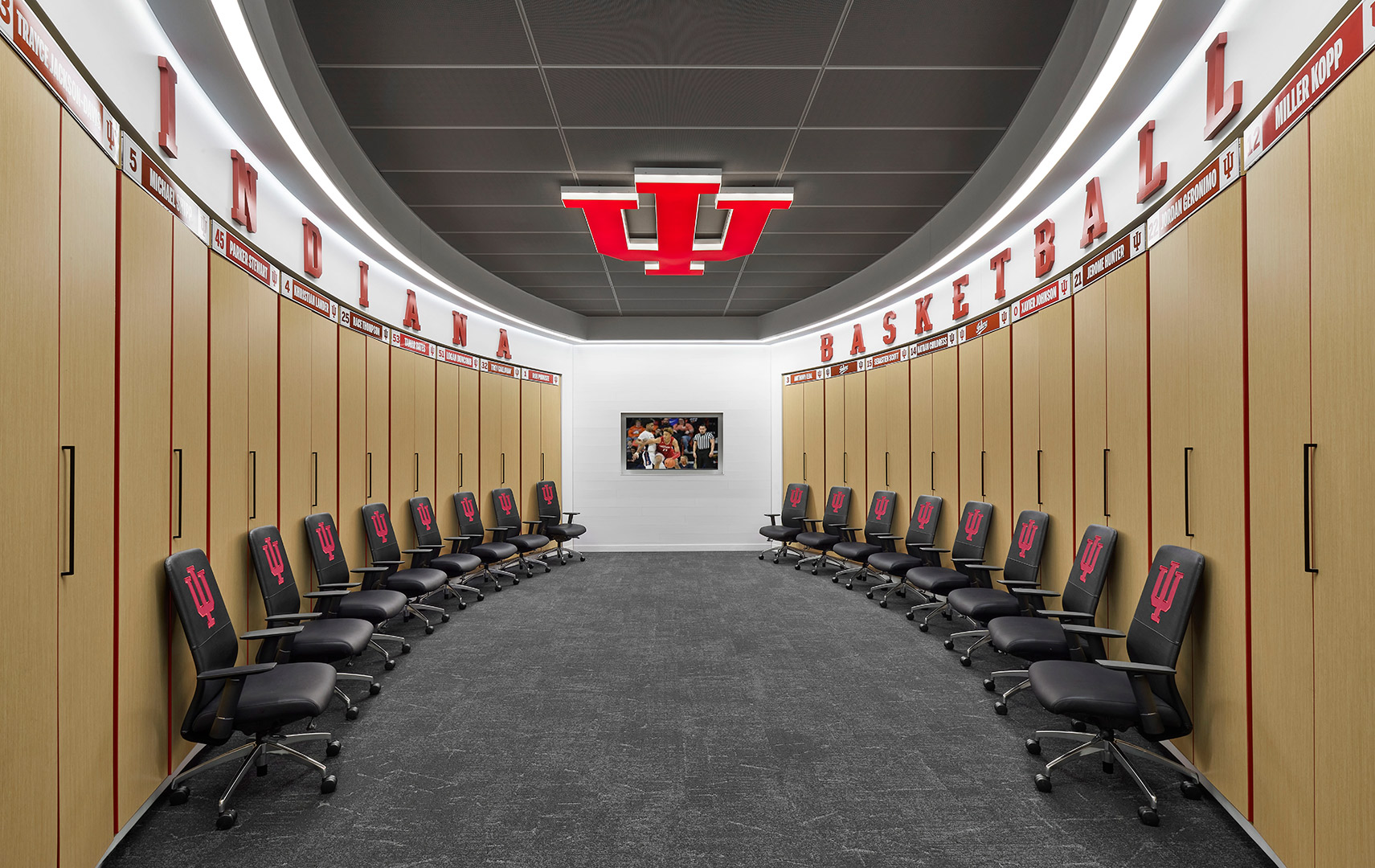
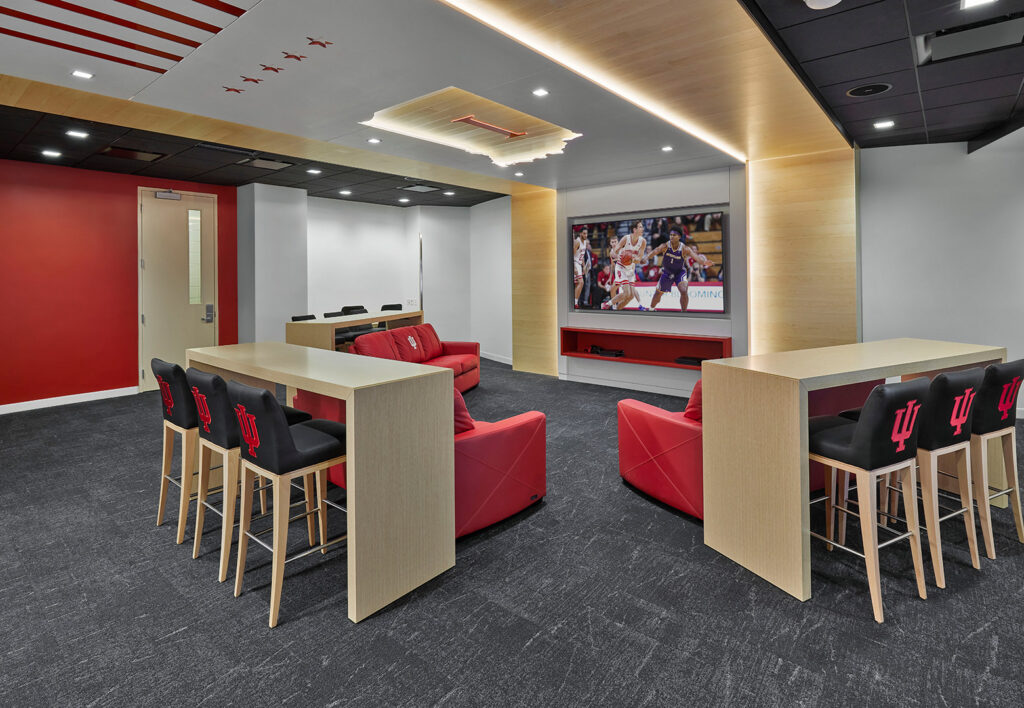
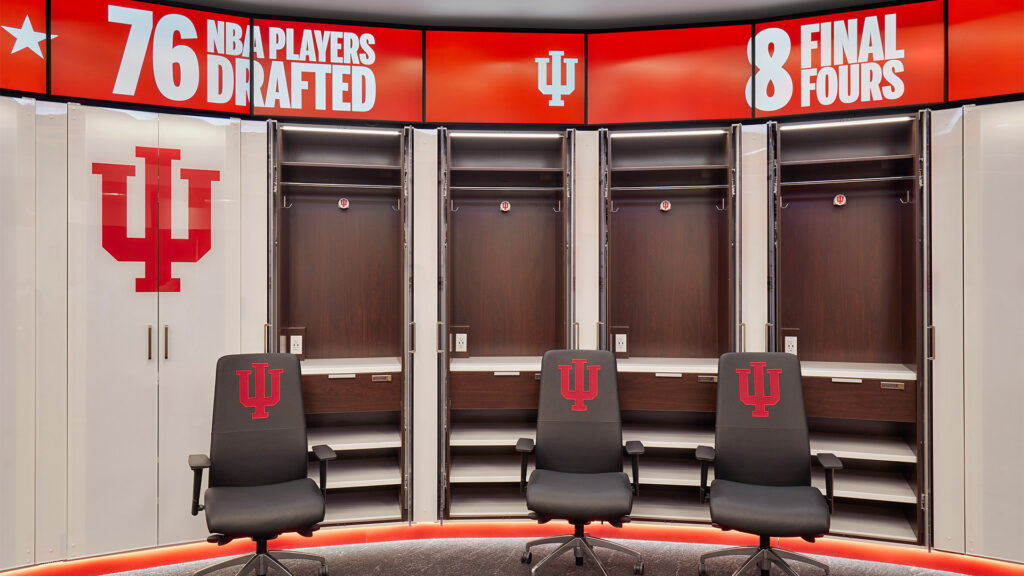
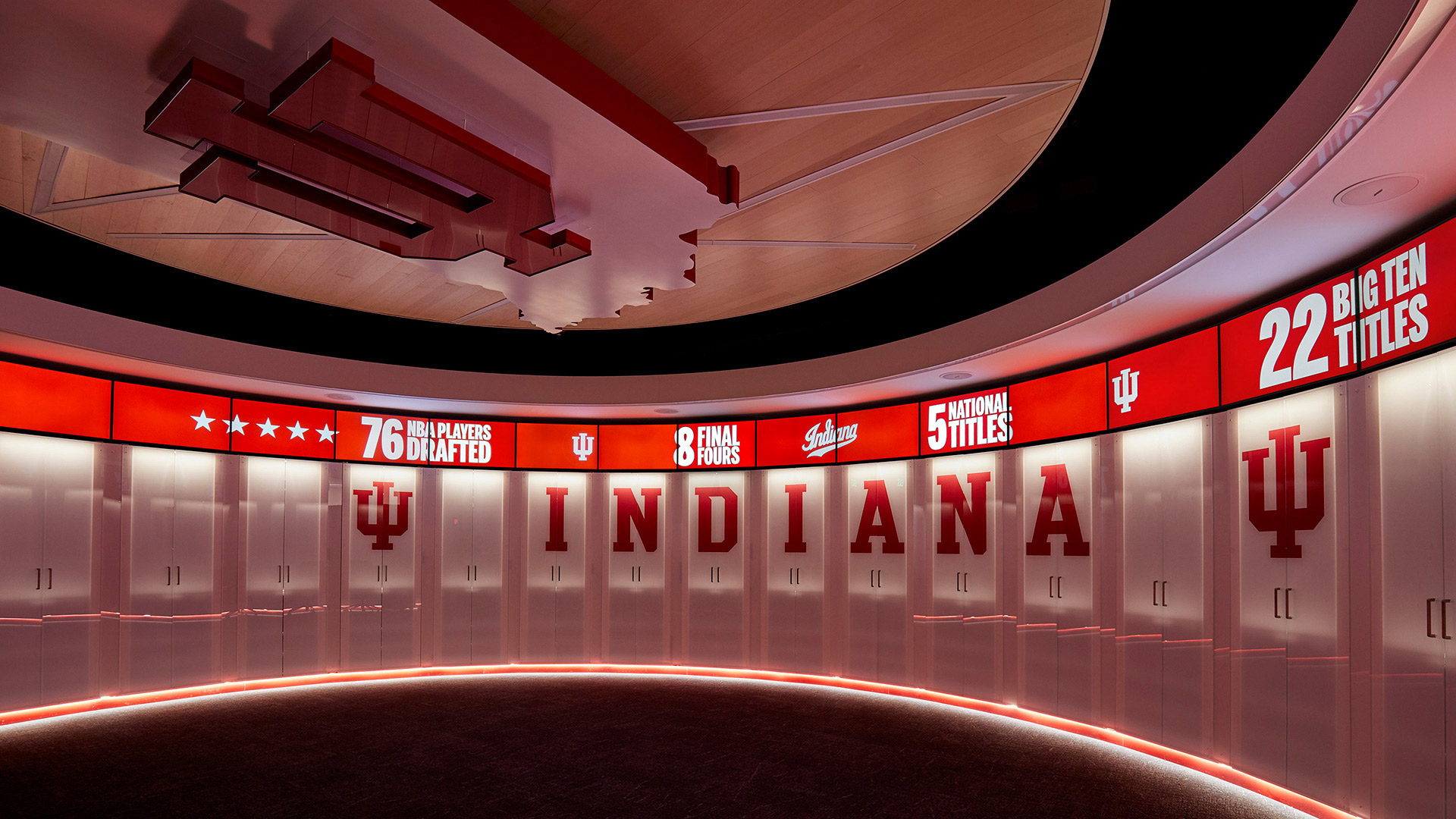
In order to meet the goals for the project, the design team incorporated wood, limestone, and back painted glass as the foundation of the finish palette. These finishes would serve as a clean backdrop to the iconic branding components found in the furnishings and implemented throughout the design. The overall composition created the motivational and energetic space required to attract new athletes, while reminding them of the honor involved in representing IU.
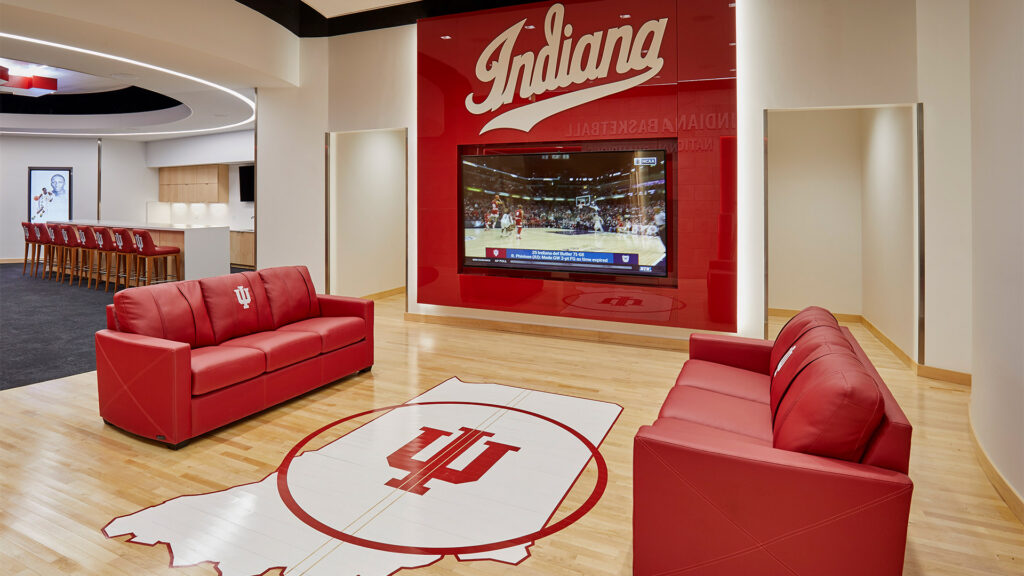
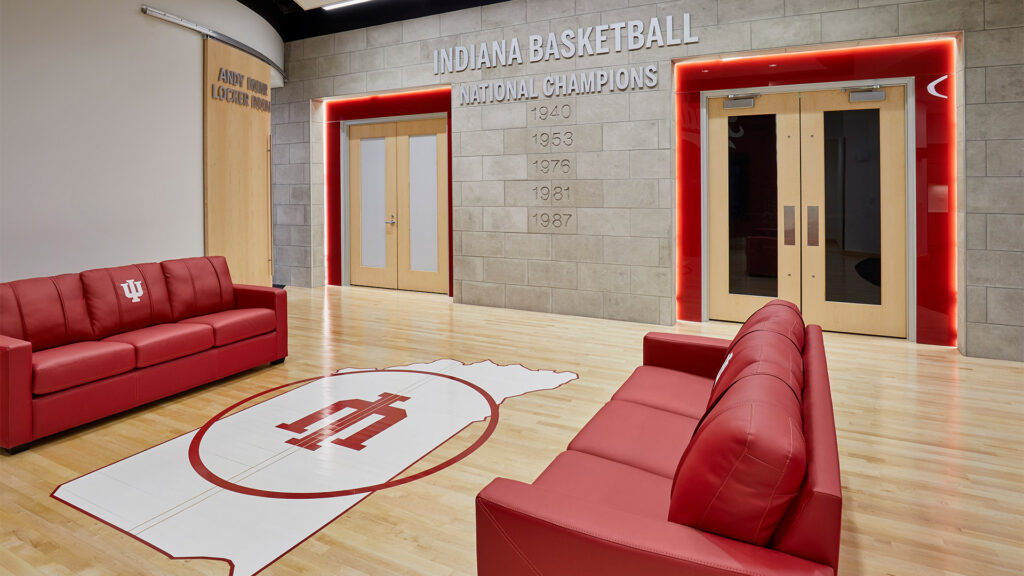

As a program we want our players to experience the best of the best, and as we took inventory on how we wanted to do things as a new staff, one of the things we really approached was a new area for our team and creating an environment that is cutting edge and second to none. I think that’s what we have been able to create here. “
–Coach Archie Miller
As quoted in IU Athletics’ Press Release
,
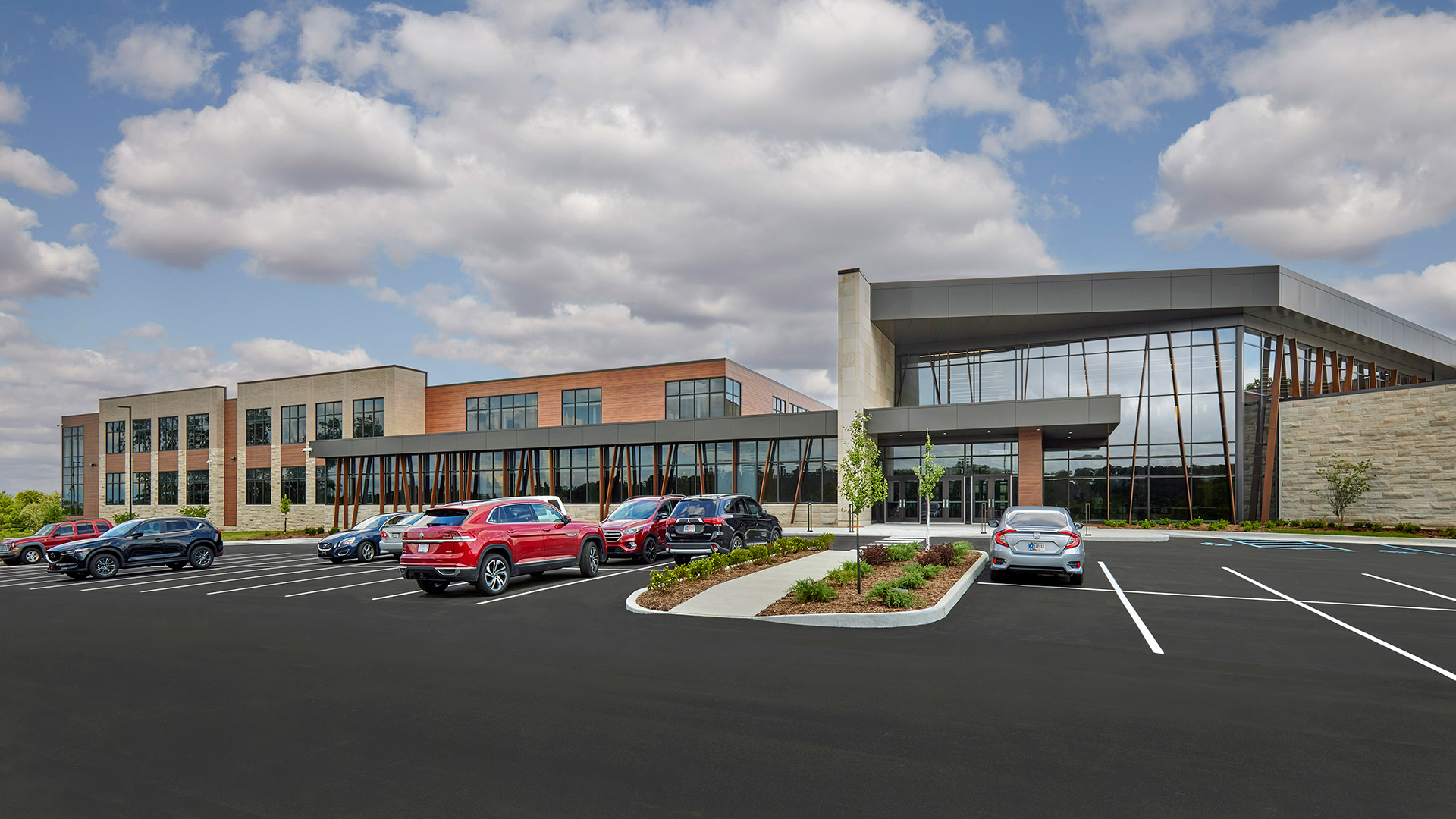
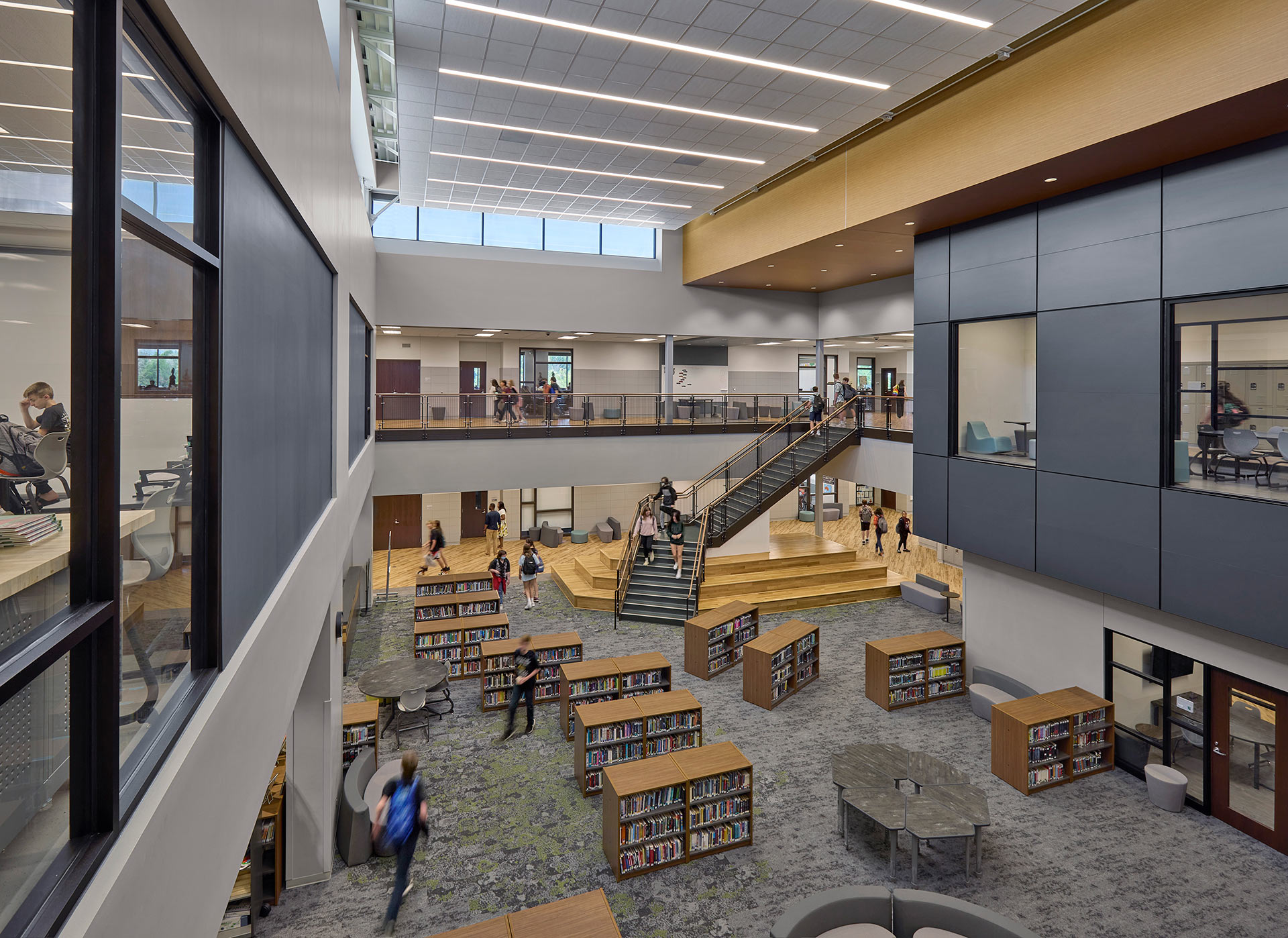
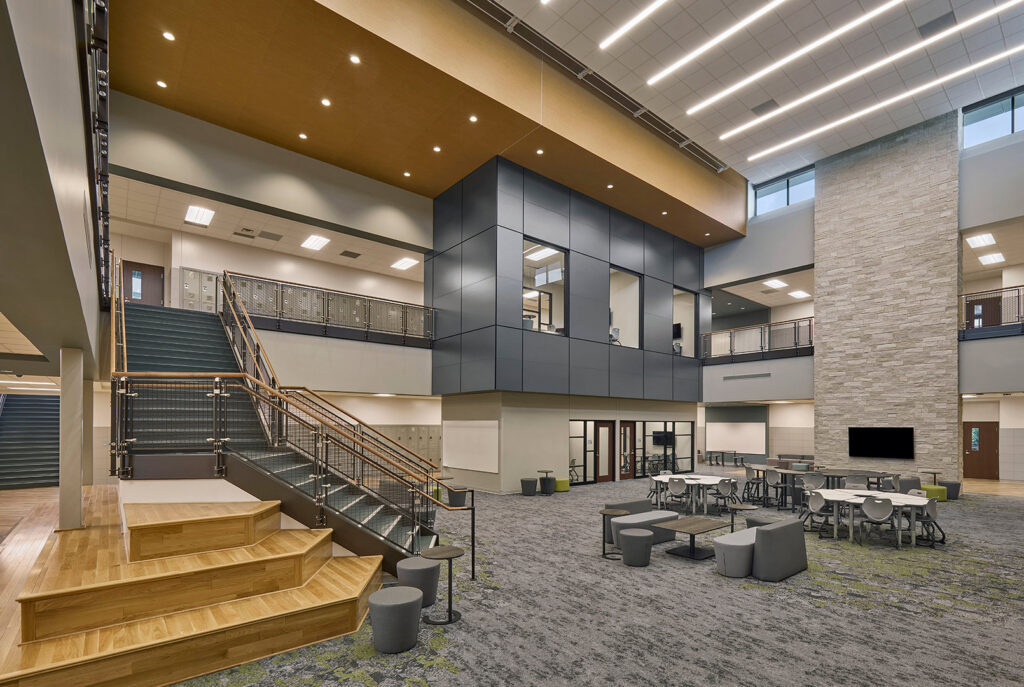
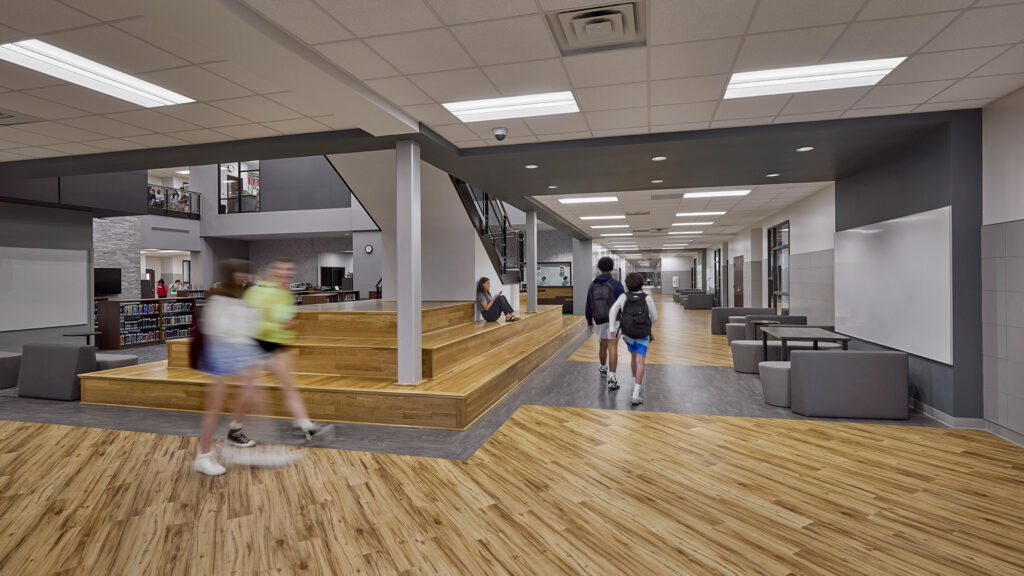
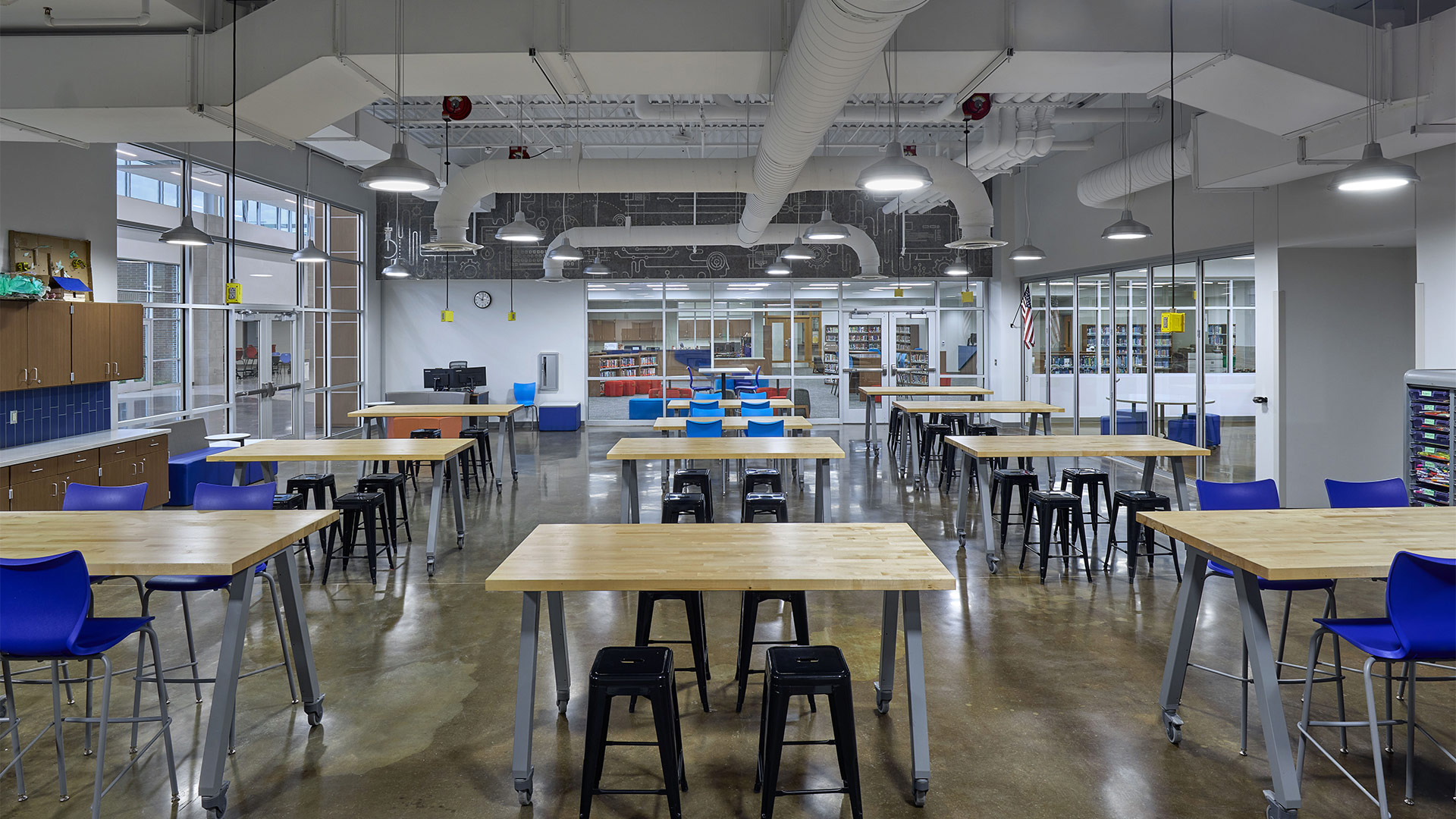
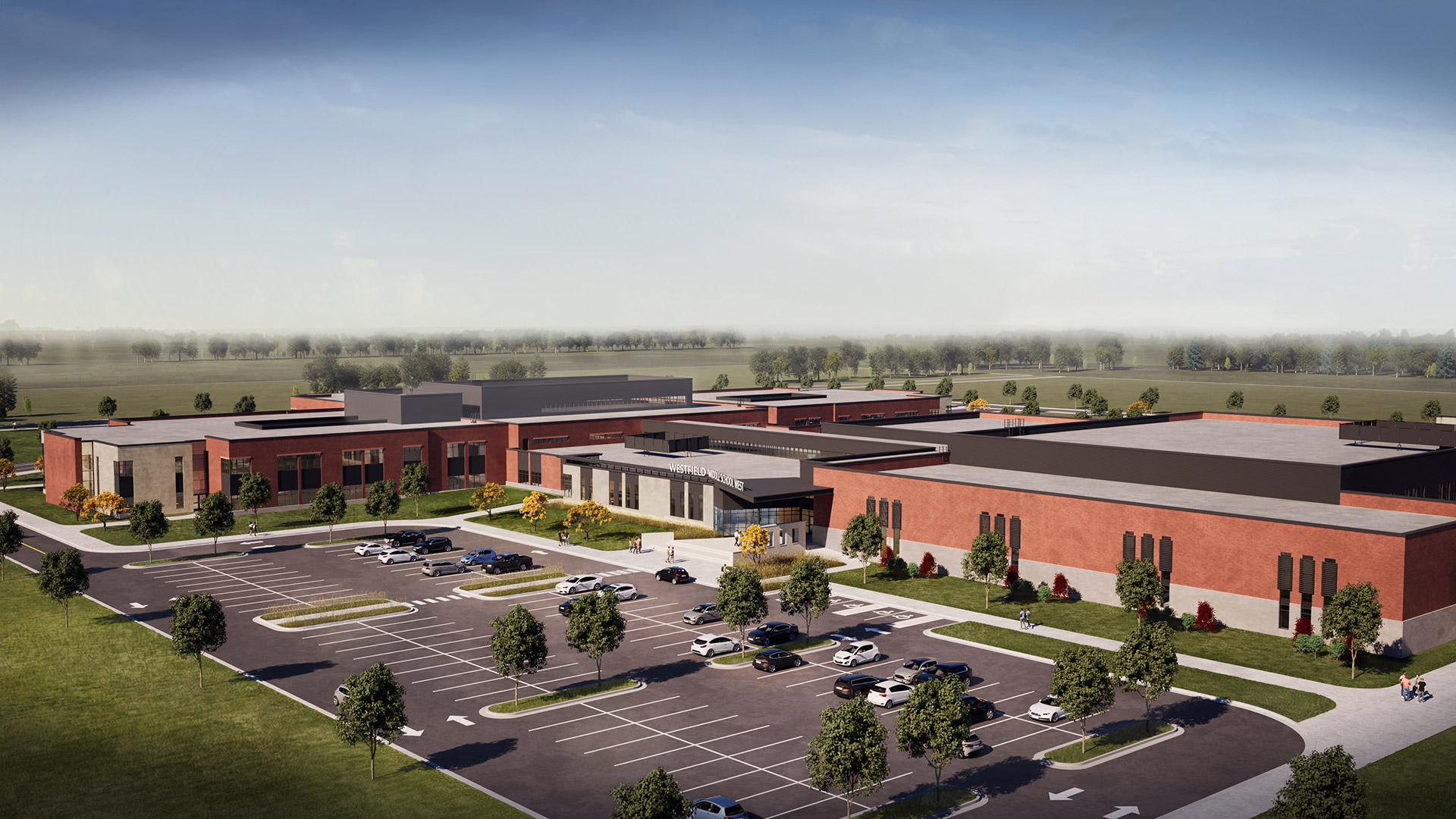
In place of a standard cafeteria, a large student commons serves multiple purposes throughout the day as a gathering space for students before and after school, an event space, or an instructional space during school hours.
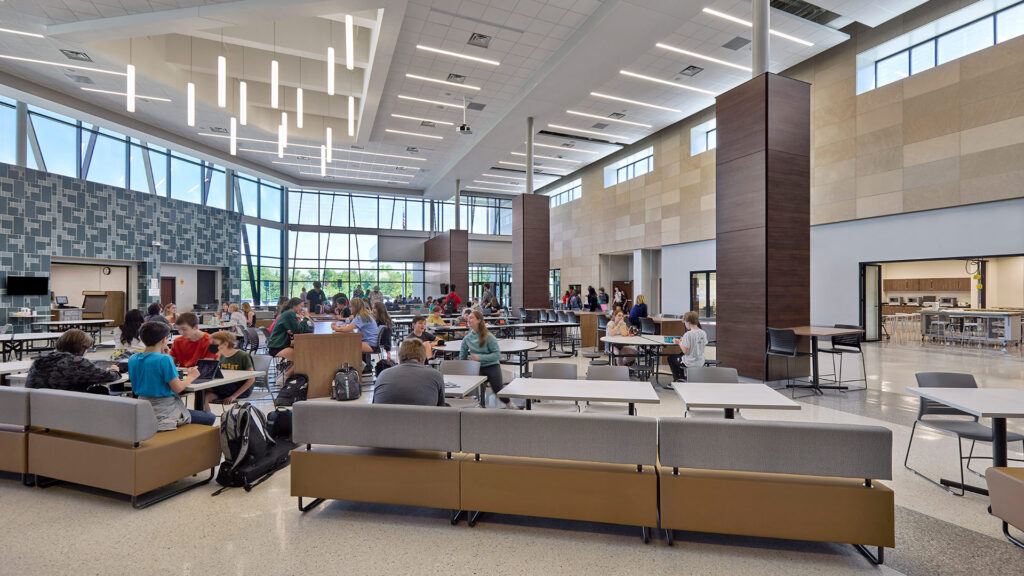
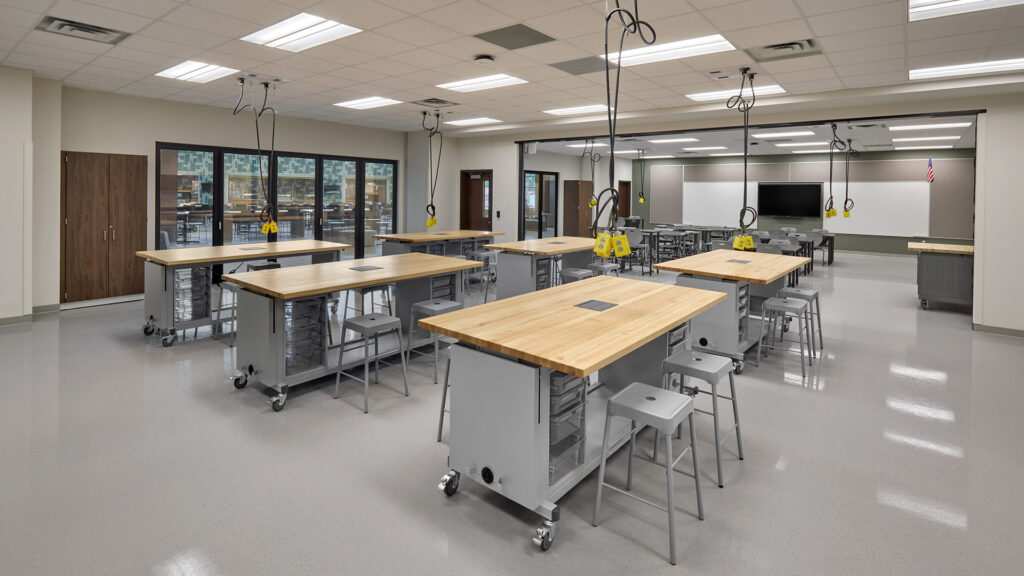
Learning on Display
STEM labs overlook the Student Commons with foldable glass doors that open up to connect the two spaces.
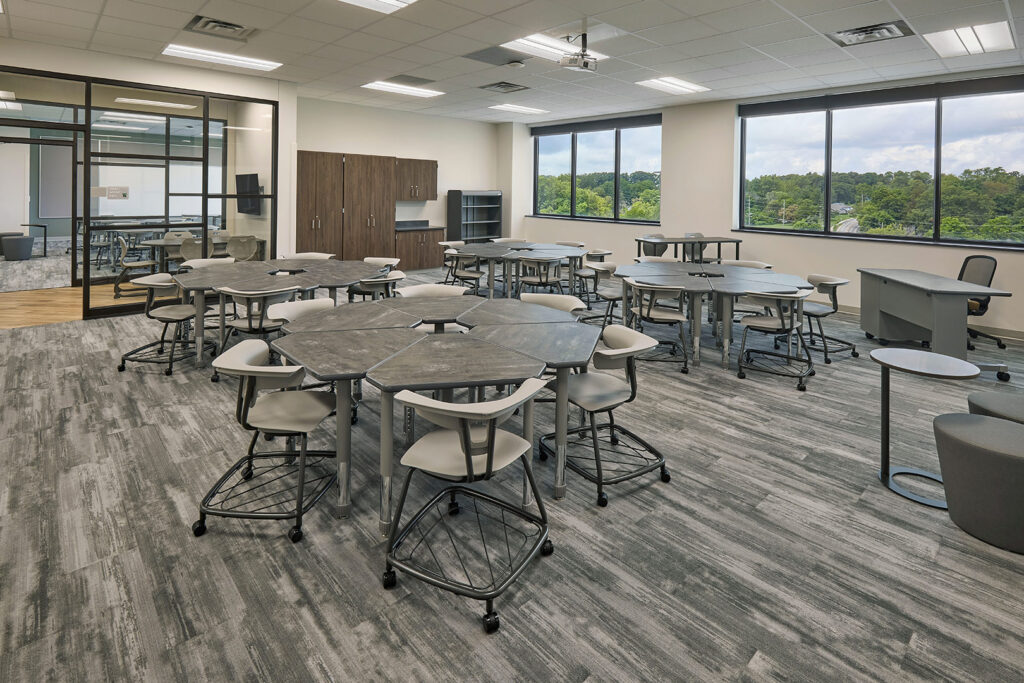
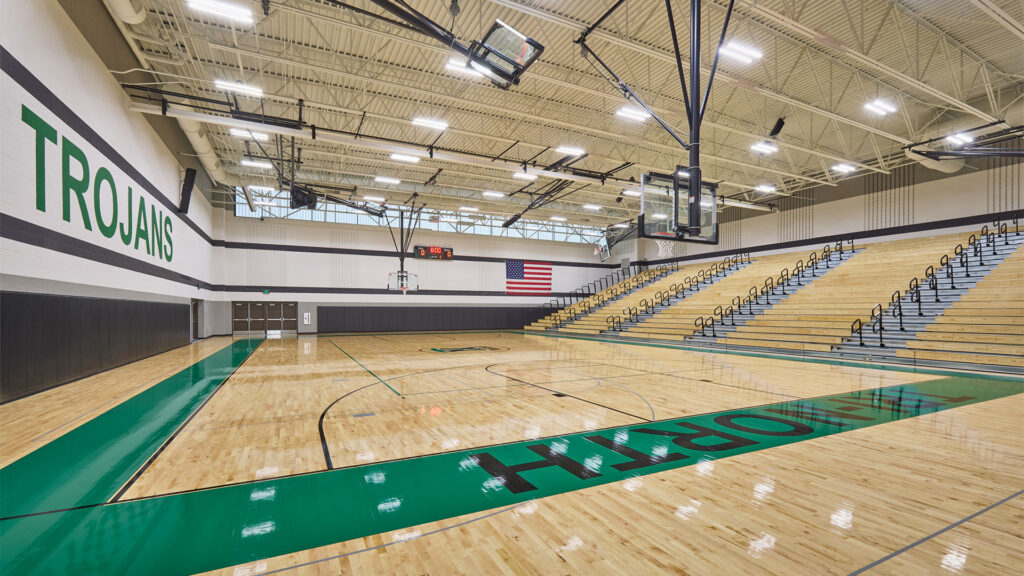
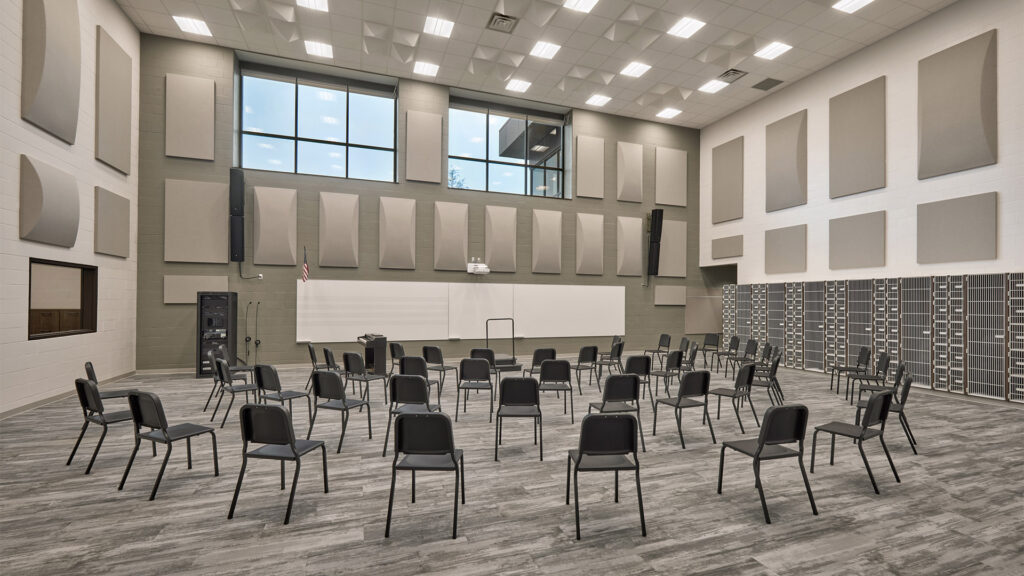
Designed for Maximum Flexibility
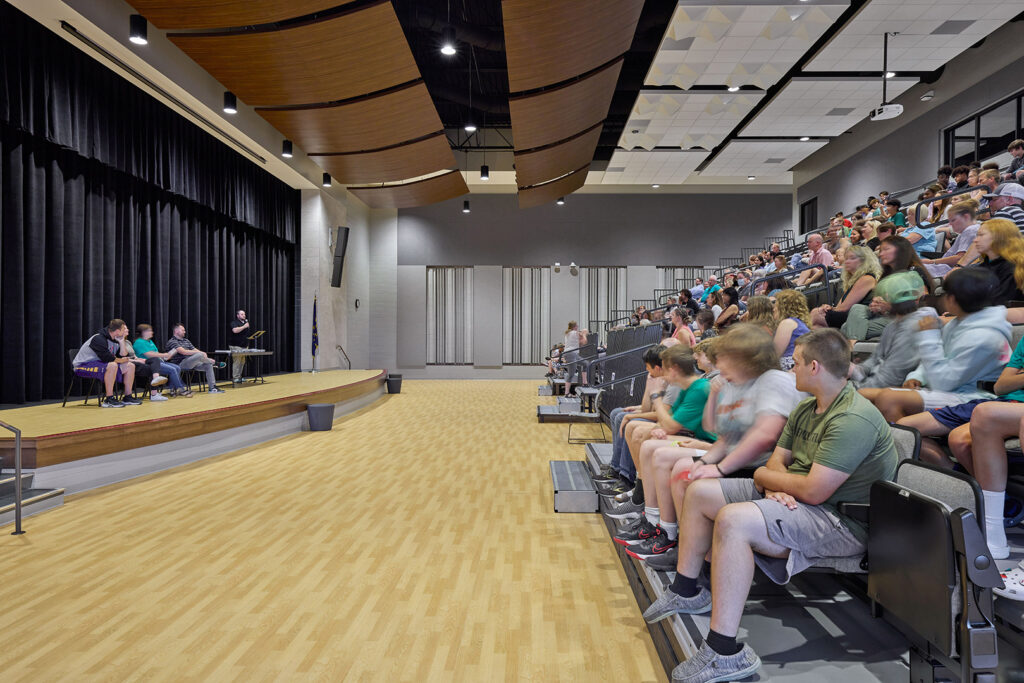
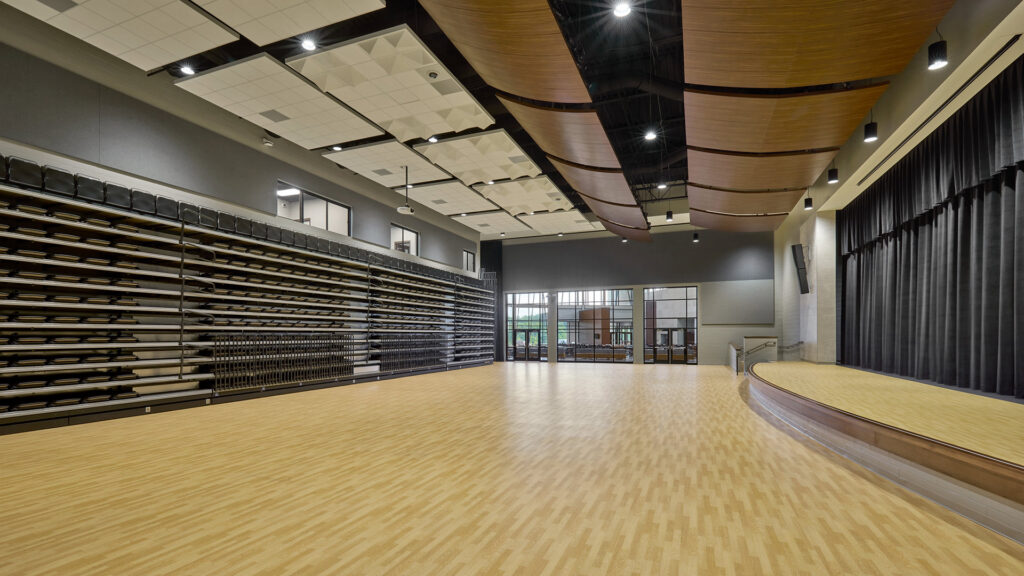
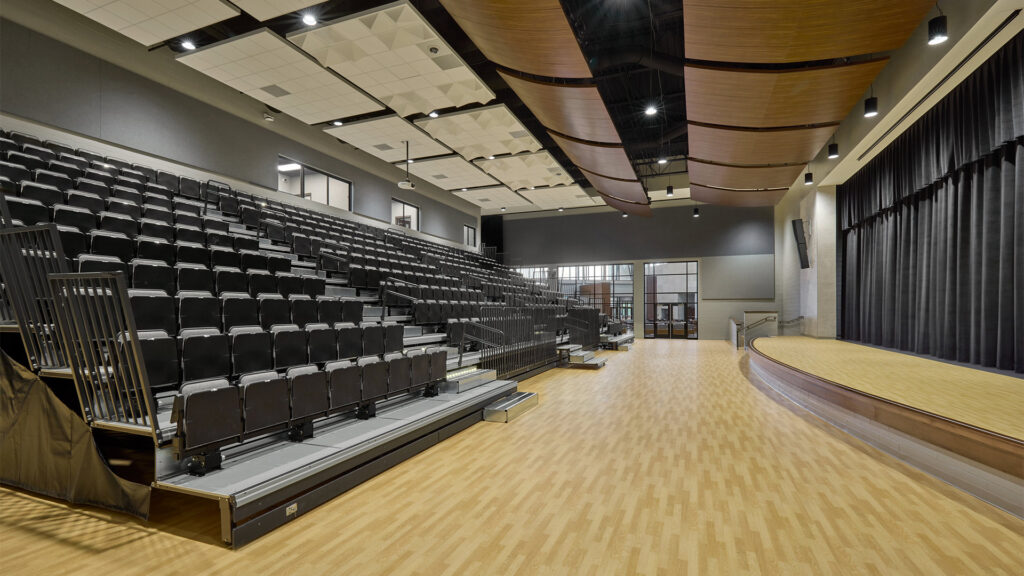
A multi-purpose performance / large group instruction space features retractable theater seating and padded athletic flooring, allowing the space to be used for overflow from the main gym, large student gatherings, or community events.
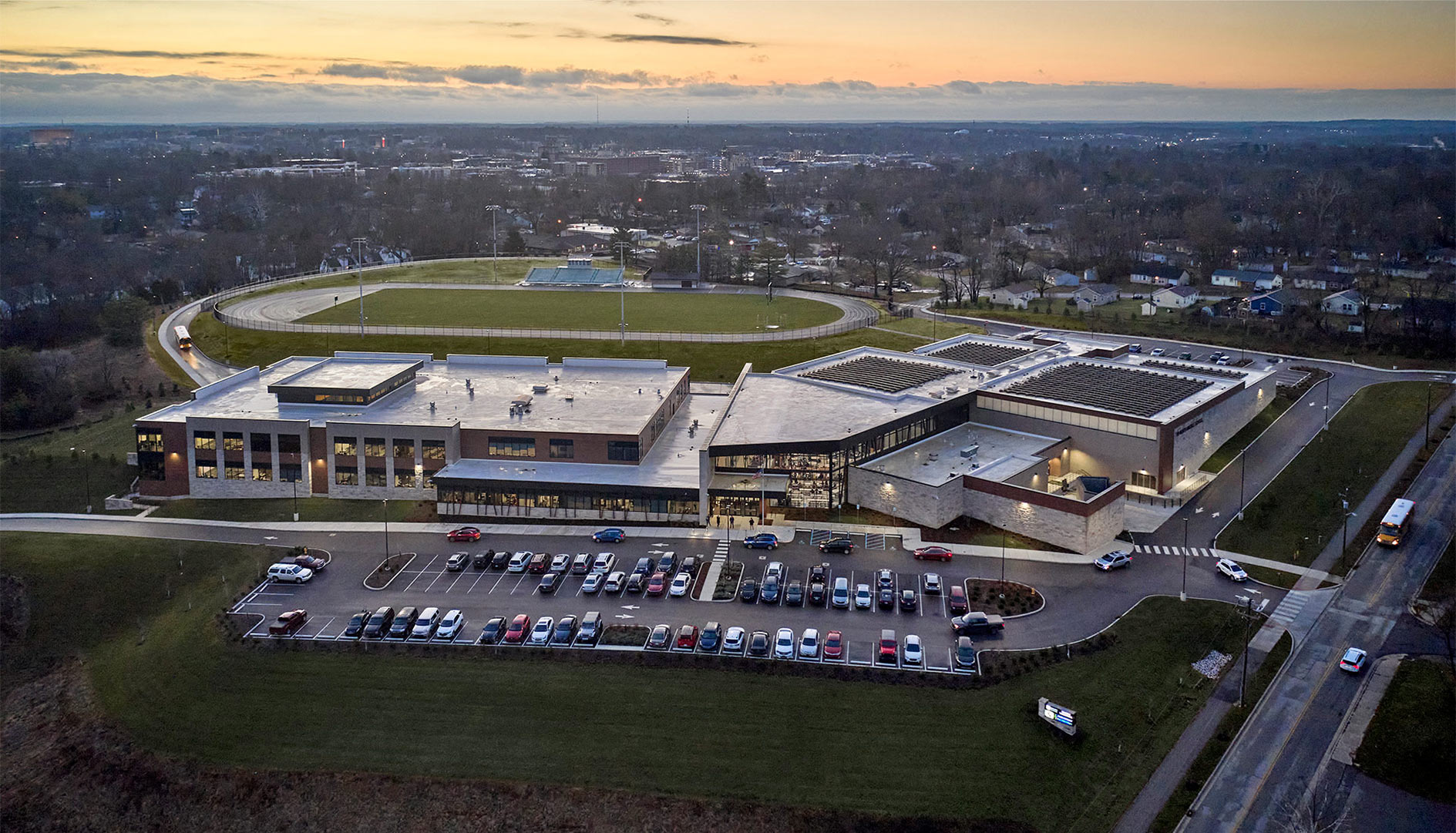
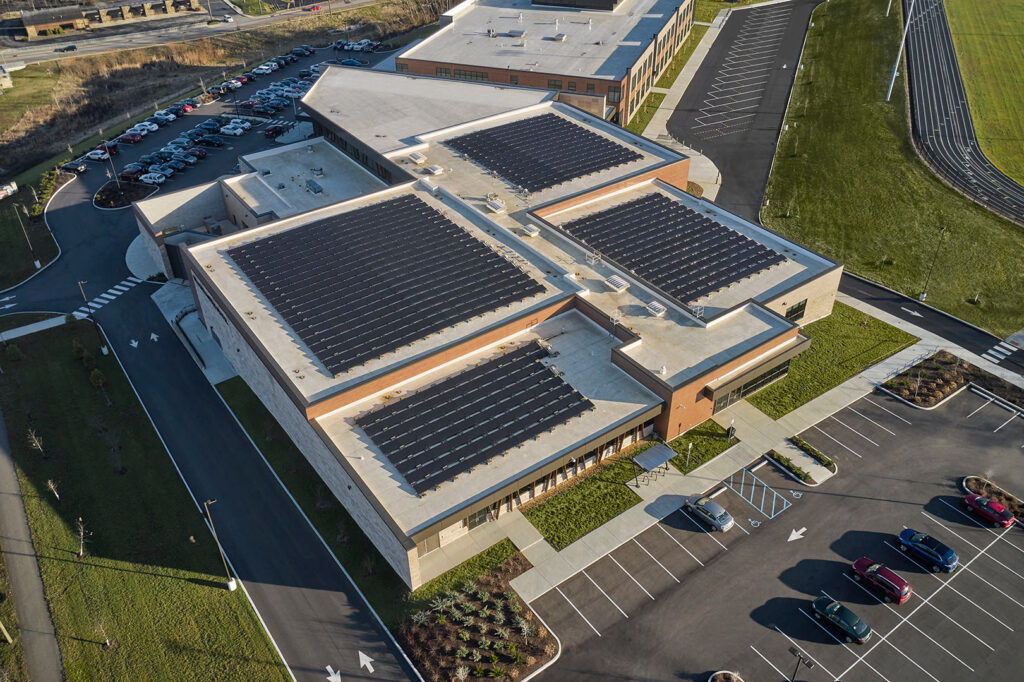
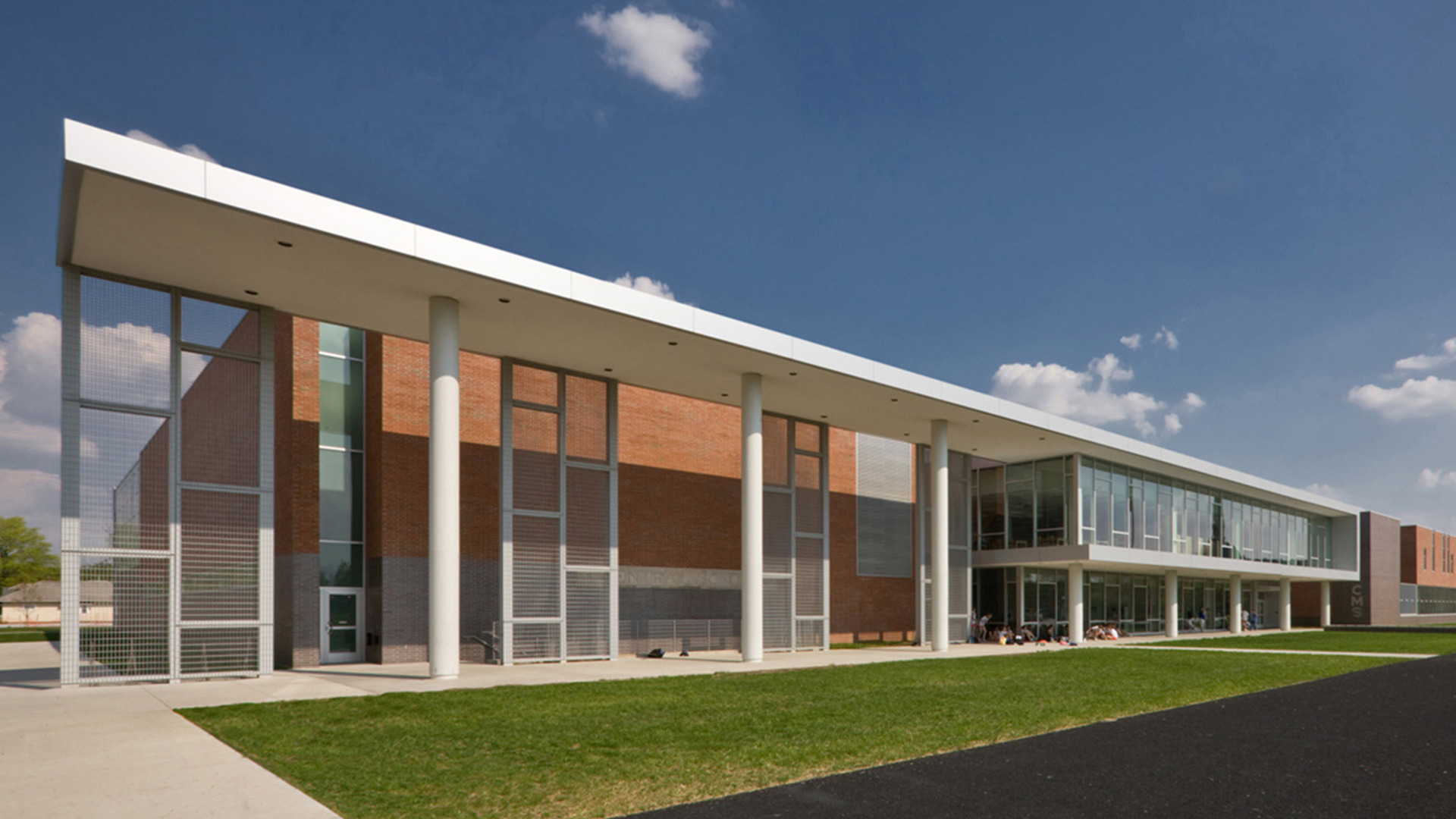
Sustainable design is integrated throughout the building with features such as a solar array, geothermal heat pump system, locally-sourced Indiana limestone, low-E windows, and a digital display that allows students to track energy consumption in real time.
,
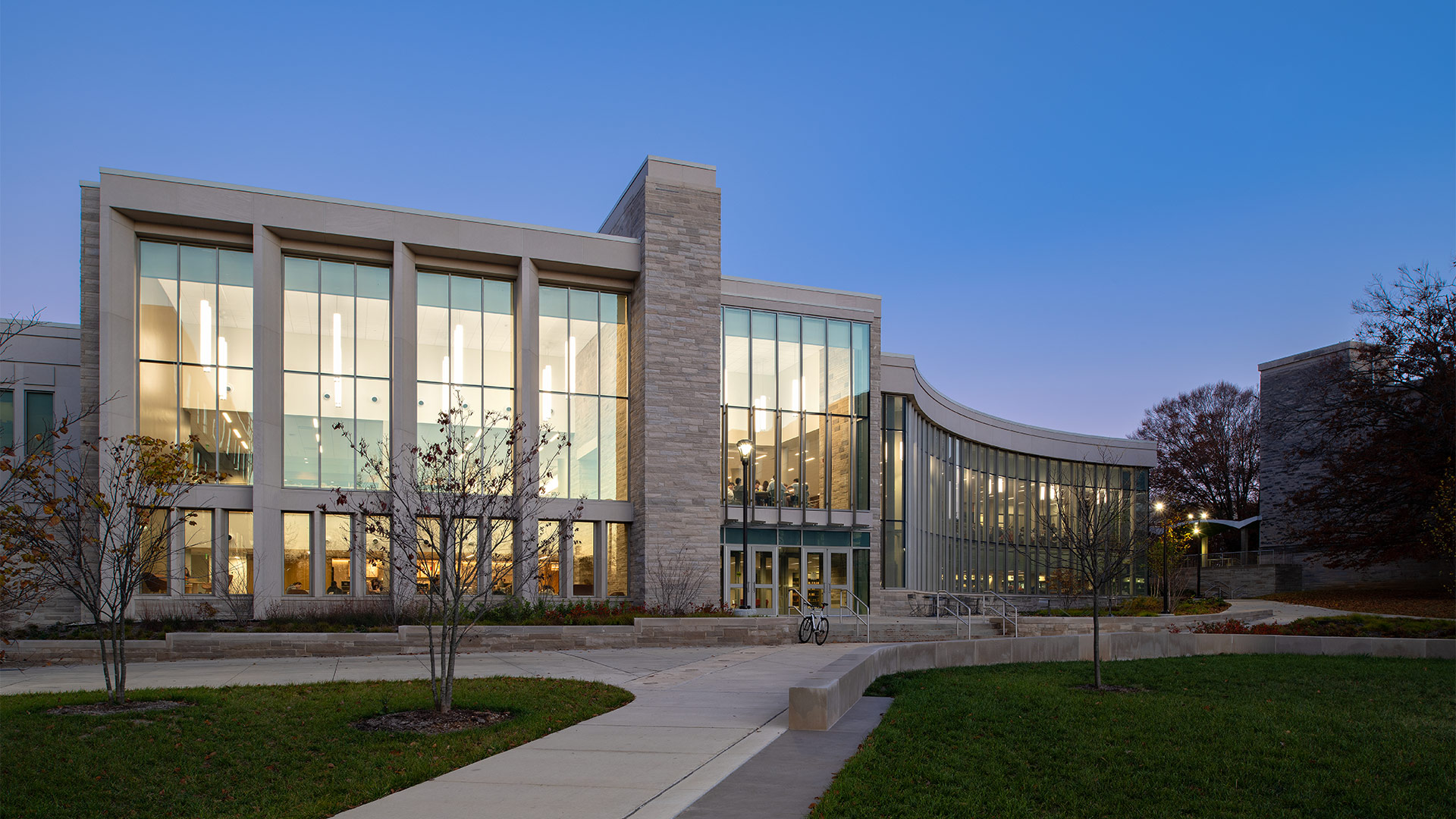
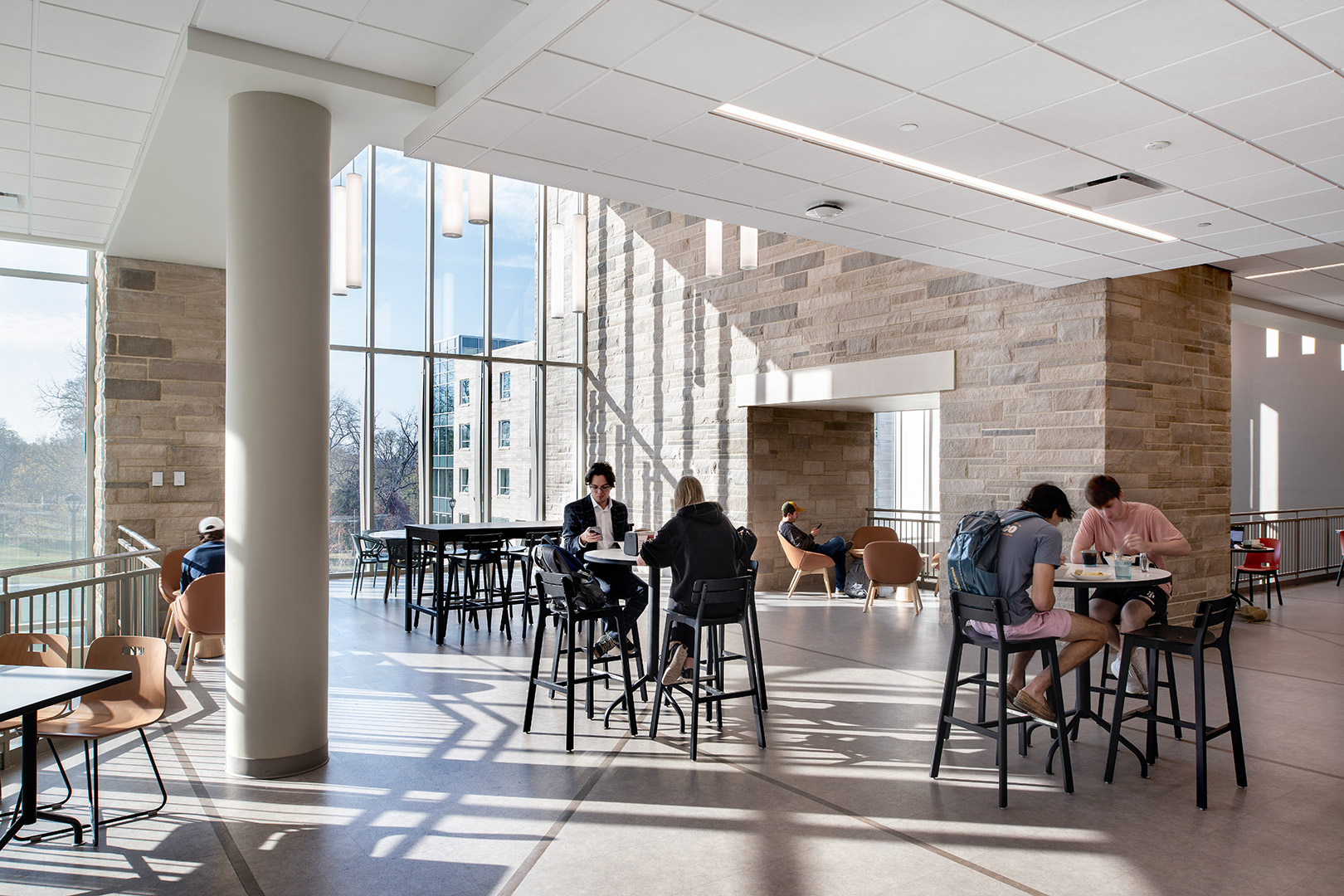
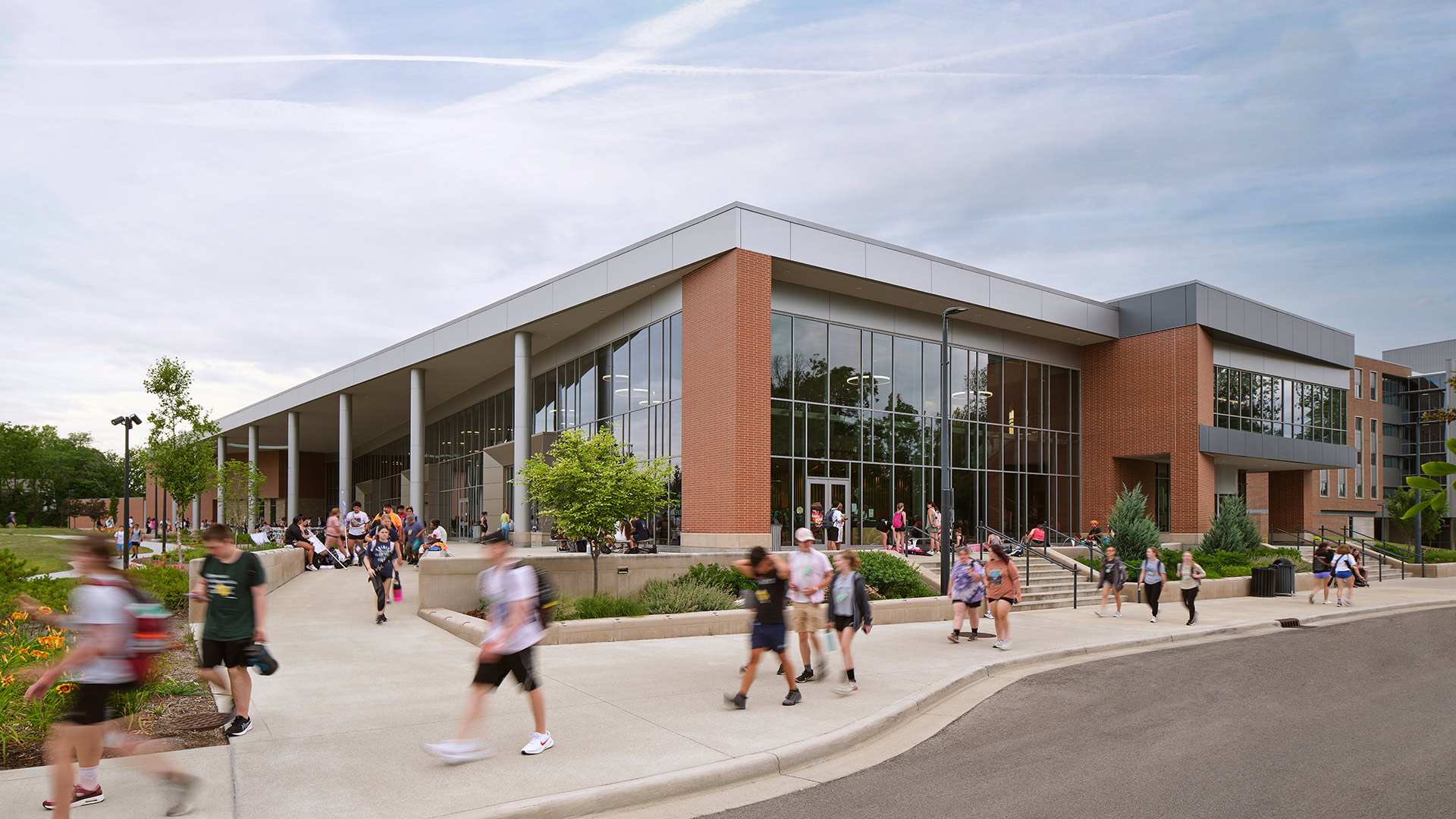
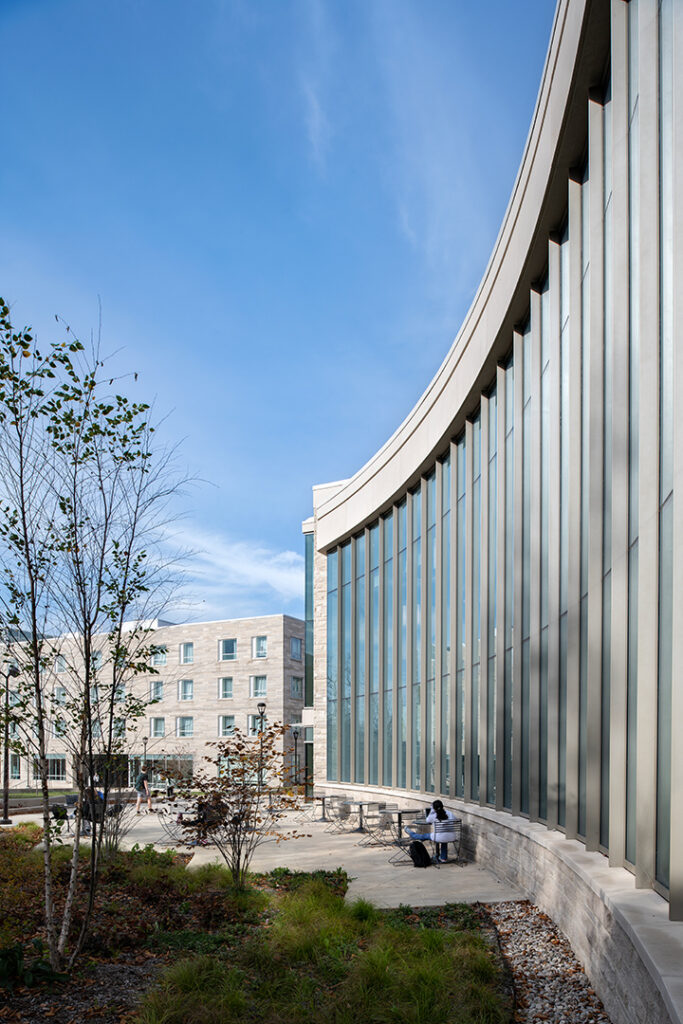
Large windows are placed on axis with new green space created by North Housing. The new dining project is an anchor to this new central green. A large curved wall of the addition gives reverence to the new green spaces and follows the projected path students take as they transfer southeast to main campus. The new architecture of McNutt Dining is carefully knitted into the context of McNutt Quadrangle as well as the adjacent new housing project.
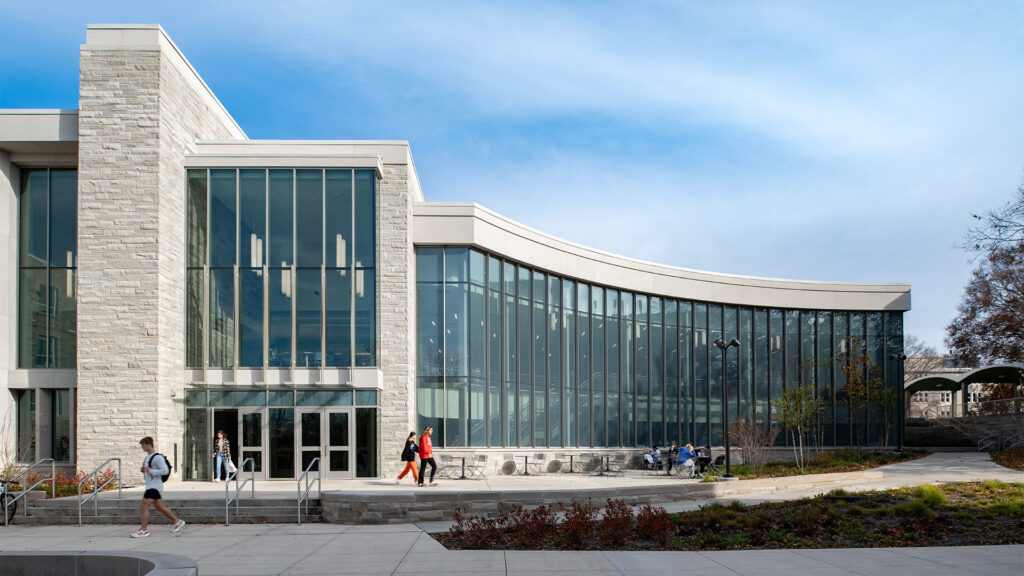
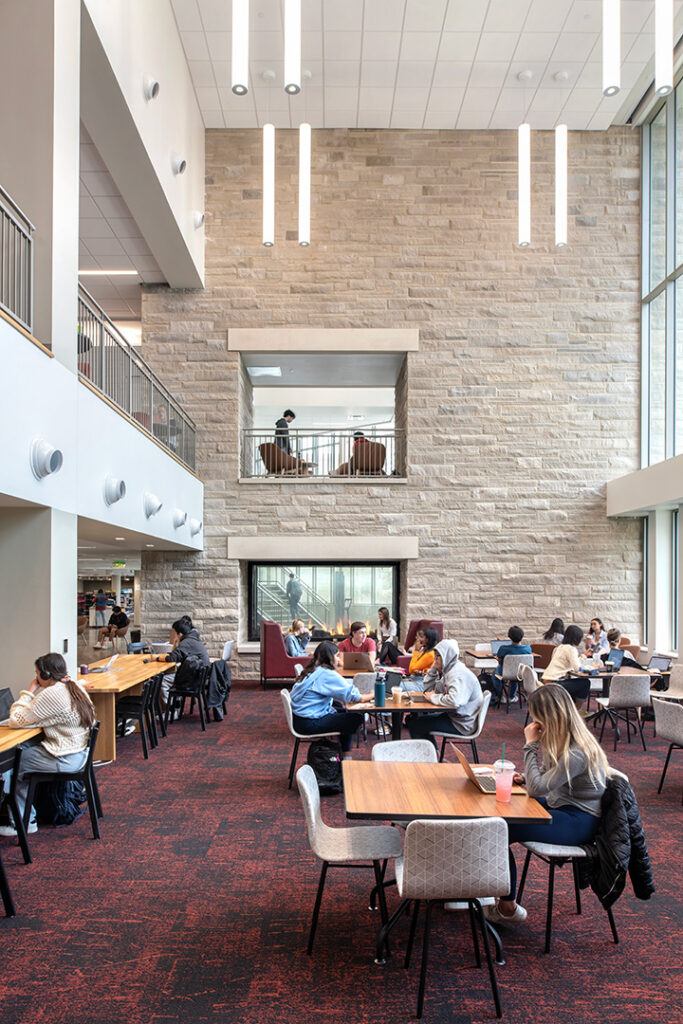
The architectural expression of the new building addition is sympathetic to the existing Mid-Century Modern architecture of McNutt Quadrangle. Indiana ashlar limestone used on the existing building is used in the same application on the new addition.
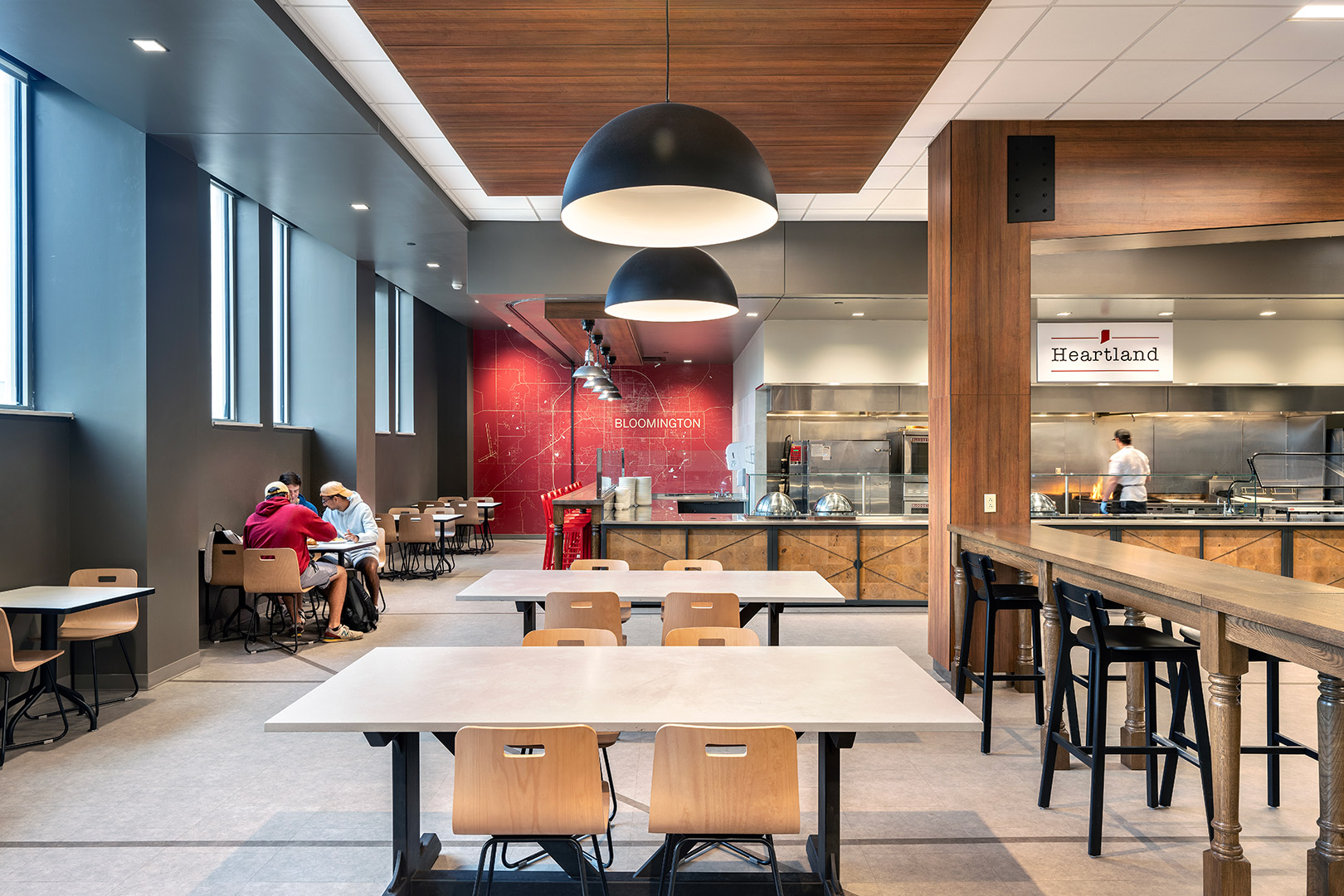
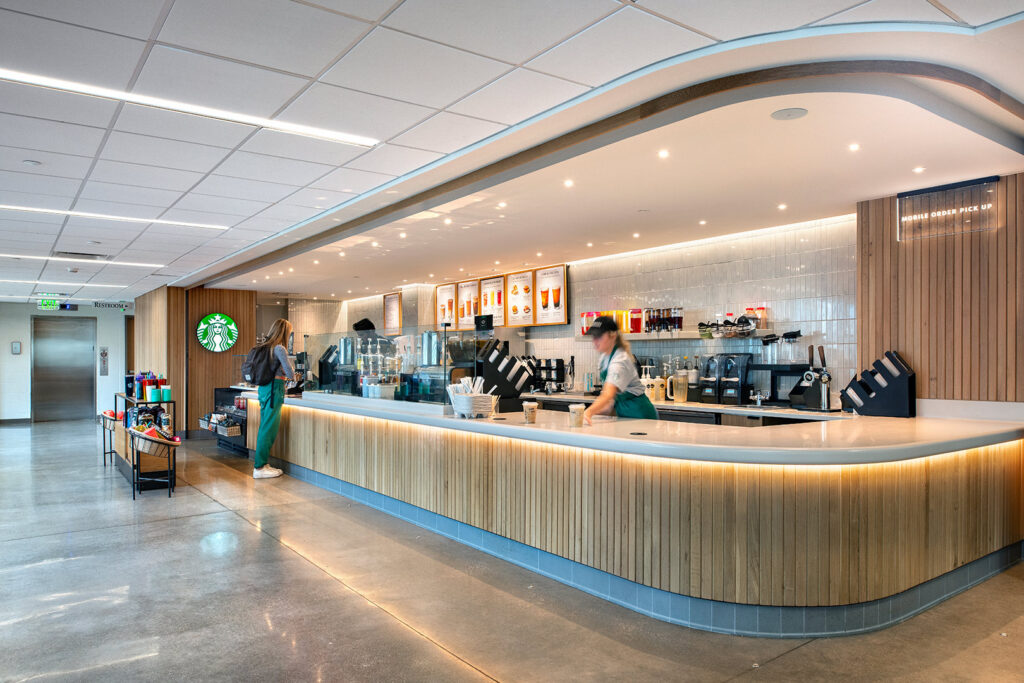
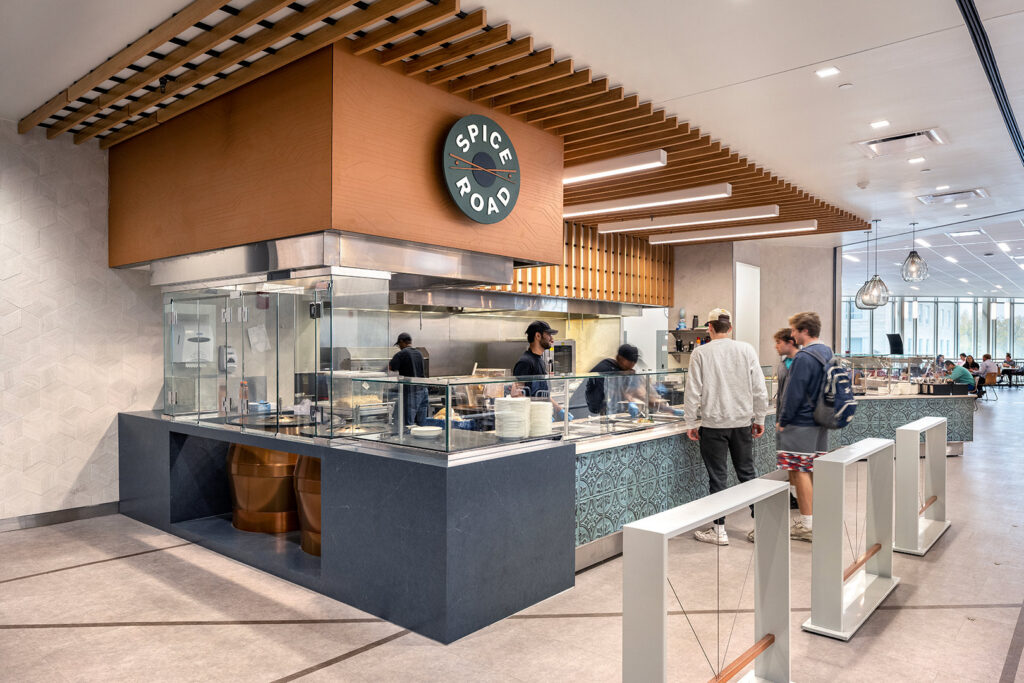
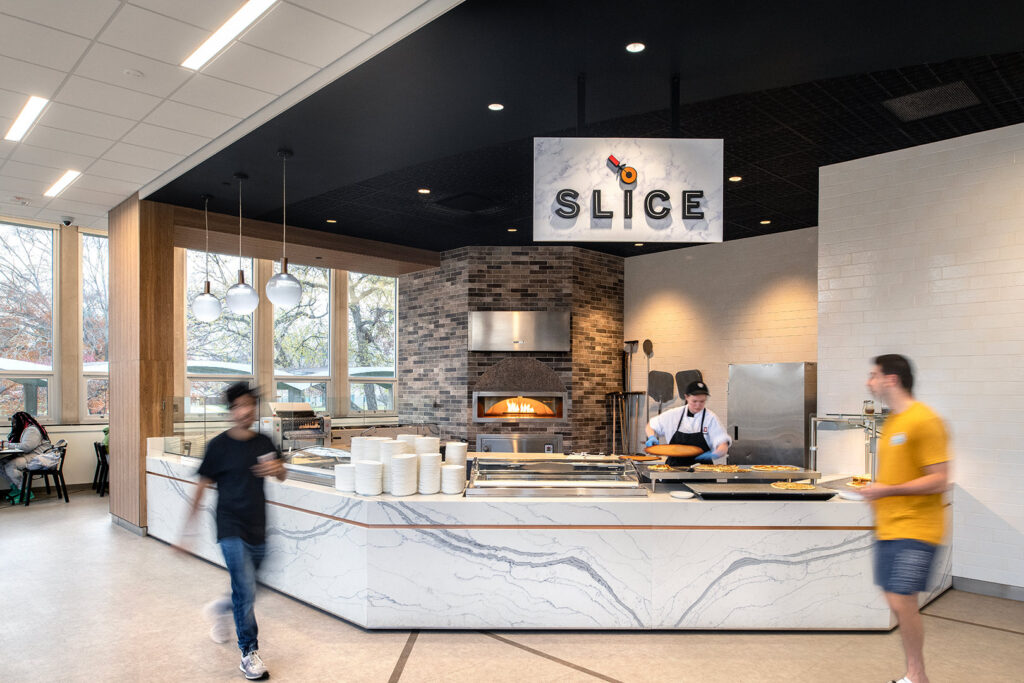
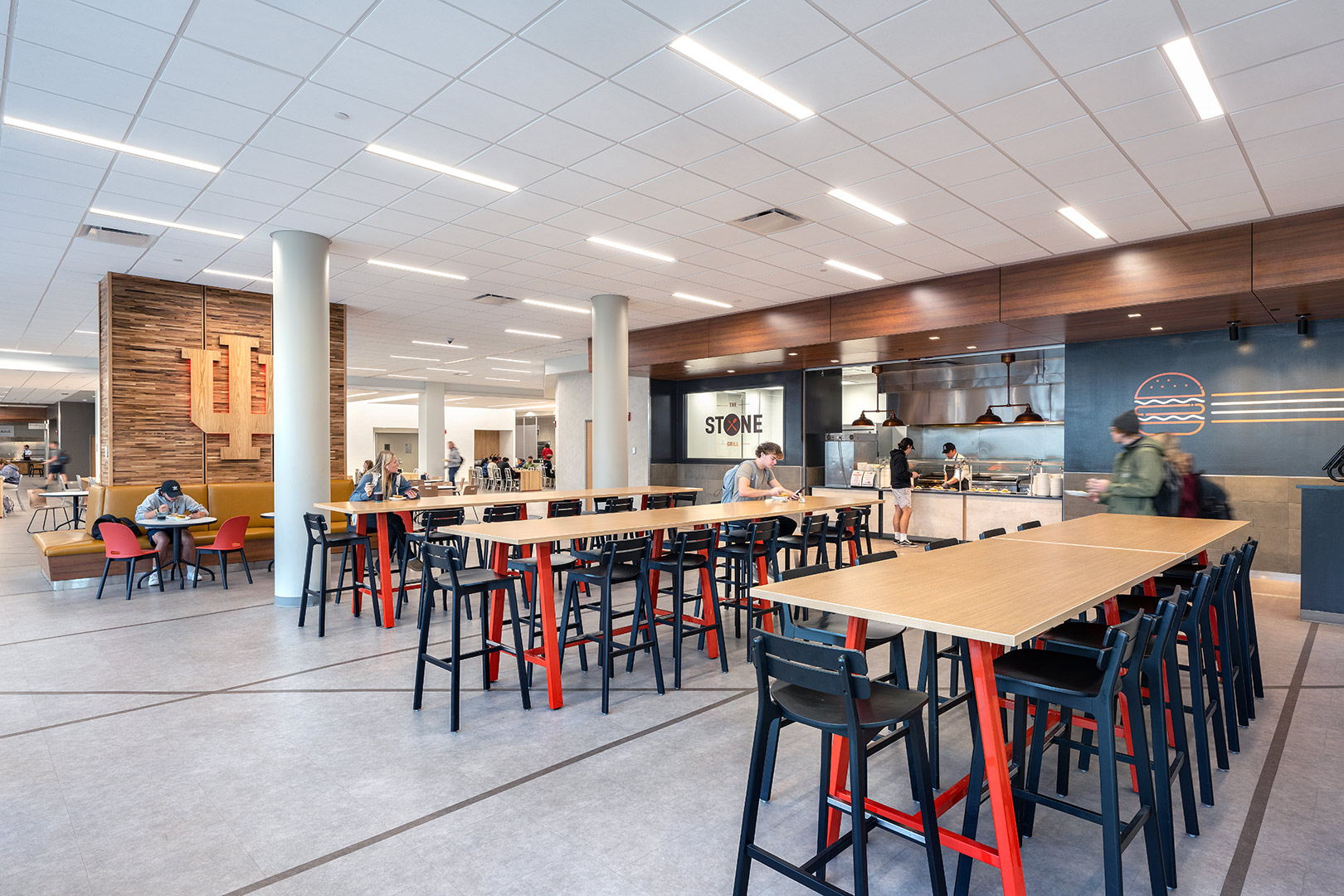
The micro-restaurant style dining concept includes ten different themed restaurant concepts, a new Starbucks, and a convenience store (C-Store). A centralized prep kitchen and dishwashing area, loading dock and other back-of-house spaces support the dining operations.
CSO collaborated with Hanbury and BakerGroup on the design of this project.
,